Lackawanna County, PA — For the first time in a long time, Katelyn sees a bright future for her son, Ben.
“He’s 13-years old and has autism. He’s a big strong farm boy, but emotionally he’s a child. I was worried he was going to stay home on my sofa forever,” she said. “Now he’s more willing to meet people. He’s way more confident now. He has so much potential.”
Katelyn said the change began about a year ago when Ben began to receive behavioral health services at home from Bonnie Bower.
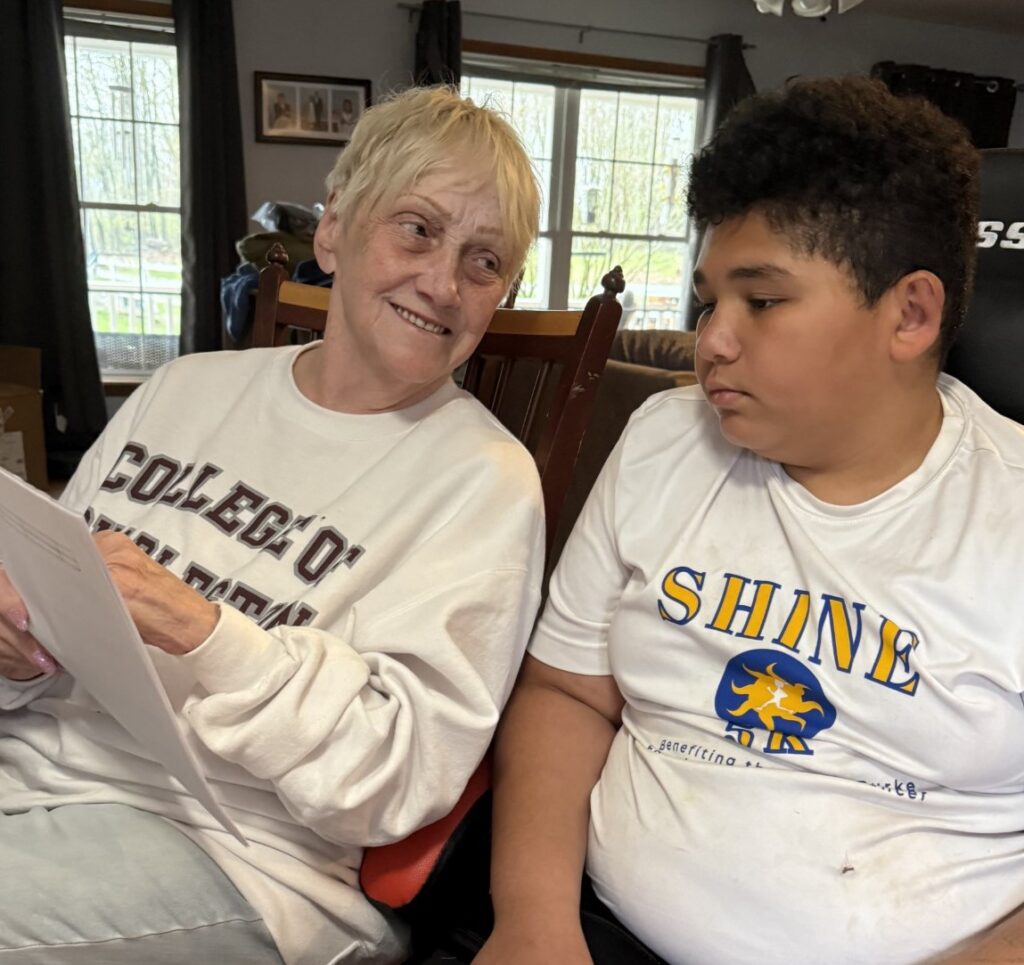
“We’ve gone through many therapists and workers over the years and it’s usually just, ‘Yes’ or ‘Uh huh.’ Or he’ll sit at the table and cry and carry on,” she said. “But Bonnie just gets right in there. She’s into his space and heart. She’s kind to him and doesn’t make him feel pressured. She’s understanding and can also be stern,” Katelyn added.
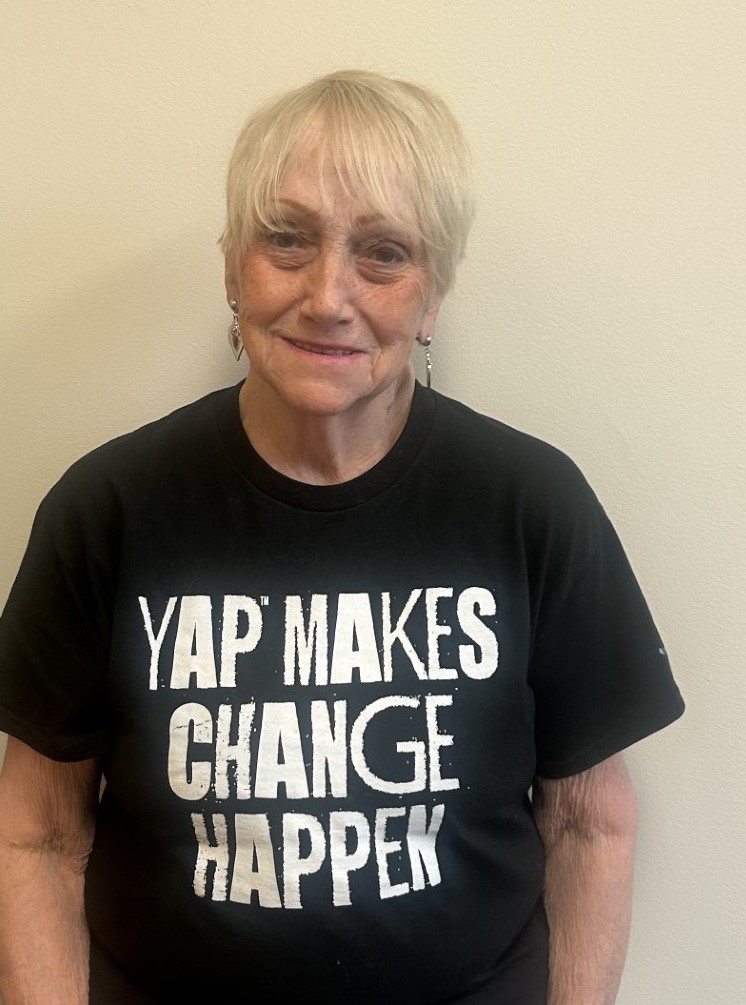
Bower is a Youth Advocate Programs (YAP®) Inc. mobile mental health professional delivering services to youth throughout Lackawanna County, often in rural communities. YAP is a donor-supported national nonprofit that partners with justice, child welfare, mental health, education, and public safety systems to deliver community-based services an alternative to youth incarceration and residential treatment. YAP’s mental health services are driven by principles of the nonprofit’s 50-year-old evidence-based youth justice model, which includes unconditional caring, and a no reject, no-eject policy.
YAP’s family-centered, accountability-focused model is what drew Bonnie to the donor-supported nonprofit 13 years ago. At the time, she was 70 years old.
“I didn’t go to college till I was 41. By then, I had been married, had worked in the food business, and had ended up single,” she said. “I went on to get my master’s and graduated in ‘94.”
With Bower’s education comes with a wealth of life experiences, including a divorce and raising two adult children, much of the time on her own. Now 83, she says she’s “a straight shooter” when it comes to working with kids and their parents and guardians.
“When I get a family, I sit them down and say straight out, I’m here to help you and we have a whole treatment team, and you need help or we wouldn’t be here,” Bower said. “I tell them there are going to be times when you’re not going to like me, I’m going to hit raw nerves, treatment is painful. There are going to be times when it’s not going to be easy,” she added.
True to the YAP service delivery model, Bower’s youth and family treatment plans focus on the strengths of program participants and their parents and guardians. She connects them to tools to nurture their gifts and talents and to firm their family foundation.
“The treatment plan might include a bubble bath for mom,” she said.
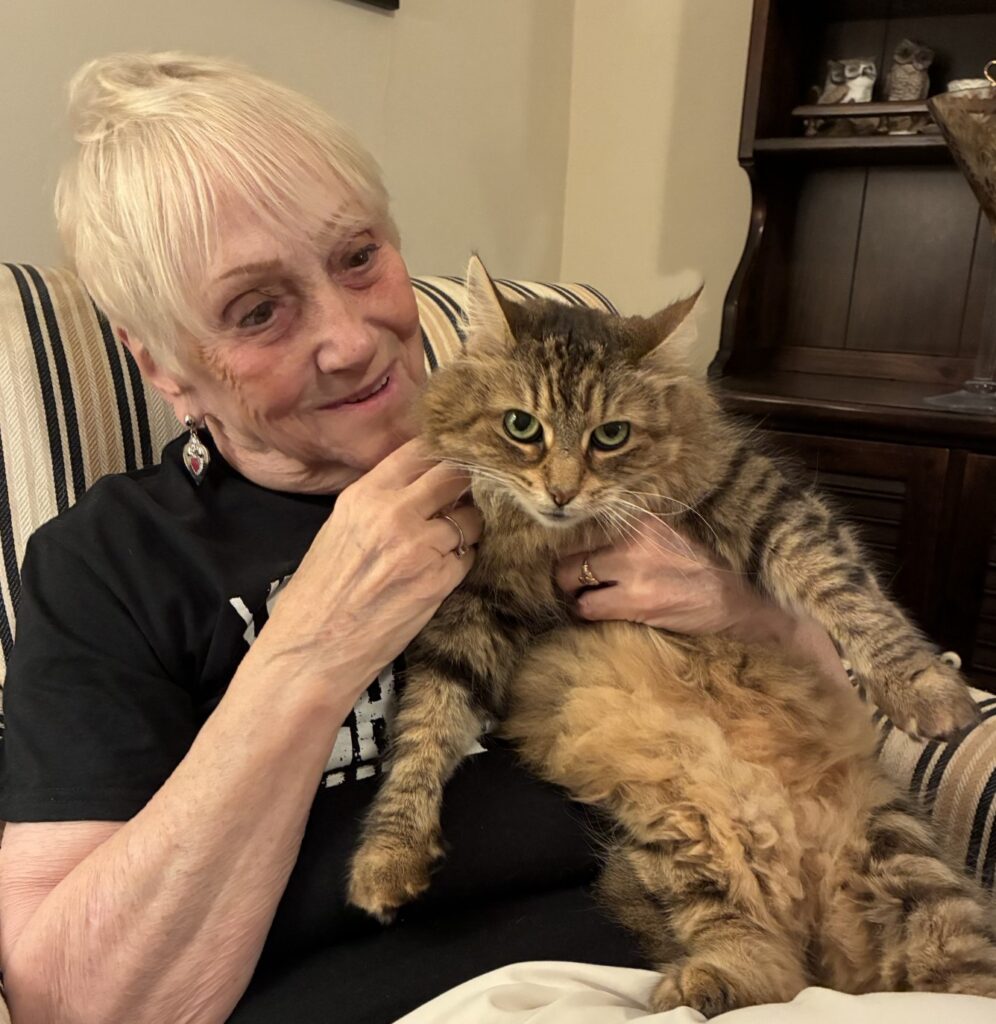
Bower also believes in balance for herself. She spends her free time traveling, with friends enjoying an occasional martini “stirred, not shaken and served in the right stemmed glass,” she said. Or she’s relaxing at home with Telsa, a large and clingy cat named after one of her favorite rock bands.
Bower’s background includes stints as a substitute teacher and a variety of social services positions including a Scranton, PA nonprofit serving children, adolescents, and adults with behavioral, emotional, or developmental challenges. One of her co-workers there was Denise Shandra, who now works for YAP as Bower’s Program Director.
“I have always respected Bonnie as a true social worker; with her program participants’ and their families’ total wellbeing as her utmost concern,” Shandra said. “She is fantastic at assuring all possible community resources are connected with the family. Bonnie is the definition of above and beyond.”
Bower also worked at an organization specializing in substance use disorders and for 11 years, she provided services at a locked facility for youth offenders.
“I loved that job. The kids I worked with there were from D.C., Baltimore, Philly. I worked with their families too.,” Bower said adding that she cared deeply for the individuals she served. “I didn’t take any nonsense from these kids, but I have a different style, and it works. Ninety-seven percent of those kids were trafficked. The girls I worked with were either snatched off the street or coerced. Some of their stories were horrendous.”
When Bower learned about YAP, especially its outcomes with young people who might have otherwise been in a corrections or residential care or treatment facility, she knew the national nonprofit was where she would do her best work. Her experiences taught her that the best way to serve young people is to empower them with tools to see and nurture their best qualities while also connecting their families with individualized support tools. The principles of the YAP model align with who Bower is and she is still as excited about the job as she was when she first started.
Eleven-year-old Joslyn said before working with Bower, she would throw desks when she was frustrated and would talk back when a teacher instructed her to do assignments she didn’t like.
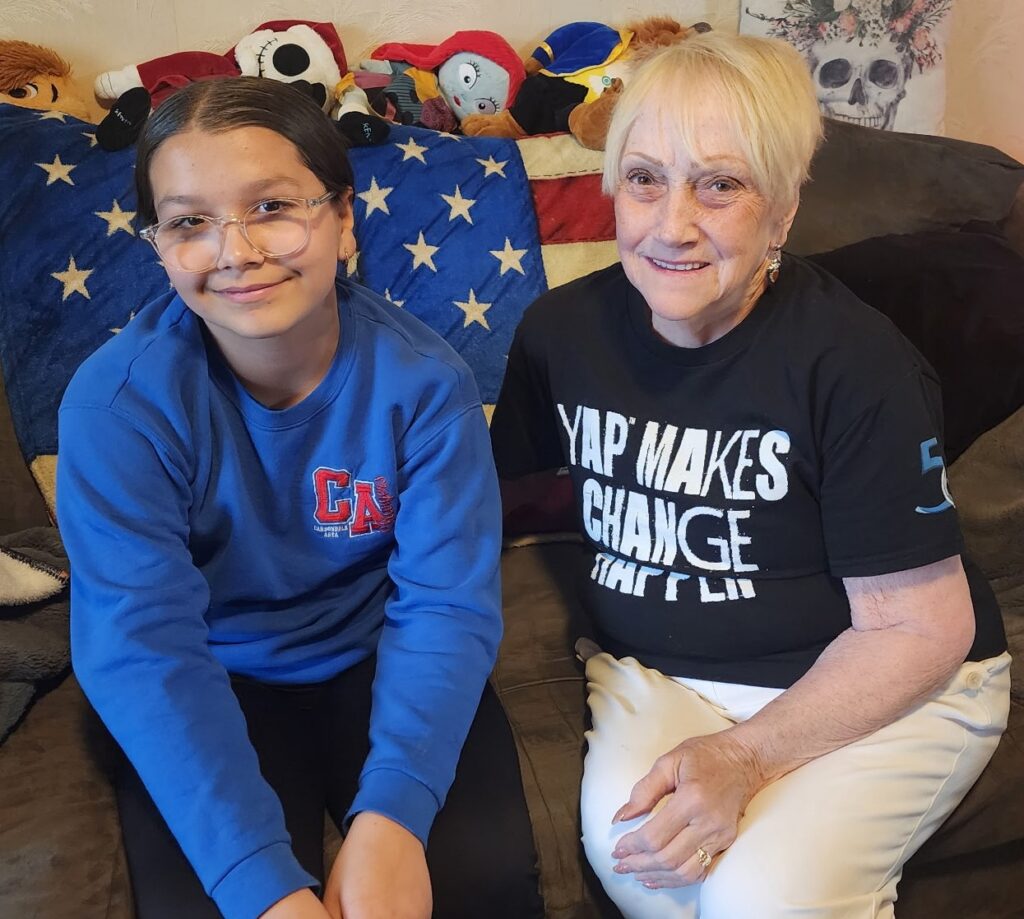
“I feel like I tell her what I feel like is important. She actually listens and helps me do better things,” Joslyn said in describing her experience with Bower. “I feel like there’s a big difference; I’m following my parents’ rules, and I don’t get attitude that much. I feel like I’m going to do good in the future. I see myself playing soccer,” she added.
Joslyn said she had just brought home a permission slip to join her school’s 7th grade soccer club next year.
“We talked about it,” her mother said. “And the answer is yes.”
Bower said she begins by building a relationship with the young person. She also listens to the young person’s parents and guardians and works hard to build a bond with them as well.
“If I hook onto something that I can relate to, that’s a good thing,” she said. “For example, with one kid I remember struggling to get the dad on board. Then one day, he told me about his wedding and said they played something from Ozzy Osbourne. That’s when I told him that I’m also into heavy metal and that I really like Alice In Chains. That was our connection.”
Katelyn said Bower connects with her son in a similar fashion.
“She asks me about him, what he’s interested in. Bonnie’s good at asking me what works for him and putting it into play,” she said, adding that she has success getting him to open up while doing the things he loves.
“They go out to the farm together and she watches him and talks to him while he shovels and cleans up,” she said. “He also loves to bake and cook with her. Lots of times she has a project she’ll bring over.”
Katelyn said Ben attends a special school but that he joined a competitive swim league with kids his age from the general population and she’s seeing glimmers of hope in his attempts for social interaction.
“He’s more willing to try. All day long he’s down there without Mom and Dad. Now he’s in the 13-18 group,” she said. “Your race is only three minutes, but he’s sitting with those big guys on the bleachers for six hours. He’s learning how to be more comfortable with being friendly with the older kids.”
Katelyn is encouraged by Ben’s willingness to work with Bower and is impressed watching him cooperate with her, even taking time to answer questions to assess his anxieties and other challenges.
“I’m trying to make his world as big as possible,” she said. “I’m hoping he’ll be able to connect with supported employment,” she said. “He wants to work he can do the work, and now I’m hopeful he’ll be able to connect with someone who can help him be successful out there.”
Bower stays in contact with the young people and families sometimes years after they complete services. She encouraged one grandmother to enroll in and complete college and continues to encourage when she doubts herself in her first weeks in a new job.
She was also there for a program participant whose mother left town to live with a new boyfriend only to return weeks later when things didn’t work out. The youth stopped going to school until Bower restarted services and found a therapist for the mom as well. He’s back in school and is focused on entering a trade school.
Bower believes encouragement is one of the keys to her success.
“Celebrating accomplishments is important. I’ll take cake and ice cream and do things like that. When you celebrate, children feel it’s a rite of passage,” she said.
As for Bower’s future, she is working to complete requirements to become a licensed behavioral consultant.
No doubt, there will be standing room only at her celebration party followed by time with friends and a martini, served in a stemmed glass, and of course, stirred, not shaken.
Learn more about YAP and how you can support the donor-funded nonprofit at www.yapinc.org.