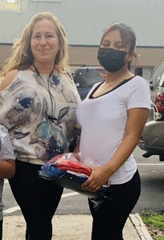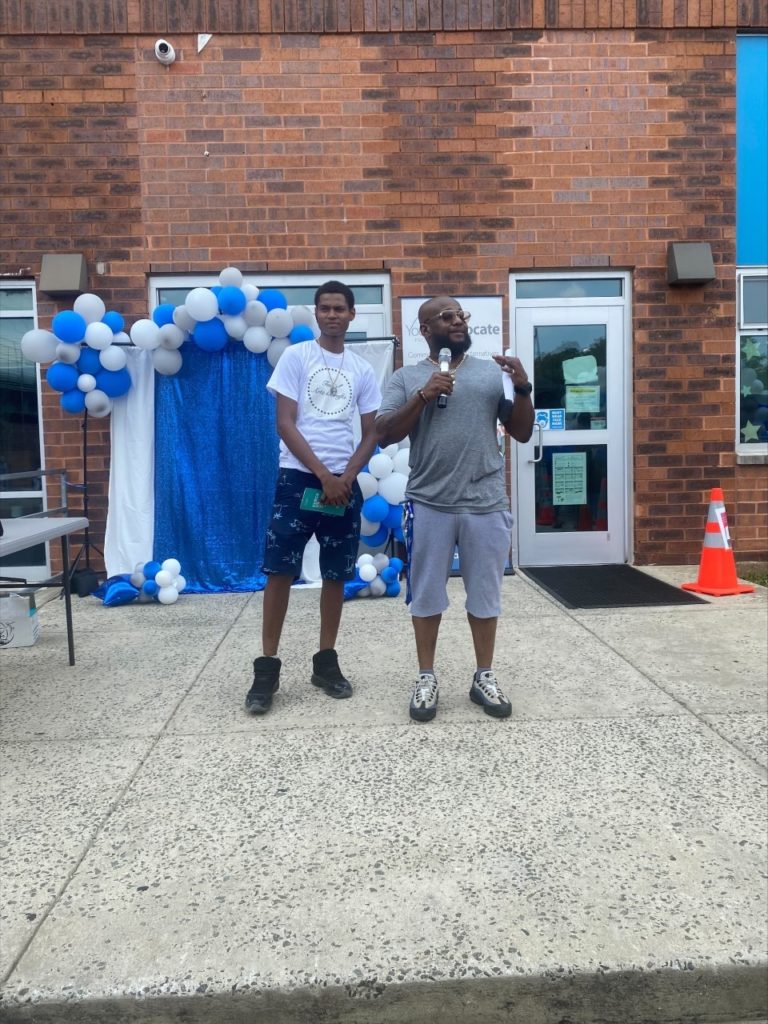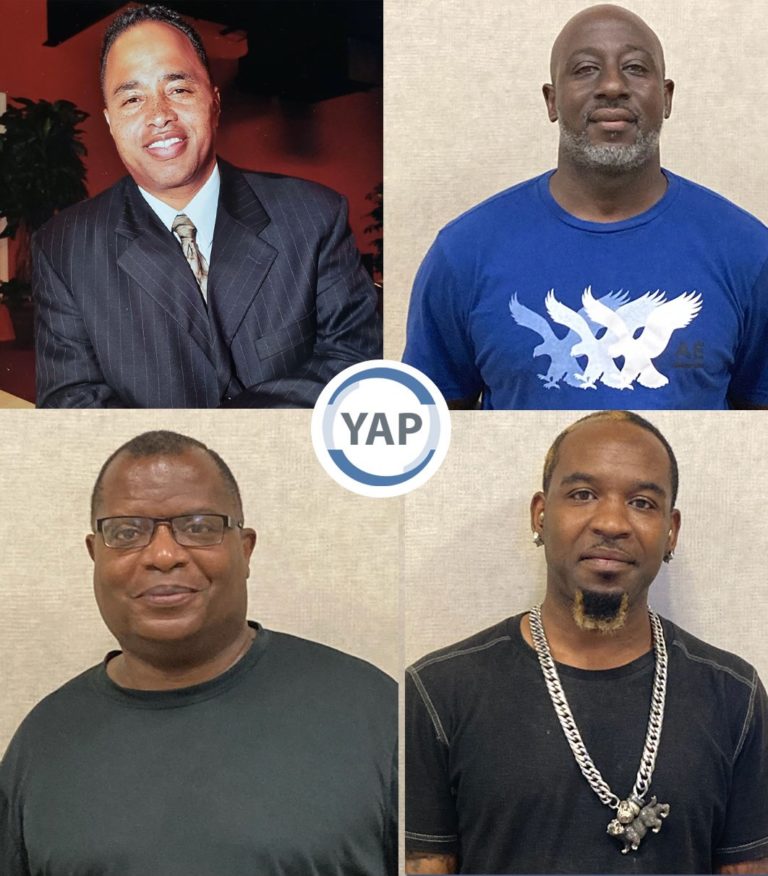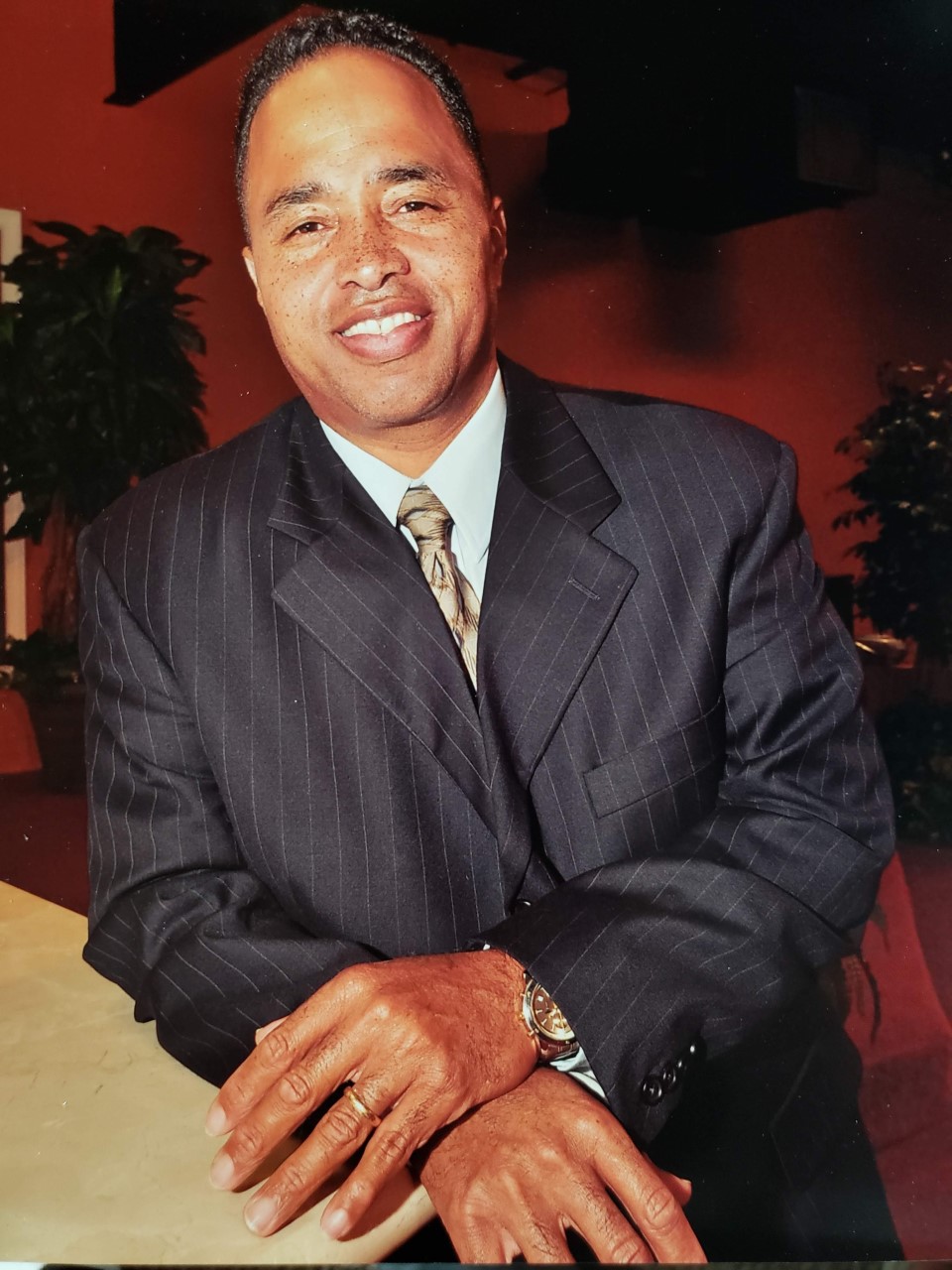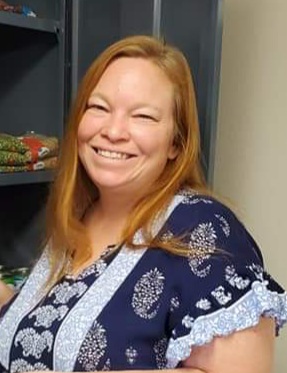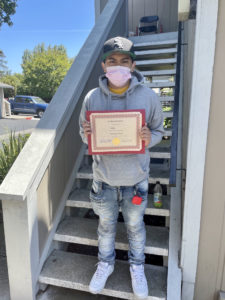
Chicago, IL — Whether he’s in the barbershop or at a Chicago event, Lee Jones is sharing stories about his job. He’s among those on the frontlines of a movement to transform lives and public systems. These days, Jones is also in full-force recruitment mode.
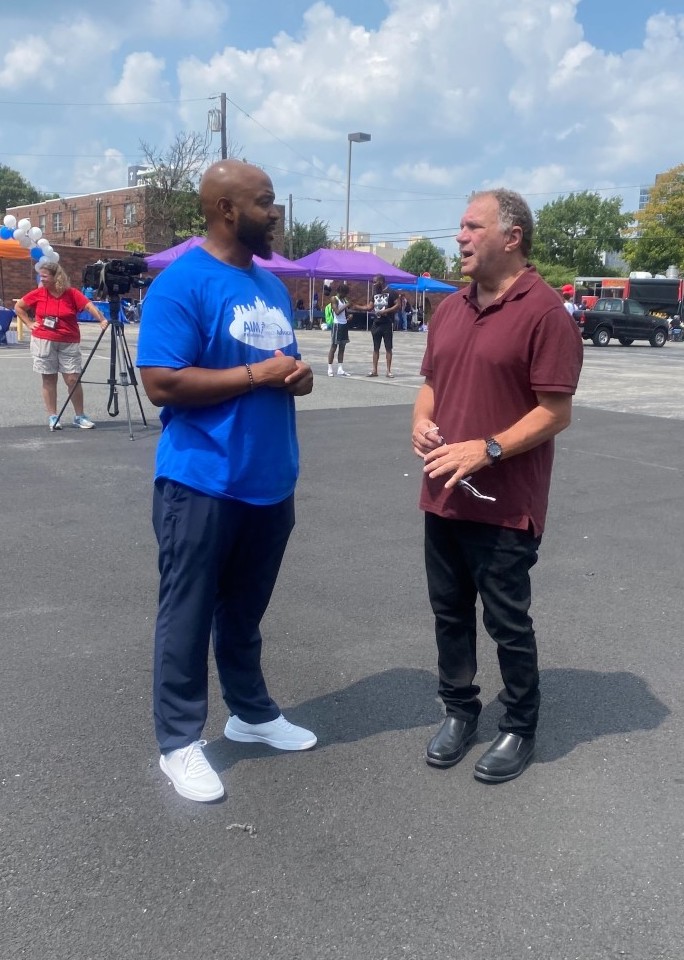
Lee Jones chatting his barber up about his work at YAP
“There are a lot of people who want to do this work and have no idea jobs exist that pay people to do it,” he said. “But I’m on the Southside and Westside spreading the word, and there are lots of people filling out applications.”
Jones is a program director at YAP. That’s the acronym for Youth Advocate Programs (YAP), Inc., a unique national nonprofit that provides community-based alternatives to youth incarceration, out of home placement and neighborhood violence. In Chicago for 15 years, YAP is in nearly 150 communities in 31 states and the District of Columbia.
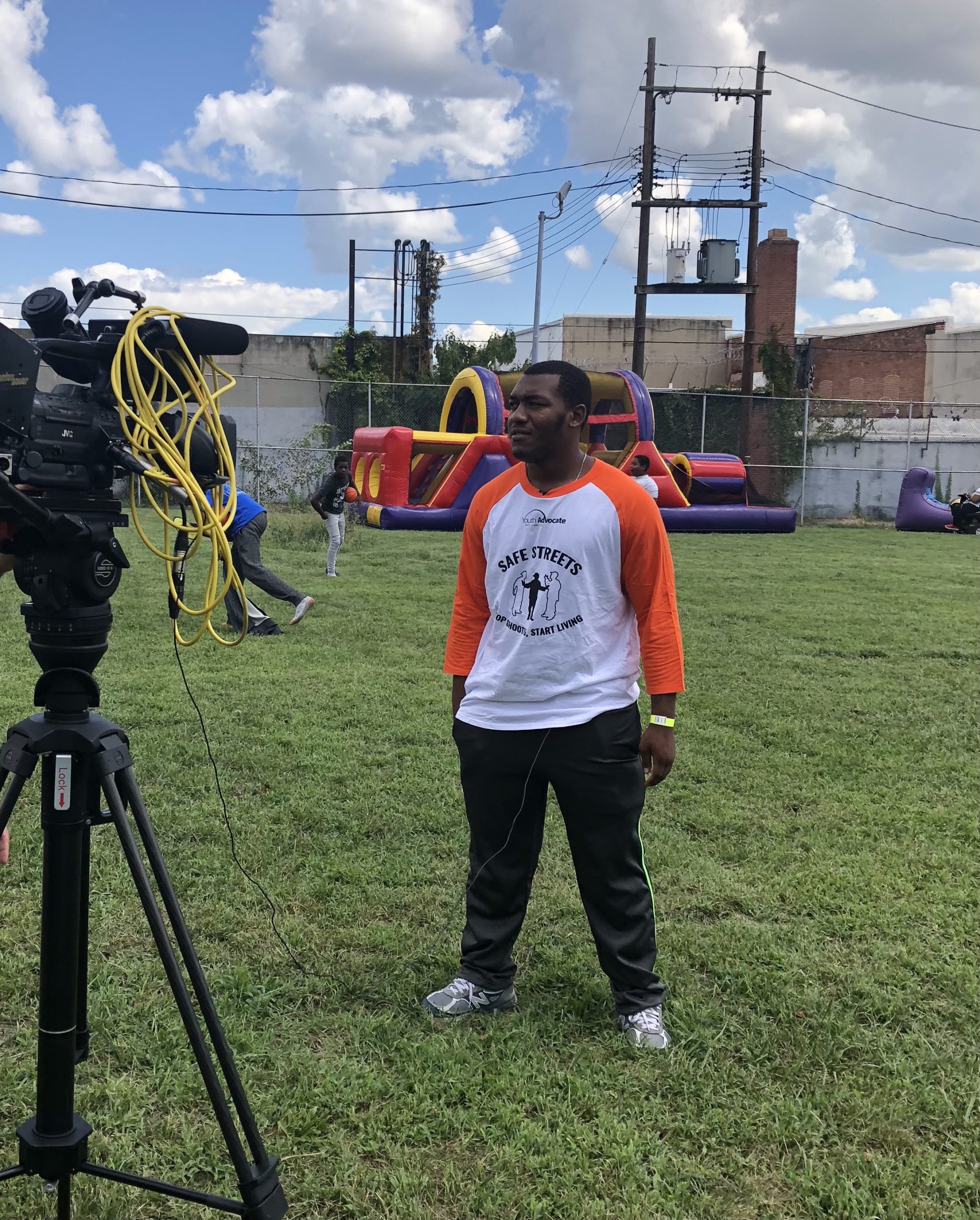
Lee Jones works with youth in a Chicago YAP program that serves as a community-based alternative to youth incarceration
People who work for YAP are in every way Advocates for young people with complex needs — kids with poor school attendance, involvement with the justice system, heavily exposed to violence and trauma; youth challenged with developmental disabilities, mental health needs and/or other struggles.
YAP’s training gives employees skills to help program participants see their strengths and connect them with tools to set and achieve positive goals. As part of the YAP model, staff work with the program participants’ parents, guardians, and if necessary, the entire family to help firm the young person’s foundation. Their work is the real deal. It’s what systems change looks like.
Lee Jones sets up to recruit for YAP at a Southside Chicago shop
If you’re like Jones and have the passion and magic that will change lives and public systems, check out jobs at YAP by clicking on www.YAPInc.org. You can follow the organization on Twitter @YAPInc.
Bagdad, Ariz. — If someone had told 18-year-old Emarie this time last year that she would be where she is now, she would have highly doubted it.
Emarie will soon head from Bagdad, Arizona to Mesa, where armed with work experience and a great reference from her boss, she will be in a new job at the restaurant where her mother is a longtime employee. A few months back, Emarie was working to get off probation for an arrest that took place at home when an altercation with her father and stepmother turned physical.
“I feel like I’m a lot happier and confident in who I am,” she said.
Emarie points to Amber LaFon as a central character in her turnaround story. LaFon is program coordinator at Yavapai County Youth Advocate Programs (YAP), Inc. A national nonprofit in 31 states and the District of Columbia, YAP partners with youth justice, child welfare and other social services systems and municipalities to provide safe, effective, community-based alternatives to youth incarceration, out-of-home placements, and neighborhood violence.
Youth Advocate Programs (YAP), Inc. Advocate Amber LaFon with former program participant Emarie
Yavapai County Juvenile Probation Department is one of six youth justice agencies in the U.S. to receive Safely Home startup funding a couple of years ago to launch YAP programs. The grants came through a partnership with YAP and the Center for Juvenile Justice Reform at Georgetown University aimed at improving outcomes for youth justice systems.
As her Advocate, LaFon, who lives in Emarie’s community, received YAP training to help her see her strengths while connecting her with tools to help her turn her life around.
“I am honored to help kids like Emarie through YAP, and I think YAP is such an important, vital, service to kids who are often overlooked,” she said.
Most of her work as Emarie’s Advocate came during the height of the COVID-19 pandemic when Bagdad, like most U.S. communities, had all but shut down.
“Quarantine was rough. That was the saddest I’ve ever been,” Emarie said.
In addition to coping with her loneliness, Emarie had to work through her parental relationship issues, which was particularly challenging with her living with her dad and stepmom in close pandemic quarters. But before they could even get started, Emarie had to move beyond her initial reservations about working with LaFon.
“I didn’t like her daughter,” Emarie said, acknowledging that while her own reputation was one of a tough girl, everyone knows LaFon’s daughter to be just the opposite.
Bagdad is a copper mining town with a population of 2500 people. There’s one high school, no stop lights, and for most people, few opportunities to reshape a reputation, let alone make new friends.
After spending a little time with LaFon, Emarie found herself becoming more independent in her thoughts and actions. She opened to getting to know LaFon’s daughter and couldn’t help seeing her as a reflection of her new Advocate, whose kindness was hard to reject.
When Emarie dropped out of high school, LaFon encouraged her to re-enroll online and has continued to support her plans to earn a GED. LaFon was always quick to respond when Emarie got into arguments at home and was 100 percent supportive of Emarie when she applied for a job at Bagdad’s steak house.
18-year-old Emarie is off probation and excited about her future
“She’s worked her way up from dishwasher all the way up to cook,” LaFon said. “I was talking to the owner of the steak house, and she was saying how now everyone there loves Emarie.”
While winning friends at work came quickly, making a whole new name for herself proved more difficult.
“Where we live, the culture is different from anywhere else,” LaFon said. Once you do something, the whole town labels you and judges you. Nothing will change their mind.”
When pandemic restrictions loosened, more people saw Emarie at the steakhouse and out and about with LaFon during her time off.
“We’d go shopping or to movies and my favorite place – Dutch Bros,” Emarie said. “I started doing things I like instead of what others say I should do,” she said.
Pleasantly surprised, LaFon said before she knew it, others in Bagdad were looking at Emarie differently.
“Most people in and around her life just wrote her off as a ‘bad kid,’ but now they see what I see. She’s a great person, hardworking, driven, hilarious and kind,” LaFon said. “People can see it now that Emarie has self-confidence and can see the self-worth that I see in her. I honestly believe YAP saved Emarie’s life by just showing up, building relationship, finding, and encouraging her strengths and showing her who she truly is and can be. “
LaFon said Emarie proved that even in Bagdad, where reputations die hard, changing people’s minds about you is possible.
“The opinion of the community has completely changed. She’s a good girl. They just needed a minute to see that. I don’t think that would have happened without YAP,” LaFon said. “I adore this girl. She’s pretty special and is going to do very well in life.”
LaFon said beyond those who are just now getting to know her, Emarie’s mother notices the change and that even her father can see the difference. But most important, Emarie does, too.
“I feel like I know myself so much more,” she said. “I really just found my soul.”
To learn more about YAP, please visit www.YAPInc.org. Follow the national nonprofit on Twitter @yapinc.
Most young people who’ve received services from Chicago Youth Advocate Programs (YAP), Inc. will tell you they have much love and respect for Monique Robbins. YAP is a national nonprofit in 31 states and the District of Columbia that provides community-based services as an alternative to youth incarceration and other out-of-home placements. Monique was one of Chicago YAP’s first employees when the nonprofit launched in the city 15 years ago.
“I meet the youth and families I work with where they are and help them go where they want to be,” she said. “I see young people’s needs and act on them no matter their background or circumstance.”
Monique Robbins leads the Chicago YAP Choose to Change (C2C) team
Monique has worked in many capacities with Chicago YAP since 2009 and is currently co-Director of Choose to Change (C2C), which engages youth heavily impacted by violence and trauma. Monique’s team of YAP Advocates delivers intensive individual and family wraparound supports while Children’s Home & Aid provides trauma-informed therapy to help the youth build healthy decision-making tools to live safe and successful lives. Through a randomized controlled trial, researchers at the University of Chicago Crime Lab and Education Lab have found that C2C reduces violent-crime arrests by almost 50 percent and increases attendance in school by about a week.
When describing her devotion to her work and the youth she serves, Monique says it’s simple. She cares.
“Many of the youth I’ve encountered in my career have lost trust in adult role models,” she said. “The power of adults who work in partnership with young people to build persistent, caring relationships, find their potential, and have a genuine interest is invaluable to the success of their futures.”
Monique said many of the relationships she has developed with youth resemble that of an extended family. She has always been motivated to empower communities, neighborhoods, and families in her encounters by making them the priority.
If you’re interested in working with Monique and her team of Advocates or other YAP teams across the U.S., apply at www.YAPInc.org, where you can also learn how to support the organization through a donation. Stay in touch and share other positive stories by following the organization on Twitter @YAPInc.
Baltimore – Tumani never thought he would make it to see his 21st birthday. Last year, at age 20, he was almost proved right when he was shot in the head. The shooting (an assailant has not been identified) left him with short-term memory loss, loss of hearing in one ear, blurriness in one eye and face paralysis.
Born in Baltimore where he spent most of his childhood, Tumani was living in Wisconsin when he was shot. Wisconsin is where his mother relocated to during the two years Tumani spent in youth prison for carjacking and armed robbery.
Former YAP program participant Tumani still keeps in touch with his Advocate.
“I got locked up on December 17, 2017,” Tumani said. “(Being locked up) made a big impact on my life and my outlook on freedom and how it can be snatched away in a second.”
Once released at age 19, Tumani was referred to Youth Advocate Programs (YAP), Inc., a national nonprofit that provides services to young people and families as alternatives to youth incarceration and out-of-home placements. In 31 states and in the District of Columbia, YAP matches youth justice and child welfare program youth with neighborhood-based Advocates who help them see their strengths and connect with tools to achieve their goals.
Hesitant at first, Tumani didn’t mesh with his first YAP Advocate. Then he was paired with Jamal Connor.
“Jamal keeps me on my toes, he’s that guy,” Tumani said, speaking of their relationship in present tense, although he graduated from YAP before moving out of state. “I just moved back to Baltimore like a month and a half ago. As soon as I got off the bus Mr. Jamal was right there ready to pick me up.”
When Connor first met Tumani, he said he was unwilling to take many directives, but the two clicked from the beginning.
“(Tumani) was very vulnerable about where he was at in his life, what type of Advocate he needed at that point in time and what type of guidance that he needed,” Connor said. “He was pretty stern that if it wasn’t like that then he didn’t want to be involved.”
Tumani, who is very close to his younger siblings and cousins, has a lot of goals and aspirations, but just needed some consistency. Before heading to Wisconsin, he was working and had his own apartment, but worried, knowing that he couldn’t escape hanging out with the wrong crowds when he got off work.
“No matter what he went through he always remained bright and aspiring with his goals and trying to stay on task,” Connor said. “He is a product of his environment in that neighborhood and having to survive in that neighborhood. I tried to give him some tutelage to stay focused and stay grounded. Just the fortitude the young man had and the feeling of responsibly that he accepted that he had to do something.”
Tumani in August 2019 at a YAP Penn North neighborhood back-to-school event where he volunteered to offer tips to parents.
Although Tumani graduated from the program, Connor explained that once Advocates point program participants in the right direction, they want to see the result and make sure they stay on track. He is currently helping Tumani get his documents together so that he can get assistance and support and get the rehabilitative therapy he needs to get back to work. The bullet from when he was shot is still lodged in his head.
“I don’t want to set anyone up for failure,” Connor added. “I tell them to call me and I feel like it’s a duty of mine to answer. He’s a young man with a high level of resilience and very courageous.”
“YAP has got to be the best thing that ever happened to me in my life,” Tumani said. “All the knowledge and everything that I know, all of that stuff came from Mr. Jamal and the YAP program. My eyes are still bright; I still got that twinkle. Sometimes I feel I lost a sense of value in myself, but I still try my best.”
Click here to see a video of Connor and Tumani from 2019. Learn more about YAP at www.yapinc.org and follow the organization on Twitter @yapinc.
Dauphin County, PA — Earlier this year, Dauphin County Youth Advocate Programs (YAP), Inc. Clinical Supervisor Matthew Powerygot a call from the mother of the first child he worked with when he started at the nonprofit back in 2014. At that time, the child was a second grader and as his therapeutic staff support (TSS), Matthew was helping the student learn how to express anger without throwing chairs, flipping tables, and tearing things off classroom walls. The call was an invitation for Matthew to videotape a surprise birthday message for the now soon-to-be high schooler who completed middle school with high honors.
Headquartered in Harrisburg, PA, YAP is a high-impact national nonprofit that provides community-based alternatives to youth incarceration, out-of-home behavioral health treatment and other congregate care. Matthew started at the nonprofit right after earning a psychology degree from the University of Pennsylvania.
“I was looking for an opportunity to work with kids,” he said. “As a TSS, I was going into the community, in the schools, home environments, wherever we were needed.”
YAP, which has programs in 31 states and the District of Columbia, trains frontline employees to empower individuals and families with skills to recognize their strengths. The nonprofit’s model is based on connecting program participants with tools, which in some cases include basic needs resources, to help them achieve their goals.
After two years at YAP, Matthew knew he wanted to stay in the behavior health services field. Being on a part-time work schedule enabled him to set his own hours, which made completing a master’s degree in applied psychology at Harrisburg’s Penn State campus manageable. He was also already in place to complete clinical internship requirements for his advanced degree. Since joining YAP, Matthew moved into several behavioral health positions before being promoted to lead YAP’s Dauphin County Behavioral Clinical team.
Matthew Powery — “We value improving our community. It’s a challenging job. It’s baby steps; but it’s rewarding when we see people making progress.”
“This is very meaningful work,” he said, speaking for himself and his teammates. “We value improving our community. It’s a challenging job. It’s baby steps; but it’s rewarding when we see people making progress.”
Matthew said the first child he worked with is a perfect example. He worked with the student for more than three years.
“You could tell this child was one of the brighter students; someone who needed motivation to harness their academic talent,” he said. “By the end of fifth grade, this student was taking pride in their progress; that was the most drastic change. By the time the child was discharged [from the YAP program], we were looking at a model student.”
In addition to working with children, Matthew has also provided adult mental health services. He’s particularly proud of a program participant who struggled to overcome cultural barriers to welcome tools he offered to cope with frequent panic attacks. When YAP discharged this program participant, 10 attacks per day were reduced to one a month.
Matthew is aware that since the onset of the COVID-19 pandemic, many people have been questioning their career choices, even quitting their jobs as they look for meaning in what they do.
“This is really fulfilling work. If you’re working in other industries and you want to do something that’s more community-focused, you can come to YAP and harness that passion,” he said. “If you come in with an understanding that you’re not doing this job to get rich, it’s easy to stick to it.”
Matthew feels fortunate to have found meaningful work early on…. and a place where he’s happy to do it.
“Flexibility is a huge benefit of working here. You set your own schedule and there are no complaints when you need time for self-care,” he said. “You meet some of the best people who have great intensions and want the best for their community. I owe a lot of friendships to YAP and have met some wonderful people here. You find people who want the best for others, and that’s refreshing.”
Seminole County, Fla. — Vita looks at her math and science assignment grades and can hardly believe what she sees – 80s and 90s in math and 100% in science! The Seminole County, Florida 14-year-old is repeating seventh grade at a new school after enduring ongoing bullying from students at her old one, including an incident that students shared on social media.
What she experienced disrupted her learning and home life. She took out most of her anger on her father.
“I screamed and all that stuff,” she said.
For Vita’s parents, whose primary language is Spanish, dealing with their daughter’s pain and outbursts and identifying resources to help her was beyond difficult. It was also tough for her younger sister and brother. More than once, police got involved.
Early in the summer, a Seminole County Embrace Families program that diverts young people from the youth justice system, referred Vita to Youth Advocate Programs (YAP), Inc., a national nonprofit that provides services to young people and families at home as an alternative to youth incarceration and other placements. In communities in 31 states and the District of Columbia, YAP hires and trains Advocates who live near and share cultural values and experiences with program participants to empower youth and families to see their strengths and connect them with tools to nurture them.
Vita remembers the day she met Rusemery Araujo-Rosales, the YAP Advocate assigned to her and her family. Araujo-Rosales grew up in Venezuela, and like Vita’s family, immigrated to the U.S.
Vita and her Youth Advocate Programs (YAP), Inc. Advocate Rusemery Araujo-Rosales
“I saw that she was nice, but I was scared to talk to her,” Vita said as she reflected on the day that she and her parents met Araujo-Rosales.
Araujo-Rosales said Vita has come a long way since that first day.
“I saw an introverted little girl, willing to comply but hesitant to engage in social activities,” she said. “She was not interested in being part of the community. Anger management skills were an issue.”
Araujo-Rosales has taken time to build a bond with Vita and provide her with the support she needs. At the same time, she works with Vita’s parents to ensure that they’re connected to tools they need to firm the family’s foundation.
“Now, I talk a lot with her. I like to talk with her a lot about anything,” Vita said. “We laugh and we do a lot of stuff.”
Vita most enjoys learning about her Advocate’s birth country and cooking with her, especially when she and her mother share their traditional Guatemalan dishes with her and try their Araujo-Rosales’ Venezuelan cuisine.
One of Vita’s favorites are her Advocate’s Venezuelan empanadas, and Araujo-Rosales has fallen in love with Guatemalan tamales, tortillas and other dishes Vita and her mom make with corn. She also likes when they play Guatemalan music.
As the summer ended and news arrived that schools in the county would safely reopen with COVID-19 precautions, Araujo-Rosales went into high gear. She knew that Vita could not return to her old school.
Working with YAP Program Director Seyny Dressler, she learned about and informed Vita and her parents about Step Up for Students, a special scholarship for students like Vita. Working up to the deadline, Dressler and Araujo-Rosales helped the family complete the application and get Vita enrolled in a nearby private school. Everyone was thrilled to learn that Step Up for Students agreed to provide a scholarship for full tuition, uniforms, field trip fees and school supplies for all three children.
Vita’s been in the new school for just a few weeks and already, her future appears brighter than ever. For her parents, seeing those first grades was pure joy.
Vita with her mom
“Words can’t describe how immensely proud I am of her,” her mother said in Spanish, as Dressler translated. “Before [during the pandemic], the old school just gave her a laptop and she had to fend for herself. Now the new school is taking time with her to make sure she learns.”
Vita is already making friends at her new school, which has made a big difference at home, too.
“I feel better now. I feel more accepted because everyone is nice to me. I used to just go to my room,” she said. “Now I hug my mom.”
Learn more about YAP at www.yapinc.org and follow the organization on Twitter @yapinc.
Philadelphia – At age 14, he threatened a teacher; but instead of lockup, Alonzo got a personal Advocate.
Four years after completing his program at Philadelphia Youth Advocate Programs (YAP), Inc., Alonzo was one of two former program participants who shared their stories at the Resilience and Peace Rally held at Philadelphia YAP’s headquarters on Aug. 26.
The event was held for former and current Philadelphia YAP program participants to motivate each other and provide an opportunity for them to come together, take a stance against violence, and stand up for youth justice reform. Food, a raffle, and entertainment were also provided.
“Before YAP, I was bad and doing dumb stuff,” Alonzo, now 18, said. “I would recommend YAP to people who needed it like me.”
For more than four decades, youth justice systems have referred thousands of Philadelphia youth justice and child welfare systems-involved young people to YAP, a national nonprofit providing community-based alternatives to detention, youth prison, away-from-home placements, and neighborhood violence in 31 states and the District of Columbia.
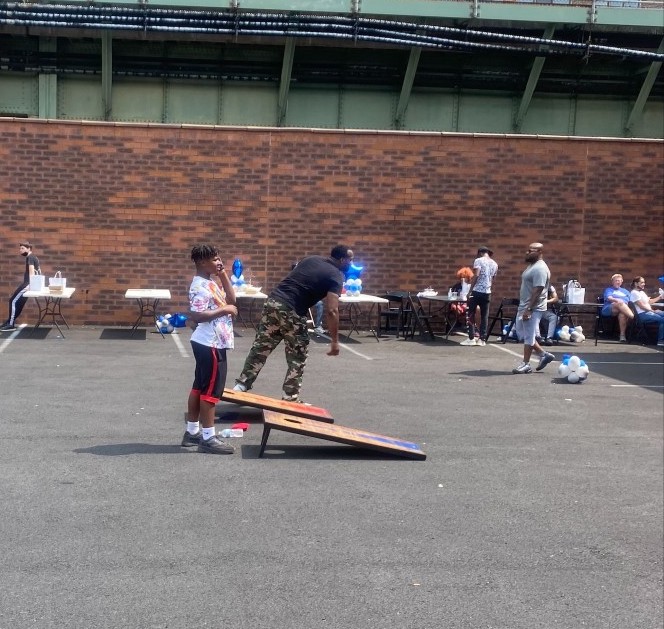
Attendees play cornhole.
YAP Advocates help young people identify their strengths and empower them and their parents and guardians with accessible tools to turn their lives around.
Among the tools is YAP Supported Work, where young people work for local employers while receiving a paycheck from the nonprofit– often to repay court fees and restitution.
Alonzo’s mother, Christina, owner of Tina’s Arts & Crafts, created decorations for the rally and like her son, is thankful for what YAP did to support her son.
“He’s doing much better,” she said, adding, “He’s not in the streets like he was before.”
Carl Walker, the YAP Advocate who supported Alonzo and his family, joined them at the rally. Walker credits Alonzo for using the program’s tools to control his anger and get his schoolwork done, adding that he graduated from Excel Academy North and is now working.
Fred Fogg, YAP’s Assistant Vice President of the Mid-Atlantic Region and YAP CEO Jeff Fleischer.
“He has really matured and grown up,” Walker said. “Before (YAP) he was getting into trouble and misbehaving. He is a lot more focused now.”
The Philadelphia YAP team hosted the rally as an opportunity to inspire, encourage and celebrate the successes of program participants. To learn more about YAP, please visit www.YAPInc.org. Follow the organization on Twitter @YAPInc.
This weekend, Youth Advocate Programs (YAP), Inc.’s new Alternatives to Violence (ATV) team will be among those at the Charlotte, Mecklenburg County QC Fest.
ATV, a Cure Violence Global model violence interruption program, will apply YAP’s 46-year-old principles of hiring neighborhood-based staff to provide unconditional support to give Charlotte’s Beatties Ford Road corridor residents alternatives to violence.
Now operating in 31 states and the District of Columbia, YAP is a high-impact social justice national nonprofit with evidence-based programs that serve as an alternative to youth incarceration and congregate placements. For the past six years, YAP has been applying its unique operating principles to the Cure Violence disruption model to introduce violence interruption programs like ATV to cities across the U.S.
Recently, the city and county introduced YAP ATV Site Supervisor Belton Platt. Platt and his team will work together to mediate disputes and connect their neighbors to individualized economic, educational, and emotional alternative-to-violence wraparound services and tools.
Like Platt, who spent 21 years in prison before turning his life around, the ATV team members, some of whom were formerly incarcerated, are committed to demonstrating that change is possible, serving as role models, and giving back to their community.
Belton L. Platt, Site Supervisor
Site Supervisor Belton Platt.
Belton L. Platt is a motivational speaker, mentor, chaplain, author, restaurateur, and community activist, among many other things. He comes to Youth Advocate Programs (YAP), Inc. as the Site Supervisor of Charlotte’s Alternatives to Violence program, where he will merge the lessons of his past mistakes with his community advocacy he’s done in the last decade since being released from prison. Beginning in 1989, Platt spent more than 21 years incarcerated for the distribution of drugs. A Charlotte, N.C., native, he understands the importance of mentorship and the impact a positive influence can make in the lives of youth. The father of 11 children, Platt tragically lost three sons to gun violence. In 2010, Platt founded Rock Ministries Church International Charlotte with his wife Mashandia Platt and their children. He is an author, and his life is chronicled in the book “Money Rock: A Family’s Story of Cocaine, Race and Ambition in the New South.”
Donnell Gardner, Alternatives to Violence Team Member
Donnell Gardner.
Donnell Gardner grew up in West Charlotte and was raised by a single mother who always had love for her community. Gardner said he went to college on a football scholarship and then took a left turn that landed him in federal prison on conspiracy charges. While in prison, he helped men get their GEDs and connect with their families. He said his longtime connection to his neighbors and his ability to connect people with one another are gifts he brings to his new role. President of Team True Blue, an antiviolence organization, Garner said he felt like this is something he was already doing and felt that he could be an asset to Youth Advocate Programs (YAP), Inc., and the Alternatives to Violence team. He looks forward to helping young people find alternatives to violence. “I’ve been doing this work all along, he said.” Now I get to be paid for it.”
Jamal Davis, Alternatives to Violence Team Member
Jamal Davis.
Jamal Davis joined Youth Advocate Programs (YAP), Inc.’s Alternatives to Violence team after learning about the program from Belton Platt, the program’s site supervisor. Davis has been out of prison for seven years after serving about a decade, divided between state and federal prison on conspiracy and gun charges. In the time that he has returned to his community, Davis has been committed to giving back to his community, even jumping out of his car to help people carry groceries across the street. Davis said Platt told him about YAP and what he could be doing as member of the Alternatives to Violence team and how he could help his neighbors.
BJ Murphy, Alternatives to Violence Team Member
BJ Murphy.
Longtime radio/podcast host, BJ Murphy has been involved with the Charlotte Peacekeepers, Fruit of Islam, and other Beatties Ford Corridor community organizations. With his experience of more than 45 years in working in Charlotte radio, Murphy is committed to helping young men and families in his neighborhood. He thinks being with Youth Advocate Programs (YAP), Inc.’s Alternatives to Violence team is a match made in heaven. He sees the program as a groundbreaking movement and looks forward to bringing other grassroots organizations into the movement to stop violence in the city.
Theirs are among too many stories lost in news headlines about gun violence in their neighborhoods. They are young people who are thriving because of their individual strengths, fostered by Chicago’s Choose to Change program, also known as C2C.
A partnership with Youth Advocate Programs (YAP), Inc., and Children’s Home & Aid, C2C provides young people with intensive trauma-informed wraparound and behavioral health services to help them develop healthy decision-making tools while connecting them and their families with resources to nurture their gifts and talents. The program focuses on young people impacted by neighborhood violence who face complex challenges, including exposure to trauma, justice system involvement, and school disengagement.
JaShon graduated top of his class
“JaShon graduated top of his class!
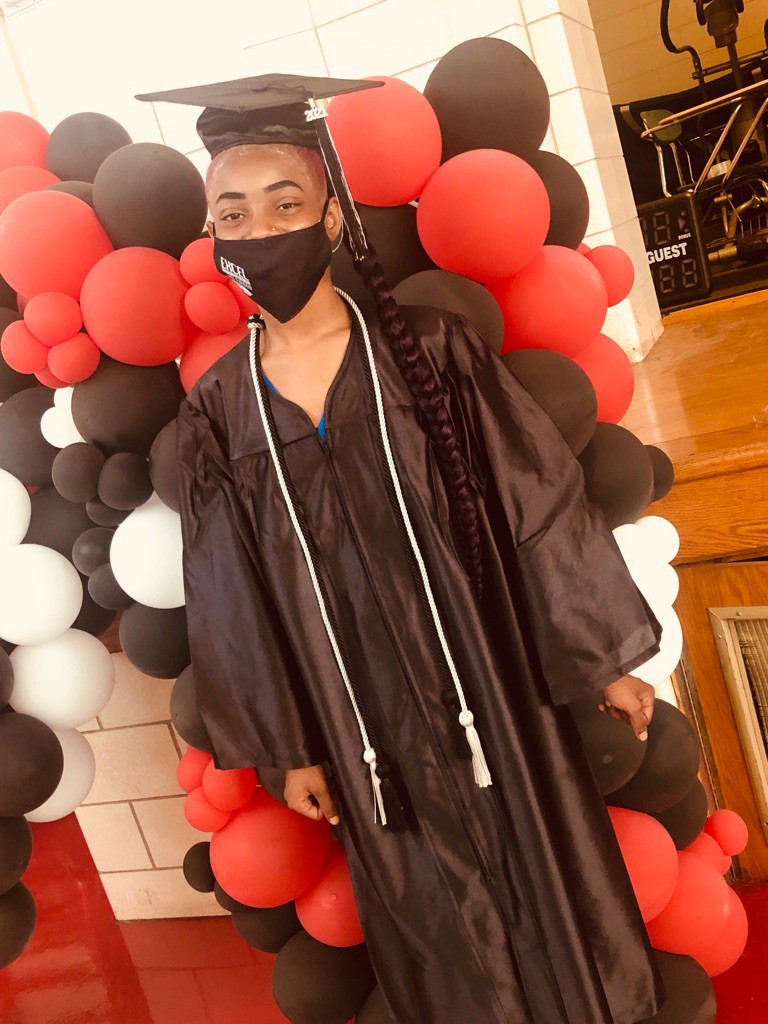
Ariel graduated from Excel Englewood at the top of her class
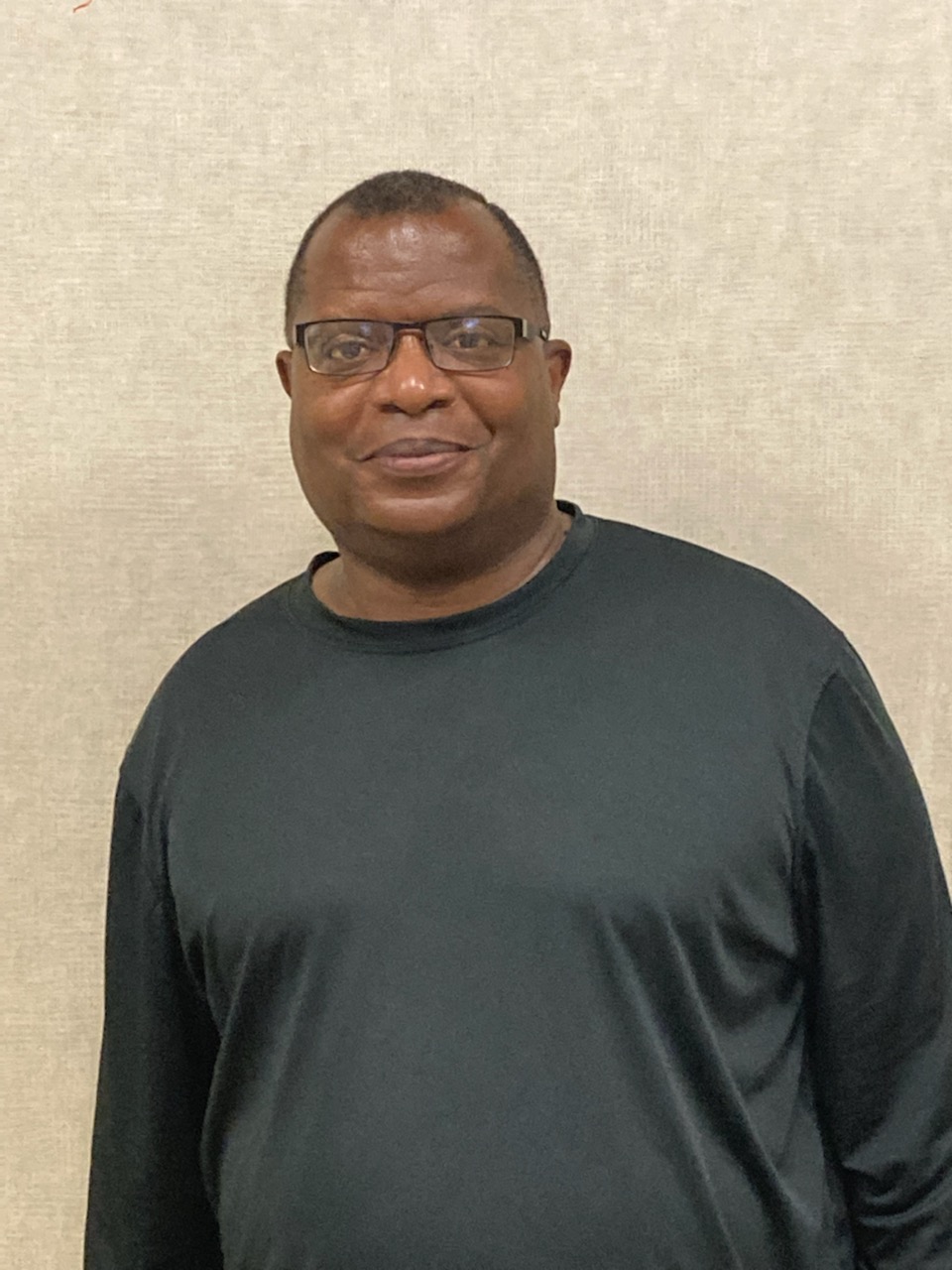
Ariel is graduating from Excel/Englewood at the top of her class, and she will start classes at Chicago State University this summer,” said YAP Midwest Regional Director of Quality Improvement Dina Harris.
Like a proud parent, Harris joined YAP Advocates Cassandra Bell and Jean Johnson to boast as they shared program participants’ high school graduation and prom photos.
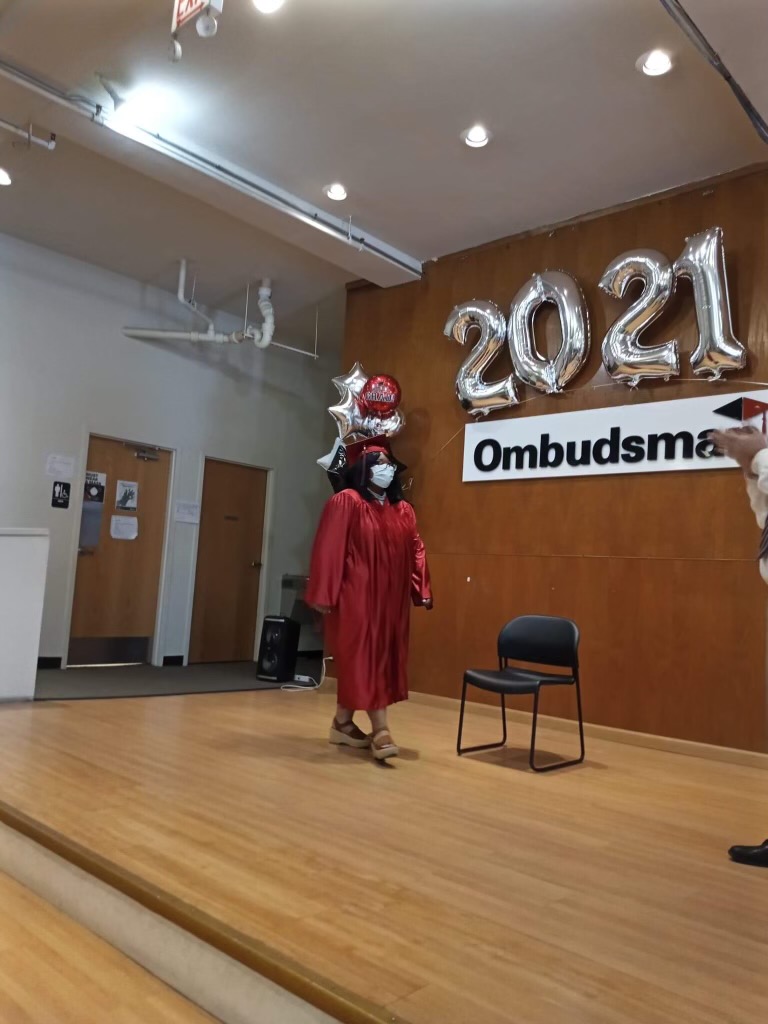
Bell recalled the persistence of Carriana, how her life was full of tragedy as she endured continuous bullying, transferring four times before landing at Ombudsman South. “While Carriana was trying to gain control of her life, her aunt, who was also her best friend, was murdered,” Bell said.
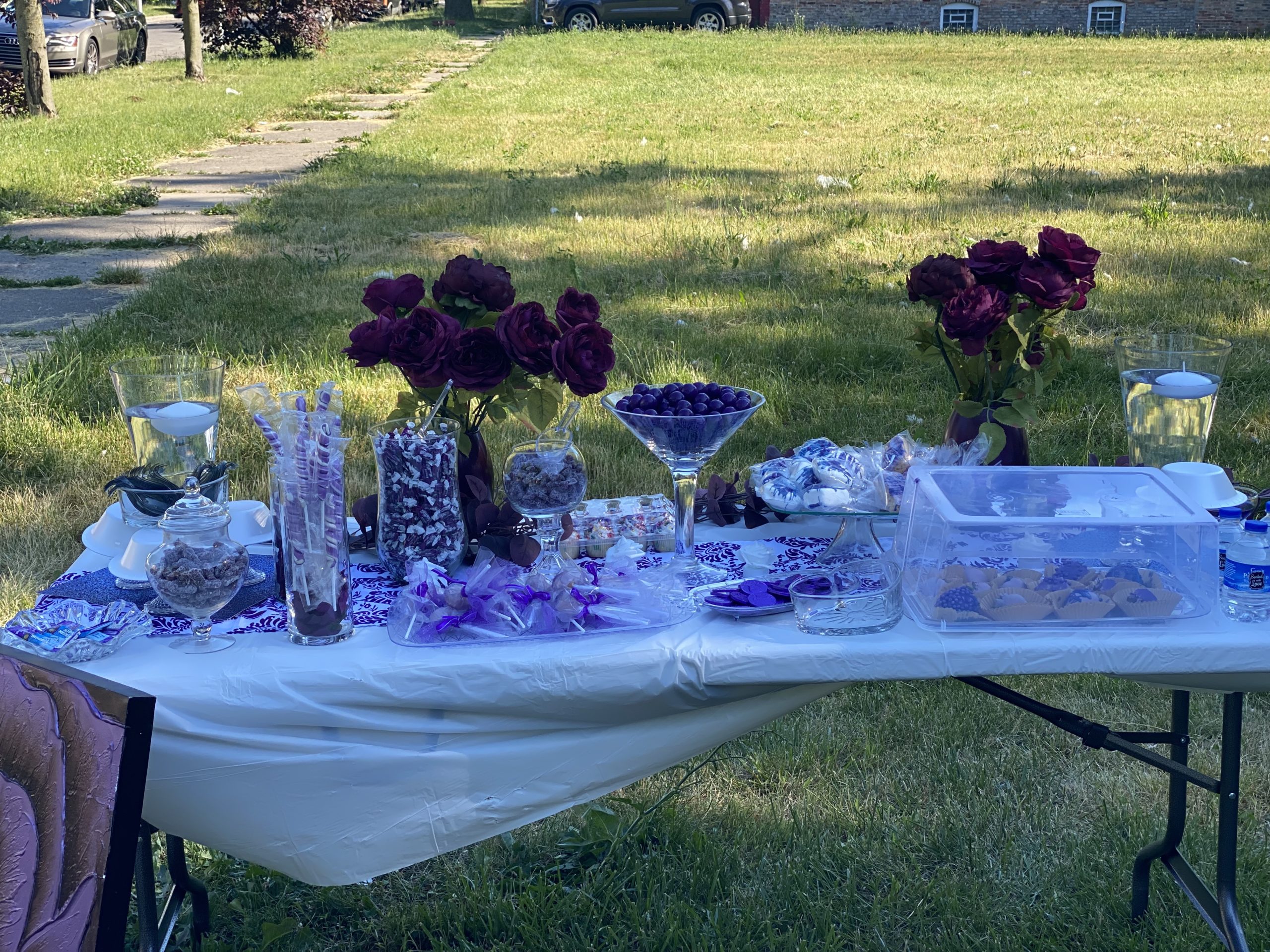
Chicago YAP team celebrated with Carriana, decorating a dessert table in her favorite colors
“Carriana graduated with her class, and we hosted a prom send-off for her that included a dessert table in dedication to her aunt with decorations in all her favorite colors.”
C2C launched in 2015 in the greater Englewood communities of Chicago and has since expanded in the South and Westside neighborhoods, engaging more than 800 youth ages 13-18. The C2C team is touched by each student’s unique struggles and ability to achieve their goals.
Alexis was valedictorian at Ombudsman West
Johnson shared a graduation photo of a participant named, Alexis, saying she “has come a long way.” “She was valedictorian at Ombudsman West and plans to attend the University of Illinois Chicago campus for psychology. She has enjoyed C2C and she’s in YAP’s summer program. She’s definitely ready to pursue her future.”
Among the photos Bell shared were pictures of Melanie, who suffered personal losses as a young child including being separated from her mother. Melanie was nine credits away from graduating when she became a C2C participant.
“From the moment we met, we worked on our plan to achieve the impossible,” Bell said. A mantra she and Melanie shared was, “It’s possible because I’m possible.”
YAP’s services are based on the nonprofit’s youth justice model, which provides community-based and individualized advocate and family services. Children’s Home & Aid provides weekly trauma informed – cognitive behavioral group sessions.
Youth Advocate Programs Advocate Cassandra Bell with program participant, Melanie
“I would pick her [Melanie] up, go to school with her and have homework time with her,” Bell said, adding that she also made sure Melanie spent time with “her YAP brothers and sisters [other program participants].” Central to Melanie’s success were her teachers and members of the staff at Ombudsman South High School.
Through a randomized controlled trial, research at the University of Chicago Crime Lab and Education Lab have found that C2C reduces violent crime arrests by 50 percent while increasing school attendance by about a week.
“The staff was amazing and as a team, we worked together to turn the impossible into being very possible,” Bell said. “Hard work pays off! [Melanie] graduated Class of 2021.”
Youth Advocate Programs (YAP), Inc., partners with the Yavapai County Juvenile Probation Department to provide community-based alternatives to youth incarceration and out-of-home placement. A nonprofit in 31 states and the District of Columbia, YAP launched in Yavapai County in 2020. The site is one of six youth justice startups launched with grants from the Safely Home Fund, a joint initiative with YAP with the Georgetown University’s Center for Juvenile Justice Reform to create community-based alternatives to youth incarceration.
The key to the success of program participants are their neighborhood-based Advocates who provide intensive family-based services that help youth see their strengths and establish their goals.
We asked the Yavapai County YAP Advocates to tell us what they enjoy about their jobs and here’s what they had to say:
Gordon Burton and Cami Pollard:
“For us this is a way to contribute to the local community in which we have chosen to retire. Part of the reward for us, besides a stronger community, is being able to see young people grow and learn to make positive choices in their lives and make contributions themselves to the community.
Further, we have the opportunity to learn more of the Indigenous culture that is all around us.”
Ivan Morales:
“What I love most about being a YAP Advocate is being a kind, loving leader and role model for my kids!”
Daniel Nash:
“To bear witness to or be a part of when, a child, who’s life you know to be full of trauma and uncertainty, genuinely smiles.”
Kathy Roaleen:
“When a program participant shares something from their heart and thanks me with a grin (or tears) just for listening. So simple and so profound.”
Audrey Young:
“The most rewarding part of being a YAP Advocate so far has been hearing about individuals hopes for the future. Everyone has desires and dreams for what they can accomplish with their lives and the numerous things they can become. Hearing individuals openly talk about those wants is truly inspiring. The ability to lay out a plan for the future and discuss the steps needed to accomplish those plans has even pushed me to plan a little bit more in my life. While scheduling day to day activities might still seem daunting to them the idea of what the future holds is still exciting which in turn makes me delighted to work with them through harder times to help them hopefully achieve, as close to, their ideal future as possible.”
Eric Schulze:
“I think that the easiest (and one of the best) answers to this question is getting to see the growth that a YAP youth undergoes as they go through our program, encountering challenges and developing new skills. But the best, most rewarding thing about this wonderful work to me is when one of my boys recognizes growth in himself. All too often, the youth we work with are told that they have failed or that they aren’t good enough, and a punitive justice system is hasty to reinforce that message. To see a youth, take ownership of their future, participate in their self-growth process, and then get to look back and see that they have created something in themselves that cannot be taken away is absolutely extraordinary. To see a young man or woman take pride in who they have become, and to know that I had a hand in their journey is the best gift that I could ever receive.”
Amber LaFon:
“The most rewarding aspect about being an advocate is reaching that inner trust in a kid. Seeing the “light” click on in their eyes when they realize there are good people in the world that care about them and for the first time, they feel safe, important, and worthy. They finally let go, have fun, smile, laugh, play, and just be a kid. First, you see it in their reaction to you but as time goes on you see them connecting with the community in the same way. That is awesome.”
For more information about becoming an Advocate or about Youth Advocate Programs, visit yapinc.org. Follow YAP on Twitter @YAPInc.
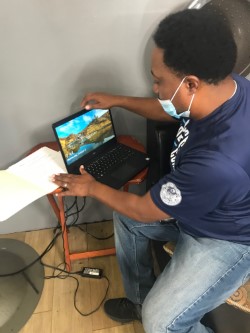
Abdul just turned 18 and for the first time in a long time sees his life moving in a positive direction. He describes the past few years as ones consumed with arrests, school absences, court appearances, detention, and probation – consequences, he said, of his own bad choices.
Abdul said it wasn’t until 2020 that he realized why he’d let things get so out of control and that he holds the power to change his life. That’s when he met Veron Rawls from Youth Advocate Programs (YAP), Inc., whom he credits for believing in him and helping him see his strengths. YAP is a national nonprofit in 31 states and the District of Columbia that provides community-based alternatives to youth incarceration, out-of-home placement, and neighborhood violence.
Hamilton County (Ohio) Juvenile Court is one of six U.S. youth justice systems that received Safely Home program startup grants in late 2019 through YAP’s partnership with Georgetown University’s Center for Juvenile Justice Reform (CJJR). YAP and CJJR collaborated to create the unique grant to provide a year of funding to seed innovative community-based rehabilitative services for the highest-risk youth, many whose histories include serious offenses, multiple arrests, and lengthy out-of-home placements.
YAP Advocate Vernon Rawls with 18-year-old Abdul, who is in a peaceful space since receiving services from the community-based alternative to youth incarceration program
“Working with Mr. Vernon has lifted a weight off my shoulders,” Abdul said. “When I was a little kid, I loved school; whenever I picked up a book, I enjoyed it. My father was locked up when I was two or three and as I got older, I was having problems with my stepfather. I started smoking, becoming a follower — robbing people, and getting locked up,” he said. “When I got into YAP and met Mr. V., I felt blessed. Until him, I never had that consistent male figure to tell me how to be a man.”
The YAP service model is based on hiring and training community-based Advocates to guide program participants in creating individualized service plans while connecting them with tools to achieve their goals. Meantime, the Advocates build rapport with the young people’s parents and guardians and do everything they can to assist in firming the family’s foundation.
“I didn’t want to finish school because I’d missed so much that I was behind,” Abdul said, adding that his personal YAP service plan includes working through the summer and completing his senior year in the fall. “He [Rawls] helped me get my license; helped me look for a job, and always encourages me to stay focused on finishing school.”
Among the tools available to the Advocates is YAP Supported Work, which enables YAP to provide income for young people in exchange for businesses providing youth with on-the-job work experience. While Rawls was able to help Abdul find a job at a factory, he also connected him to a YAP Supported Work partner who has provided mentorship and volunteer opportunities to support Abdul’s ultimate goals of becoming a business owner.
“The owner of Roots, Seeds and Oils, has spent time with him, educating him about how she purchases and sells natural healing products, gemstones, herbs, ginger juice, things like that,” Rawls said. “Abdul volunteered with her and other businesses in the community center marketplace where the store is located and even purchased a handmade necklace from the market for himself.”
Through another Rawls contact, Abdul has also become a youth leader in a Cincinnati effort to improve opportunities for youth of color in the city. In addition to building contacts with business owners and leaders, Abdul has also improved his relationships with his mother and younger siblings and has grown closer to his incarcerated father as well.
“Now I know more about his situation,” Abdul said. “He made mistakes and didn’t want me to end up in the same position. I know he loves me. I love my dad.”
Abdul said that like Rawls, his father is also encouraging him to stick to his plan to finish school and that he’s not only committed to getting his high school diploma but looking seriously at going to college.
“I realized in this program what I knew deep down inside – that I can be so much more than I once thought,” he said. “I want to be a leader.”
Chicago – In high school, Melanie was failing nine credits and felt like graduation was impossible.
Approximately two years ago she was in a domestic battery situation that resulted in her being removed from her home. That, coupled with some other traumatic instances in her life, led Melanie to lose all motivation to do well in school.
“I was in a very tough spot in my life,” Melanie said. “I wasn’t in the right place or the right mindset.”
That is until she connected with the Choose to Change (C2C) program, a partnership to reduce violence in Chicago, between Youth Advocate Programs, (YAP), Inc., and Children’s Home and Aid. The program assists youth who have been impacted by violence and trauma, and links them to supportive, safe services. The program is evaluated by the University of Chicago Crime Lab.
YAP’s services are based on the nonprofit’s youth justice model, which provides community-based and individual advocate and family services. Additionally, Children’s Home & Aid also provides weekly Trauma Informed – Cognitive Behavioral Group sessions to help participants work through past traumatic experiences.
Melanie is the first person in her family to graduate from high school, a major milestone in her life that she credits to YAP Advocate Cassandra Bell whom she says helped her to complete her secondary education.
“I felt like there was no way I was going to graduate,” Melanie said. “She motivated me and pushed me to finish high school. That little accomplishment made a big difference in my life.”
Bell, who nicknamed Melanie “Pixie,” because of her small size, said Melanie only had 45 days to turn her grades around in order to receive her diploma.
“I was like we’re going to set a plan and we’re going to work toward our goal,” Bell said of helping put Melanie on the path toward graduation. “My goal was to show her that if you could put your mind to something, you can do it.”
Bell picked up Melanie and took her to school twice a week and found her a tutor. When Melanie, 19, finally received the letter that said she was graduating, Bell said the two of them were screaming with excitement and describes the moment as being like “the Fourth of July.”
Bell was able to help Melanie get clothes for commencement and get her hair done. Melanie graduated on June 17 from Ombudsman Chicago South.
YAP Advocate Cassandra Bell celebrating with C2C participant Melanie after her graduation.
“The building cheered so hard for her when she walked across the stage to get her diploma,” Bell said. “Now she’s a big person in a little body.”
Melanie says Bell has taught her so much and looks to her as a mother figure in her life.
“She always helps me out when I need her the most,” Melanie added. “At my graduation it felt good knowing she was there to support me. She helps guide me.”
Through C2C, Melanie said she’s also found a small family between other young people in the program with whom she can depend on and it’s a safe space where she never feels judged.
“Having your small group of friends is like having a small family,” Melanie said. “Maybe you guys may not have the same interests…but there’s still a connection.”
A study by the University of Chicago found that C2C helps improves school engagement and misconduct incidents were lowered. The program works with young people ages 13 to 18 and has served over 600 youth since it began in 2015.
Melanie said she’s glad she was a part of the program and is confident her life is moving in the right direction. She’s working a part-time job and plans to enroll in Richard J. Daley College in the fall.
“When you take the risk, you never know what the outcome is going to be,” Melanie said. “I knew that it was going to benefit me in such a good way, and I got something out of it.”
As for Bell, she is excited about Melanie’s future.
“I am just so proud of her,” Bell added. “I always tell my young people they are gifts. I can’t wait to have this conversation about her in five years.”
To learn more about YAP, please visit www.YAPInc.org. Follow the organization on Twitter @YAPInc.
Alameda County, Calif. — By the time Raiden was 15, he’d grown so tired of getting picked on and beat up that he figured the only way to ward off the tough guys was to become a bully himself.
The strategy worked too well.
“I went to juvy. I got into a lot of fights. I was an angry kid,” he said.
When Raiden was 16, he saw a prospective victim, a man walking down the street with a backpack. It wasn’t his first time acting in the manner that followed. Raiden mugged the man and took his cellphone.
“I thought he was dead,” he said. “I went back to see.”
A witness spotted Raiden and ran after him until he and a police officer caught him.
He spent nearly a year in a residential camp for youth offenders. After successfully completing the program, as part of Raiden’s transition re-entry plan, his probation officer referred him to Youth Advocate Programs (YAP), Inc. A community-based alternative to youth incarceration in 31 states and the District of Columbia, YAP began delivering services in Alameda County in late 2019.
With support from YAP, Raiden has redirected his life
YAP Advocates live near the young people they support. The program’s evidence-based model includes training that prepares them to help youth see their strengths and connect them with tools and resources to achieve their goals and stay on a positive track. At the same time, the Advocates connect parents and guardians with support systems they need to firm their family’s foundation.
“Raiden has a lot of strengths. He sticks to school, and he has a job with a landscaping company,” said his YAP Advocate Tyler Livingston. “He has an amazing work ethic and drive, and he’s determined to hone in on what it takes to reach his goals.”
With support from Tyler and his Alameda County YAP team, Raiden has come to recognize that while he made some bad youthful decisions, he has a lot of positive qualities.
“I’m a good listener. I can get the job done. I have a good sense of humor, and I’m helpful to my little brother,” he said.
Tyler and his YAP team helped Raiden get his driver’s license, set him up with a tutor to help him finish high school, worked with him on his resume, and took him to a job training. Since becoming Raiden’s Advocate, Tyler has been a steady source of support for him and his family.
Raiden with his mom, Donna
“He switched to the Raiden I knew he could be. You don’t know how happy I am and how happy my family is,” said Raiden’s mother, Donna. “I honestly think YAP helps the whole family. I’m so happy that this program is there — not just to help me and Raiden but to help other teens.”
Donna, a single mom to Raiden and his younger brother, works two jobs and cares for her mother, whose health is failing. She said YAP has been a source of emotional support for her, even providing a gift card to make things a little easier during the holidays. She said Tyler is making sure Raiden pays the restitution fees he owes to the court as part of completing his probation.
“Raiden is the only one paying,” she said, adding that she tells him: “You’re working now; that’s your responsibility.” She said Raiden is also now helping with household bills. “He gives me half of his check.”
Raiden said it feels good to be a source of pride for his family, adding that his turnaround has made a big impression on his little brother.
“He was getting curious. He sees me home now and sees that I’m in a better situation. Now he wants to do that, too.”
Now 18, Raiden appreciates the change he has made and the positive path that it’s put him on. At the same time, he recognizes that he still has work to do, saying he often thinks about the incident that brought him to YAP.
“I still feel bad about it,” he said.
Raiden is thankful that he got a second chance at life; but he’s just as grateful that his victim is able to live his.
To learn more about YAP, please visit www.YAPInc.org. Follow the organization on Twitter @YAPInc.
YAP participants installed the mural on one of the nonprofit’s Harrisburg, PA buildings
Central, PA-area Youth Advocate Programs (YAP), Inc participants jumped at the opportunity to help artist Aryanna Tischler install a mural designed by Symone Salib for the Care, Not Control campaign. YAP is a national nonprofit that provides community-based alternatives to youth incarceration and out-of-home placements. The mural, now a permanent fixture on one of the nonprofit’s Harrisburg, PA buildings, represents the campaign’s work to end incarceration in the state.
“The artist [Tischler] was great, good with kids and personable,” said YAP Program Director Ed Harmon, who was among the nonprofit’s staff members on hand for the project.
According to Care Not Control, 1,500 youth are incarcerated in detention centers and youth prisons across the state, the vast majority of whom are kids of color. As the Pennsylvania Juvenile Justice Task Force votes on its youth justice recommendations to Governor Wolf, the poster campaign, which launched in Philadelphia and will continue in Pittsburgh, calls on the task force to end youth incarceration and invest in community-based supports.
Participating in the project was personal for the YAP program youth, who were aware of what the mural aims to achieve. “If you want to better the world around you, you start with your community,” Devon said. Expressing similar sentiments, Xavier saw his contribution as a chance “to build a better, positive environment for youth… It was a great experience.”
YAP’s evidence-based program model provides community-based Advocates who help youth identify their strengths and connect them with accessible tools to nurture their gifts and talents. At the same time, YAP Advocates work with parents/guardians to provide resources that help them reinforce their family’s foundation. YAP’s goal is to empower program participants to achieve their educational, emotional, and economic goals while giving back to others.
Taking part in the mural project gave Adam a chance to offer advice to other youth who might be veering onto a negative path. “Stay clean, stay drug and crime free,” he said.
Care, Not Control is a coalition of young people and youth advocates working to end youth incarceration. Together, they have created a vision for, and action steps towards, ending youth incarceration in Pennsylvania once and for all. Read more about their platform at www.carenotcontrol.com.
Learn more about YAP at www.YAPInc.org. Follow YAP on Twitter @YAPInc.
Emily is one of about 5 million American children of parents who are in jail or prison. When she was eight, being away from her incarcerated mother had taken a serious toll on Emily’s mental health. Her aunt and grandmother connected her to Youth Advocate Programs (YAP), Inc. The national nonprofit provides community-based services in 30 states and the District of Columbia as alternatives to youth incarceration and out-of-home congregate care. YAP also partners with cities to offer communities alternatives to violence.


At age 8, Emily began receiving mental health services from YAP. At age 15, Emily is going public with her story. It’s her way of thanking her family and YAP Mobile Therapist Laurann Hoover for never giving up on her. Emily wants young people who are struggling with mental health challenges to know that with support, there is hope for a bright future.
She appears in the video posted above produced by NEPA Gives, a June 4, 2021 24-hour giving extravaganza to raise funds for a group of Northeast Pennsylvania nonprofits, including YAP. Learn more about YAP at YAPInc.org.