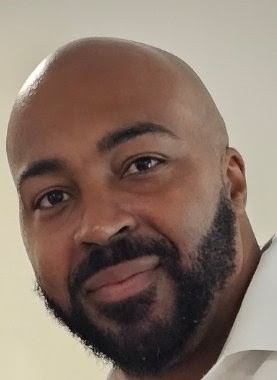
Travis County, Texas – When Youth Advocate Programs (YAP®), Inc. Travis County, Texas Advocate Jonathan Flagg began working with a program participant he asked him the question he asks all of the young people upon first meeting them.
“What do you want your story to look like? Do you want to be defined by what you’re going through or do you want to be defined by your progress? I sit down with youth and their families and then with youth alone to gain a better understanding of everyone’s needs,” Flagg said.
YAP® Travis County, Texas’ Child Welfare program partners with the Texas Department of Family and Protective Services to provide youth and families with wraparound support, connecting them to economic, emotional and educational needs tools. A national nonprofit in 32 states and Washington, D.C., YAP® delivers community-based services as an alternative to placing young people in corrections or residential care facilities.
Then 15, the youth was classified by the Texas child welfare system as a “child without placement.” Having some trouble at home, the young person was not attending school regularly and had anger issues. Today, Flagg said the program participant has taken ownership of his choices, attends school regularly and is involved in extracurricular activities.
YAP® Travis County, Texas Program Director Marisa Ignacio said Flagg played an important role in the young person’s life.
“When [the young person] came into the program, it was clear he was carrying more than most kids his age should have to experience,” Ignacio said.“What made the difference was the relationship he built with [Flagg] who didn’t try to force change. [Flagg] just kept showing up, listening, and meeting [the youth] where he was at. Knowing that [Flagg] played such an important role in helping [the youth] reach stable placement is something we’re all proud of.”
The program participant’s caseworker, Kellee Captain, said over time she witnessed a “remarkable shift,” in the youth who initially was placed in a residential facility before being placed in kinship care. Flagg worked alongside the young person and his family for six months supporting him and gaining a better understanding of his needs.
“Mr. Flagg created a safe, nonjudgmental space where [the youth] felt heard and accepted,” Captain said. “Slowly, [the youth] began opening up about his anger, his trauma, and the challenges he was facing. For the first time, [the program participant] had a consistent adult who showed up for him, advocated for him, and met him where he was emotionally.”
YAP® Advocates are trained to deliver the signature individual and family YAPWRAP® service model. They provide youth individualized services outside of the home including support with school, help finding a job, connecting them to therapy, and supporting families financially. Flagg consistently met his program participant, transported him to family visitations, participated with him in activities like walks, and even assisted with long-distance transportation to see extended family during the holidays.
“YAP was the single most stabilizing factor in this youth’s success,” Captain said. “Without the consistent, trusted support of his Advocate, [the youth] would have been at high risk for placement disruption and continued trauma. The YAP model provided more than mentoring—it provided continuity, advocacy, and emotional safety during one of the most difficult periods of [the young person’s] life.”
Captain, Ignacio, and Flagg are extremely proud of the strides the program participant has made during his time with YAP® and are excited to see his story shaping up to be one of triumph.
“He has done amazing,” Flagg added. “He is not blaming anyone anymore. He is a straight A student now and his attitude has completely changed. He is a new person.”
For more information on YAP®, visit yapinc.org.
*In order to protect the program participant’s privacy, YAP® is not disclosing his name or using his image.