Submitted by: Courtney Reimann with Audrey Waterman, and Patti Brown
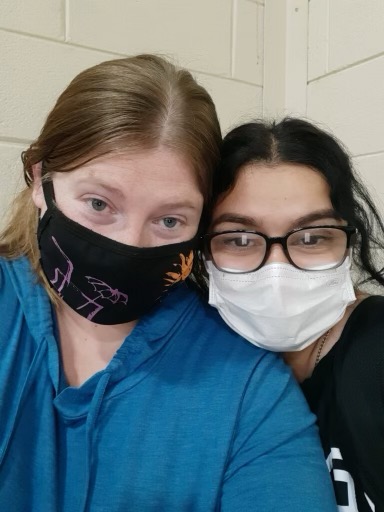
Kevin has come a long way in the past ten years, now living safely at home with Kate, his cat. He thanks his Susquehanna County, PA Youth Advocate Programs (YAP), Inc. Behavioral Health and Adult Disability Direct Support Services team for empowering him with tools to live independently in the face of complex challenges.
YAP is a national nonprofit in 32 states and the District of Columbia that partners with youth justice, child welfare, behavioral health, intellectual disabilities and other systems to provide community-based alternatives to congregate placements.
“When I first started living on my own, I struggled. Through the support of my YAP staff, I was able to find other ways to cope with my anxiety and depression rather than using drugs and alcohol in excess.”
Receiving YAP Behavioral Health services in his youth, Kevin is now a young adult and has moved to the nonprofit’s Adult Disability Behavioral and Direct Support Services program, where he focuses on making safe, healthier choices and learning how to live independently. Kevin has a constellation of supportive staff and family members who prompt him to take care of himself and his apartment, provide support to get to medical appointments, and remind him of his strengths.
He said during the last year, things seemed dire for him as he crashed his car, struggled with depression, and gave in to destructive thought patterns. YAP staff developed positive rapport with him, holding frequent meetings to find new ways and innovative programs or therapies to address his needs.
“The willingness of the YAP staff to be there whenever I needed them greatly increased my ability to deal with my anxiety. I am greatly appreciative of them to stand with me during these trials and tribulations.”
YAP’s service model is based helping program participants see their strengths and connecting them with tools to help them set and achieve positive goals.
As described by YAP staff person Patti Brown, “I always verbally praise him for his efforts with cooking, shopping, cleaning, taking his medications, making and keeping appointments and he always says thank you.”
A major turning point came when Kevin brought home a brand new kitten. YAP staff saw that with the new pet, Kevin was able to have more responsibility and day-to-day structure. He also had companionship, something missing as he established a successful independent life in his own apartment.
Audrey Waterman, Kevin’s Behavioral Support Specialist, added that she has “built a strong level of trust by showing unconditional positive regard and honesty with him, which has allowed him to be honest and ask for help.”
Learn more about YAP at YAPInc.org. Follow the organization on Twitter @yapinc.
Lebanon, Pa. – On any given Thursday afternoon, Dee Cook is busy picking up youths to take them to Girl’s Circle, an empowerment activity led by Advocates and staff at Lebanon County’s Youth Advocate Programs (YAP), Inc.
Most recently, Cook, Lebanon County’s YAP program coordinator, gave a ride to 11 year-old Gabriella (who goes by Gabby), and Brittney, age 14, who thanks to her and their YAP Advocate Kristie Houck now have a new hobby in acting. Both girls joined Cook in becoming cast members in “The Pony Expresso,” a melodrama full of puns and jokes that ran from late February to early March and was produced by The St. James Players.
YAP is a national nonprofit in 32 states and the District of Columbia that partners with youth justice, child welfare, behavioral health, and other systems to provide trauma-informed community-based services as an alternative to youth incarceration, congregate care, and neighborhood violence. YAP provides unique wraparound services that they often extend to siblings and other relatives of program participants. YAP staff felt Gabby and Brittney could benefit from tools to help meet their goals of being more sociable. As part of their services with YAP, the youth learned about and accepted an opportunity to add acting to their toolkit.
Four weeks before the play opened, Gabby, Brittney and Cook started rehearsals, which Cook and Houck often times drove them to.
“It wasn’t very long,” Cook said of the time between being cast and the first show. “(The girls) made a lot of new friends. In theater everyone is nice and everybody fits in.”
Cook met Gabby and Brittney during their intake process at YAP. As part of YAP’s Girl Circle Thursday evening empowerment forum, they journal, talk, learn a lesson, do crafts, garden, and participate in other educational or fun activities while being provided with a hot meal. The goal of the peer group is to have positive, healthy, social interactions and relationships with their families and peers.
Houck, a college student who has been an Advocate with YAP for two years, said Gabby and Brittney clicked immediately in Girl’s Circle, which has helped with their overall development.
“As a youth advocate, I think it’s really good that we can help them connect with the community more, especially since we know that it’s helpful for at-risk youth,” Houck said, adding that she saw the play and thought both girls did an amazing job. “They looked very confident on stage and it was good to see how they progressed and how they’ve grown.”
In the play, Gabby’s character was “Spice,” who loves “Sugar,” and they are never apart, she said.
“It was my first play,” said Gabby, who learned about stage presence and facing the audience. “It was really fun.”
Brittney had an ensemble role. It included stage presence, singing, telling jokes and getting the audience to participate.
“I was excited about the play,” she said, adding that she was shy before she was cast. “I am interested in acting in the future. I liked that everyone gets along and I love how everyone is nice. It became like a second family for me.”
Cook played “Dee Café,” and got pulled into participating in the play when she took the girls to audition.
“It was a really good introduction into theater for the girls,” Cook said. “I saw the raw talent, which is what the director saw too. The theater is a place where everybody belongs. It’s a major plus for our kids.”
During the experience, Gabby and Brittney learned theater etiquette and Cook noticed improvements to their self-confidence. Karen Dundore-Gulotta, founder of the non-profit The St. James Players and director of the play, prides herself on community service and education whether it’s about life or theater arts. She works with a lot of kids; is able to meet them where they’re at, and will find a part for any youth who are interested in participating. She says both girls blossomed.
“Brittney went from always having her head down and not having any eye contact to making eye contact, holding her head up, speaking clearly and a lot more smiles,” said Dundore-Gulotta, who is also a foster parent. “Gabby gained a lot of confidence too. She came in for some one-on-one time and private lessons to learn how to move around the stage, where your feet need to be pointed and other things. She really understood stage movement and was very enthusiastic.”
Brittney even plans to participate in the next upcoming play, “Anne of Green Gables – The Musical.”
“At first I was shy, but then I got over it and now I like talking,” Gabby said. “It really changed everything. I was not used to being social and socializing with other people, but now I am.”
Dundore-Gulotta will be offering a special screening for YAP participants to see the “Anne of Greene Gables – The Musical,” at the end of May.
Chicago, IL — A year after retiring as a Chicago Public School (CPS) teacher, Laverne Browne is back on campus, this time at Ombudsman Chicago South Alternative School, where in her new role as a youth Advocate, she was among those honored at a recent luncheon for their service.
“It feels good. We [Advocates] spend a lot of time with our students. More than the school knows. It’s wonderful to be acknowledged for a commitment we give to CPS students. Most of us are products of CPS ourselves,” said Browne, who completed her primary school education at Raymond and Stephen Douglas before graduating from Wendell Phillips High School.
Browne as a CPS elementary school student
Browne works for Chicago Youth Advocate Programs (YAP), Inc., which in partnership with Children’s Home & Aid, engages students heavily impacted by violence and trauma as part of a program called Choose to Change (C2C). University of Chicago Crime Lab and Education Lab randomized controlled trial data found C2C, which began in 2015, is reducing violent crimes by 48 percent.
YAP, a national nonprofit in 32 states and the District of Columba, is in its 47th year of providing community-based wraparound services as an alternative to youth incarceration and congregate child welfare, behavioral health, and intellectual disabilities placements. In recent years, YAP has also been combining its evidence-based model with others to provide services that prevent and disrupt violence. The program recently received funding from the City of Chicago and CPS, enabling staff to train four other nonprofits, expanding C2C-informed programming to reach up to 1,000 students by the end of 2022.
As a YAP Advocate, Browne provides individualized youth and family wraparound services
As a C2C YAP Advocate, Browne attends weekly structured psychotherapy for Adolescents Responding to Chronic Stress (SPARCS) sessions with the students she works with. She said it’s one of many opportunities the program gives her to understand the complex challenges program participants face.
“As an Advocate, I have the flexibility to set my own hours,” Browne said, adding that as a result, she can provide the kind of tangible support the students need to set economic and emotional goals as well as educational ones. “Right now,” she said in a phone interview for this story, “I’m at the DMV [Department of Motor Vehicles] with a student who called me at 3 this morning saying she had to get here.”
YAP trains its mostly neighborhood-based Advocates and other staff to meet program participants where they are and to connect them and their parents, guardians and other family members to tools they need to meet their goals and firm the foundation of their home life.
“I also get to visit students’ homes and see how concerned their parents are and what’s going on in their lives,” Browne said, sharing as an example how by doing so, she was able to help one mother in her own education journey.
“She didn’t have a high school diploma and couldn’t write in cursive. So, I told her about this GED program. A lot of people don’t want their kids to graduate before them. Just knowing that we not only provide services for the student, but also the parents is a good feeling,” she added.
Browne said most of the C2C program participants she works with are girls, some of whom are parents themselves.
“One of my students has two children under three and a baby on the way. We helped her get a job, which gave her the extra income she needed,” Browne said. “As my program director, Carla Felton, says, ‘you have to build bonds.’”
Browne said her career journey came with its own challenges. At Chicago’s Columbia College, she earned a bachelor’s degree in journalism and initially had a job in corporate marketing before realizing that her real passion was working with children. The first time she applied for a two-year Teachers for Chicago internship program that helped non-education majors get credentialed to teach, she didn’t get in. After she completed a couple of semesters at Roosevelt University, she applied again. She was accepted and would work in several schools before getting her dream assignment in 2011 at a school on the south side four blocks from her home.
Browne was a CPS teacher for 25 years before she retired in 2021
“I’ll never forget that first day. I walked and it was the coldest, snowiest winter in Chicago. They put me in a fifth-grade class to observe, where at the time there was a substitute teacher. I sat back and watched and took notes on what I needed to do. They needed organization and rules. The next day, I said, ‘OK let’s go. It was great. I loved that class.”
In 2019, with the schools turning to remote learning due to the onset of the pandemic, Browne realized that to effectively teach her young students, she also had to teach a lot of parents how to use the computer and how to structure their lives to support their children’s studies.
“Most of my students did really well,” she said. “That summer, after learning about YAP, Browne applied for a part-time Advocate job with the nonprofit. That’s when she was certain that while she loved teaching and all the benefits that came with it, her calling was to be a youth Advocate, to provide tools to help young people succeed in school, at home and in their personal relationships.
She said while her biggest reward with C2C is to see her students graduate, being an Advocate lets her also appreciate the value of the small steps that come along the way.
“Last year, our graduating seniors had an option to decorate their caps. I got one of the students some jewels, pins, a glue gun – just that little thing meant so much,” Brownesaid.
Baltimore, MD – This month, violence interrupters from cities across the U.S. gathered in Baltimore for unique hands-on training (HOT) classes.
The trainees are employees of Youth Advocate Programs (YAP), Inc., frontline workers and leaders of programs designed to interrupt violence and/or help formerly incarcerated individuals safely transition back to their communities.The training sessions were led by international trainer, practitioner, and violence interdiction expert, professor Aquil Basheer of the Professional Community Intervention Training Institute (PCITI) in Los Angeles.
“Driven by our motto of keeping the ‘public’ in public protection — for more than 35 years, PCITI has provided intensive gun, gang, group intervention and peacemaking services throughout the U.S. and globally,” Dr. Basheer said. “As YAP partners with more cities to apply their time-tested wraparound services approach to decrease violence, we are honored to partner & offer and very much appreciate the significance of this national training in building a foundation for transforming public safety, justice and social services systems to be more effective and equitable.”
YAP is a national nonprofit in 32 states and the District of Columbia with a 46-year history of reducing recidivism and keeping communities safer by delivering effective community-based services as an alternative to youth incarceration, congregate child welfare and behavioral health placements, and neighborhood violence. YAP combines evidence-based violence interruption approaches with its own evidence-based wraparound services model of hiring and training neighborhood-based Advocates and behavioral health professionals to deliver youth and family services that empower program participants with tools to see their strengths and achieve positive goals.Learn more about YAP at www.yapinc.organd follow the organization @YAPInc.

A year after serving more than three decades in prison, Roland Jeter El knows he can’t make up for past mistakes or the time lost because of them; but that’s not keeping him from trying. Never doubting that he would be released, Tyrone Little, who also served nearly 40 years before successfully reversing his conviction, shares his co-worker’s passion and sense of urgency for doing good. Together, Jeter El and Little are using their newfound freedom to help other formerly incarcerated men make the best of theirs.
Jeter El and Little work for Youth Advocate Programs (YAP), Inc., a 46-year-old nonprofit in 32 states and the District of Columbia with a reputation for making social change happen by providing safe, effective, trauma-informed community-based alternatives to youth incarceration and out-of-home child welfare and behavioral health placements. Jeter El and Little co-lead the new YAP Safely Home: Community Based Mentor Services for Returning Adult Citizens program, funded by The Office of Victim Services and Justice Grants in Washington, DC.
YAP Baltimore Group Violence Reduction Strategy Director Joel Miller (l), Tyrone Little (c) and Metro YAP Director Eddie Moore (r) at graduation ceremony
Jeter El and Little recently hosted a special graduation ceremony for the first five participants to complete the intensive trauma-informed services program. The graduates were among 14 men who grew up in Washington, DC and Maryland before serving from five to nearly 40 years for offenses ranging from selling drugs to murder.
“The men took what was taught in the workshops and restructured their thinking to pursue positive outcomes by getting jobs and diligently working towards establishing independence,” Little said. “In addition to vocational training, the program focuses on traumatology training, as well as higher education and learning, financial literacy, better social relationships with family and friends, and successful reintegration into the community.”
Program leaders congratulate Cadoza Simms, who with Anthony Dickey, Stanley Hunt & Donald Hines, graduated from the program
Inspired by YAP’s evidence-based youth justice model, the new adult re-entry services program is designed to help participants see their strengths and connect them and the loved ones supporting them to individualized economic, educational, and emotional tools needed to help them achieve their goals and give back to their communities.
YAPWORX Consultant Ed DeJesus (l) with YAP Safely Home Community-based Mentor Services for Returning Adult Citizens Program Co-leader Tyrone Little (c) and YAP Safely Home Community-based Mentor Services for Returning Adult Citizens Program Coordinator Charles Bentil (r)
For the new program curriculum and implementation, Jeter El and Little work closely with YAP consultants Coppin State University Psychology, Counseling and Behavioral Health Professor Dr. Argin Hutchins; and Ed DeJesus, who created YAP’s YAPWORX social capital builders’ program, which focuses on the importance of positive personal relationships and professional connections to achieve career opportunities and success.
Roland Jeter El (r) with YAP Safely Home Community-based Mentor Services for Returning Adult Citizens Program Coordinator Charles Bentil (l) at graduation ceremony
“These workshops are designed to change the way you think in a more healthy, positive, and productive way. You have to think and practice,” Jeter El said.
Little and Jeter El said addressing emotional needs is a priority when providing vocational services for formerly incarcerated adults, particularly those who, like them, spent decades behind bars.
“We deal with impaired behavior caused by early childhood experiences or things we cause on our own. Sometimes trauma is acute. You may have chronic or prolonged domestic violence or complex trauma,” Jeter El said. “That plus shock to your system while incarcerated. A lot of us were young adults. Lots of us had trauma associated with what causes us to exhibit behaviors outside of what’s socially accepted.”
The intensive curriculum includes 16 weeks of psychoeducational trauma-informed care sessions and eight weeks of social capital workshops, all with assignments and homework.
“It’s even more astonishing and awesome that these guys were willing and able to make practical application out of that,” Jeter El said.
The program borrows from other aspects of YAP’s evidence-based youth justice model as well, including an adherence to a “no reject, no eject” guiding principle and providing wraparound services that engage and support program participants’ family members.
“I can’t tell you the number of people I met in prison who had no family contact. “That’s how much pain they caused. A lot of people who serve time are desensitized,” Jeter El said. “We had to go to [program participants’] families to talk to them.”
Jeter El and Little said they were impressed with all the men in the new YAP program, even those who were unable to complete the modules. Jeter El said perhaps the one who had the most dramatic turnaround is a man who they saw as an authentic leader, but who initially presented as “tyrannical” because of his attitude and disposition.
“Dr. Hutchins would invite him to mentor others; he had fantastic qualities,” he said. “When he reversed that disposition, he got a job at a hospital. He now owns a house, owns a car; and has relationships with his family. When you change the way you think; you automatically change the way you act.”
Baltimore YAP Group Violence Reduction Strategy Program Director Joel Millers (l) congratulating a program grad with Program Co-Leader Tyrone Little (r)
Little and Jeter El said that of the 14 men who began the program a year ago, they are all focused on making positive change. They say one participant was arrested on an outstanding warrant from 1992 and that as they work with his lawyers, they also continue to provide him with wraparound services and provide support to his fiancé.
The program leaders know firsthand that the curriculum works. In fact, that knowledge is at the heart of their own backstories leading them to their work at YAP.
Roland Jeter El
Roland Jeter El
Jeter El said he was fortunate to have the support of his family throughout his incarceration. He said he surrounded himself with men like himself who got regular visits and frequent letters and calls from loved ones.
“I was already not a do-nothing kind of person,” he said. “It’s part of my DNA. I’m an entrepreneur at heart. In prison, I served on inmate advisory councils and defended guys on infractions.”
Jeter El said he had strong friendships with men in prison who also had strong family ties and said 99 percent of those men who are now out of prison have continued to do positive things.
“Those guys are phenomenal. There are at least 25 of them who I speak with on the regular. They’re disciplined; they have connections,” he said. “A very strong support system is hard to re-create that, but there are some things you can create. My support comes from not burning bridges.”
When Jeter El came home, he went straight to work, grateful that his family gave him a chair in his family’s barbershop. Within months of working at the shop, a YAP Advocate working with one of the nonprofit’s youth justice program participants, asked Jeter El to serve as a YAP Supported Work partner. YAP Supported Work employers promise to employ and mentor YAP program participants in exchange for the nonprofit paying the youth’s wages. Jeter El said yes and also agreed to be one of the volunteer YAPWORX Opportunity Advisors, volunteers who meet with program participants to tell them about their jobs and businesses and provide guidance and contacts. This was Jeter El’s introduction to the importance of what YAPWORX developer Ed DeJesus calls “social capital,” a network of people willing to share practical information about different kinds of jobs and how to use these contacts to land and keep one. It’s through his new social capital that Jeter El learned about the new opportunity to lead YAP Safely Home: Community Based Mentor Services for Returning Adult Citizens.
Tyrone Little
Having earned a bachelor’s degree in experimental psychology while he was in prison, Tyrone Little, now 65, was determined to continue his education as a free man.
In 2016, shortly after his release, Little applied to and was accepted at Coppin State University where he completed a second bachelor’s degree in applied psychology as well as a master’s degree. Little is set to begin a doctoral program this spring at Morgan State University. Shortly after he began his studies at Coppin State, an advisor at the college connected him to Dr. Hutchins.
She [the advisor] was my social capital. The whole faculty was my support,” he said. “Dr. Hutchins became my mentor.”
Little worked with Dr. Hutchins to create a conference dealing with trauma. He said that work led to a job at Focus on Recovery, where he learned the importance of providing comprehensive services to people battling addiction and trauma. Little also learned about YAP, where he worked with Dr. Hutchins who was consulting with the nonprofit on developing anger management classes.
Through those connections, Little met Regional Director Craig Jernigan and learned about YAP Safely Home: Community Based Mentor Services for Returning Adult Citizens.
“Craig asked if I wanted to try to establish a program in D.C.,” he said.
Little was happy to learn that he would work with Jeter El, who he said he heard about back when he was in prison for his work to support and defend other incarcerated individuals.
Next Steps
Jeter El and Little recently learned that the YAP Safely Home: Community Based Mentor Services for Returning Adult Citizens program has received a new grant from The Office of Victim Services and Justice Grants in Washington, DC to continue the work they started. Their hope is to further develop the program by creating a traumatologist internship for former program participants who are interested in using what they learn while receiving services to help others.
“They’d become certified pillars of support,” said Jeter El. “We don’t have enough dialogue on this – the need for trauma-informed care for people coming home from prison. We need to make sure we support them in every way.”
Note: This was produced by Youth Advocate Programs (YAP), Inc. under grant number 2022-JG-5012 awarded by the Office of Victim Services and Justice Grants, Executive Office of the Mayor, District of Columbia. The opinions, findings, and conclusions or recommendations expressed in this article are those of the contributors and do not necessarily represent the official position or policies of the Executive Office of the Mayor.
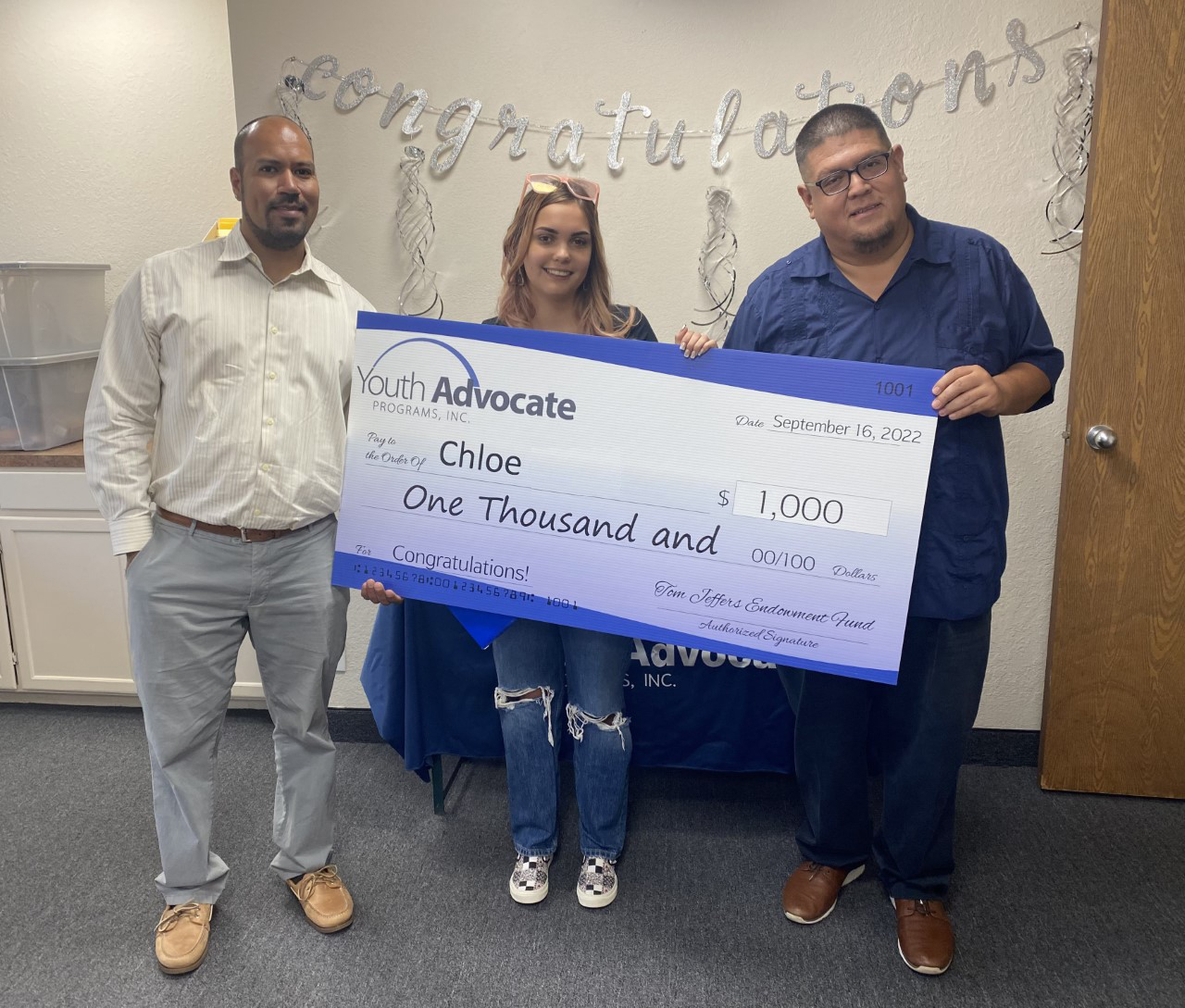
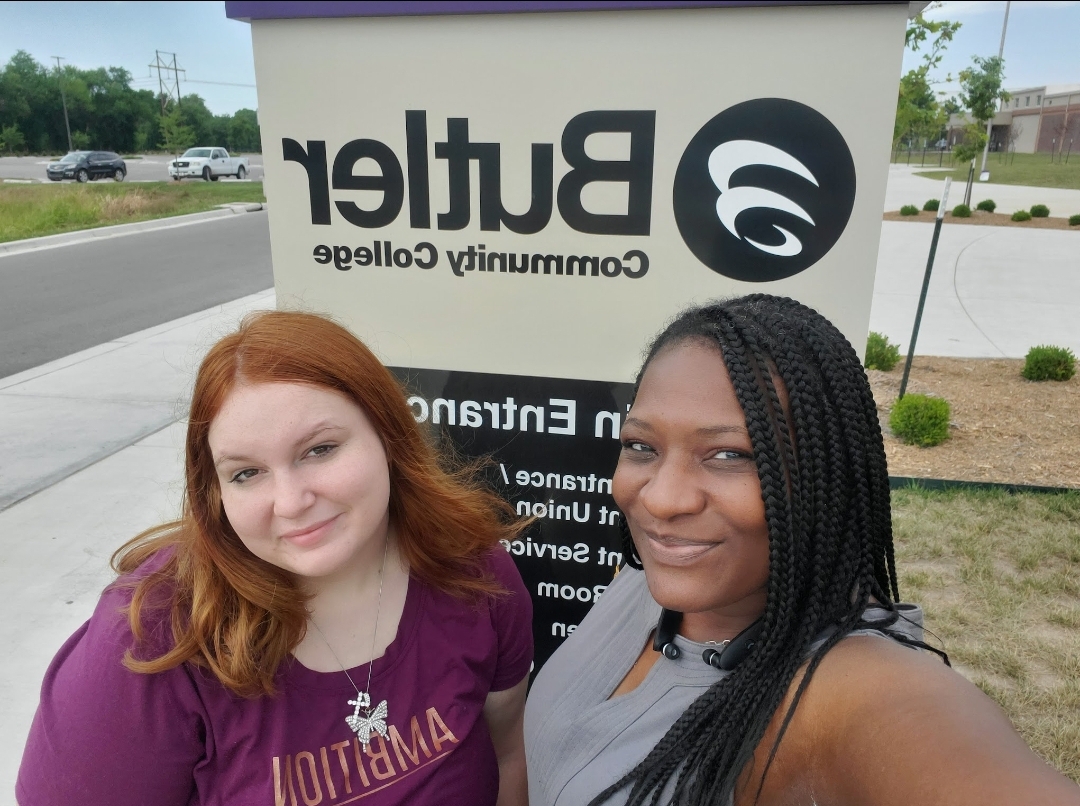
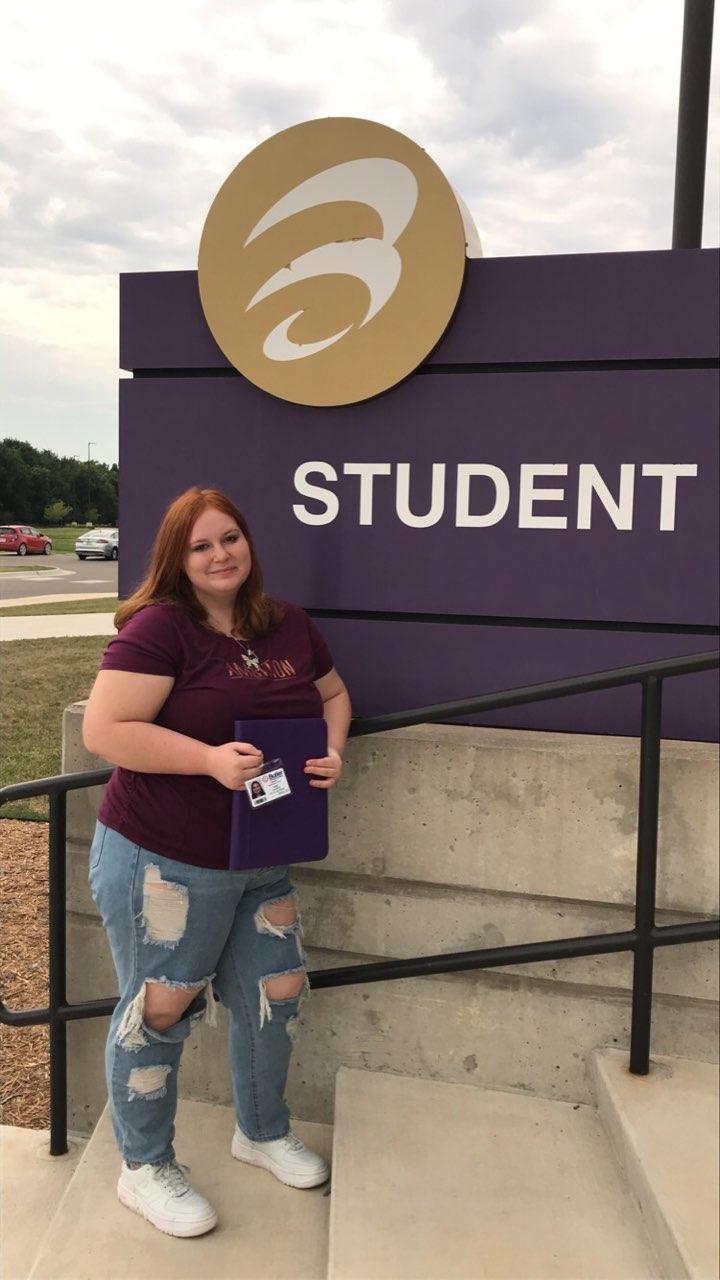
Kingston, N.Y. – Skipping school and being on probation is why Alexis was referred to Ulster County’s Youth Advocate Programs (YAP), Inc. when she was 14 years-old. Thanks to her family, YAP, and her Advocate with the program, today she’s a young adult, in college. She’s also one of 23 former program participants and family members or guardians who received the 2021 Tom Jeffers Endowment Fund for Continuing Education.
“I was doing really bad,” said Alexis, now 22. I wouldn’t go to school. I left YAP when I was placed in a group home, and then I rejoined YAP and met Jenilee. She’s a wonderful person.”
Alexis is a Tom Jeffers Endowment Fund for Continuing Education Scholarship Recipient.
Jenilee Pollan is the Program Director of Ulster County’s YAP but was Alexis’ Advocate when she first came to the program in 2016.
YAP is a national nonprofit in 32 states and the District of Columbia that partners with youth justice, child welfare, behavioral health and other systems to provide trauma-informed community-based services as an alternative to youth incarceration, congregate placements, residential treatment, and neighborhood violence.
“She was a big school avoider,” Pollan said of Alexis. “She is a really good kid, well — woman — now. She had a really good support system.”
Pollan helped Alexis’ family secure home schooling for her to finish high school and even employed her through her personal cleaning business. With Pollan’s encouragement Alexis completed her education and is now enrolled in Strayer University.
“College is something that I always push,” Pollan said. “I remind them they can apply for the (YAP Tom Jeffers Endowment Fund for Continuing Education) Scholarship.”
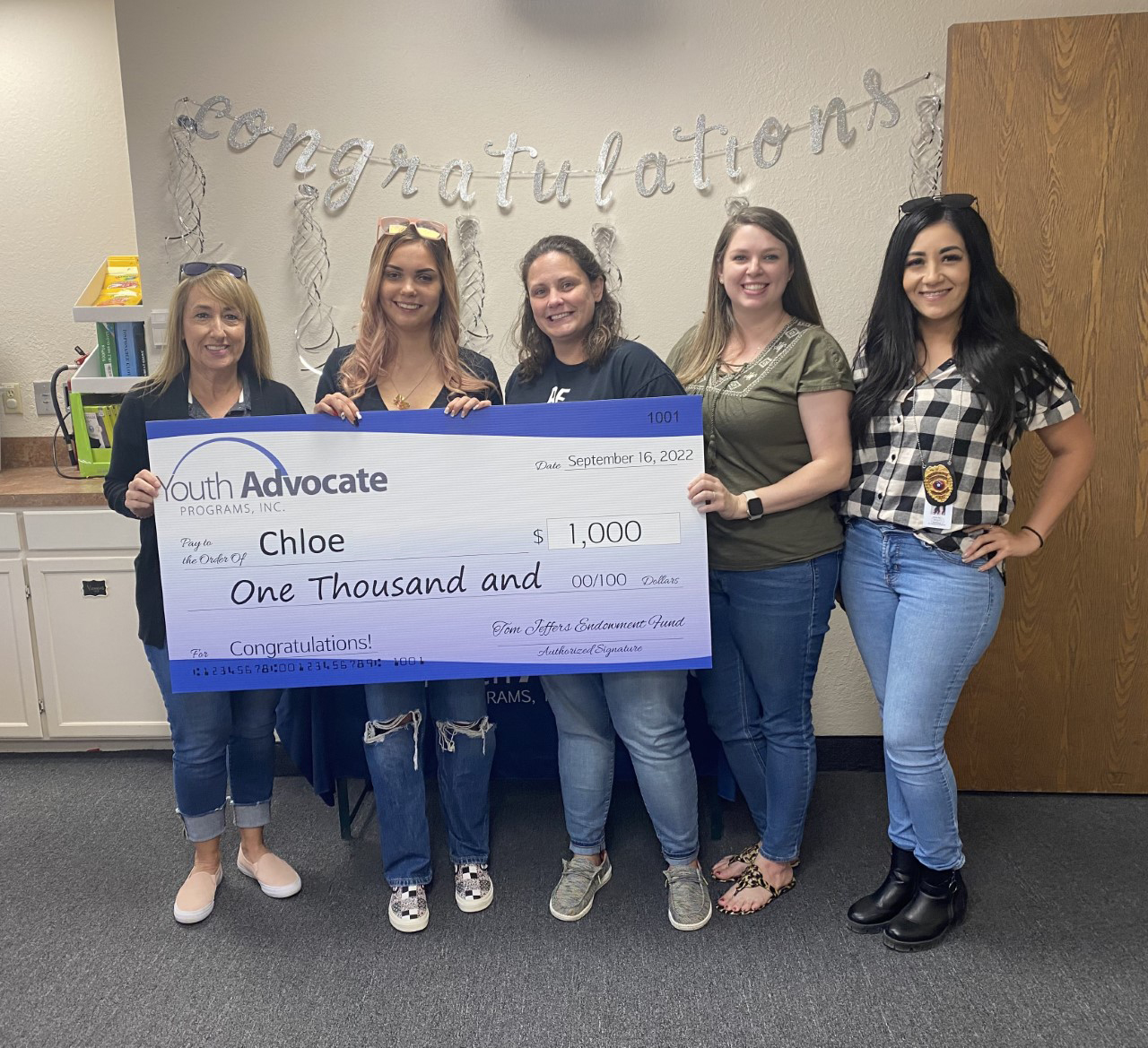
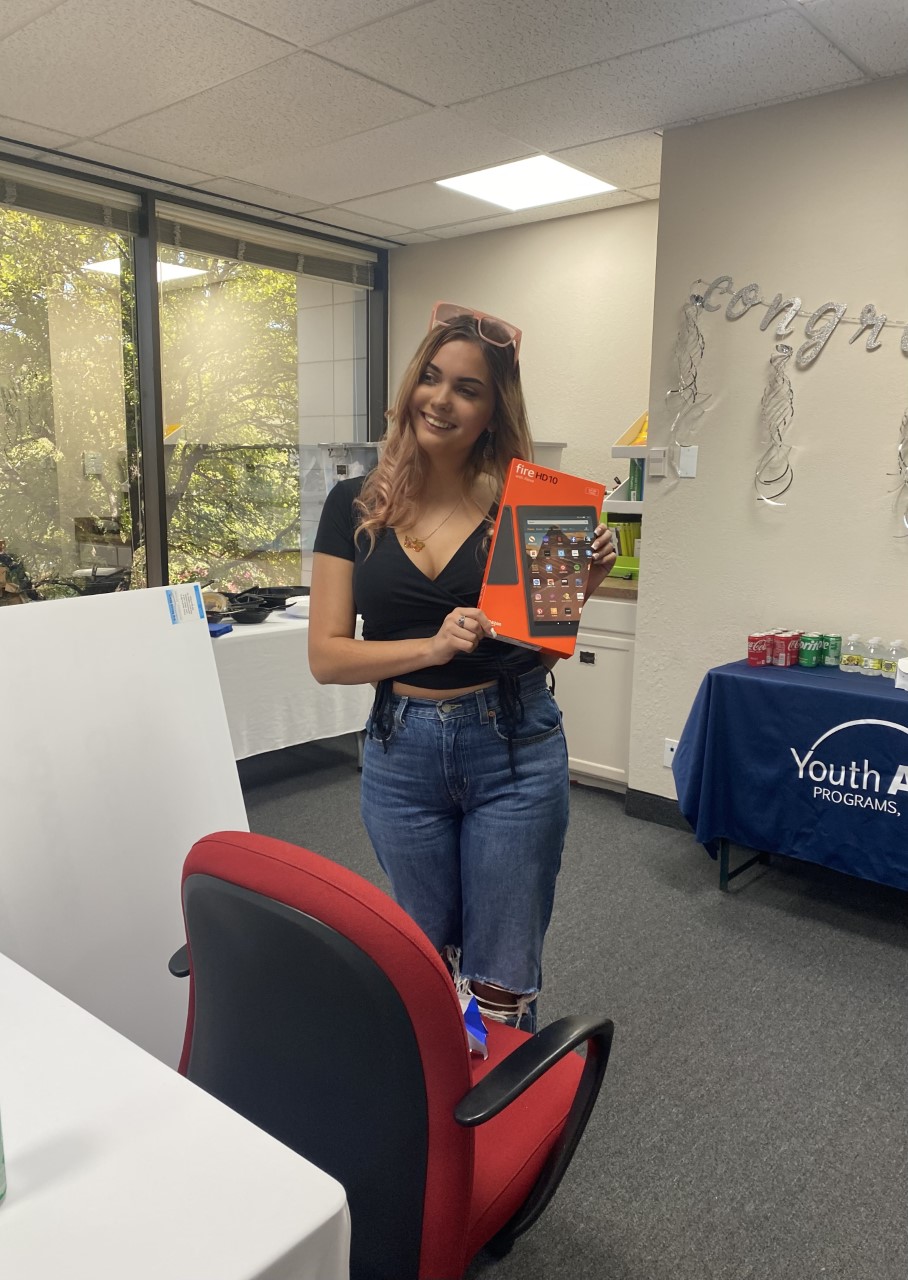
Through the Endowment Fund scholarship, Alexis received a MacBook laptop to continue her college studies. YAP started the scholarship fund in 2004 through weekly contributions from generous YAP employees. The fund was renamed the Tom Jeffers Endowment Fund for Continuing Education in honor of YAP’s founder after his death. The special scholarship is $1,000 toward school and job training costs or can come in the form of a laptop computer. Recipients can reapply annually.
Ulster County YAP held a ceremony to congratulate Alexis on her achievement in February. She brought her family to the celebration that included an oversized check presentation and cupcakes.
“I am doing college online and having this laptop means a lot,” Alexis said. “YAP is a great program. If there are any problems, they come and help get you out of that environment.”
Pollan, who first started with YAP in 2013 before becoming assistant director and director, said she couldn’t be prouder of Alexis who still shares her grades with her even though she doesn’t have to. She said growing up in her New York state region can be rough and the teen years are difficult for youth, but she’s in awe of young people like Alexis who are able to break barriers and succeed.
Alexis, is now a married mother of two children, ages 5 years-old and 9 months, with a third child on the way.
“(Alexis) is a great adult and a good mom, she deserves this,” Pollan added. “This work feeds my soul. What I do helps me sleep at night. It definitely encourages me and helps me with my own trauma; me being able to help others.”
For more information on YAP, visit www.YAPInc.org. Follow the organization on Twitter @YAPInc.

Lebanon County, PA – For Jose, weekly visits to the laundromat are no ordinary chore. It’s something he does with his Developmental Disabilities Services Advocate Frances Rimby. And for him, it represents independence.
“I wash dishes, make coffee, but with laundry, I do that the best,” he said proudly.
YAP Developmental Disabilities Services Advocate Frances Rimby and Jose
Rimby works for Lebanon & Schuylkill Counties Youth Advocate Programs (YAP), Inc., a national nonprofit in 32 states and the District of Columbia that provides community-based services as an alternative to out-of-home placements like youth incarceration, congregate care, and residential treatment. YAP’s Advocates and other frontline staff are trained to help program participants see their strengths, provide them and their families with wraparound services, and connect them with tools to help them thrive.
Jose counting his coins before using the washing machine
At age 60, Jose, like some of the nonprofit’s other Intellectual Disabilities/Autism program participants, is older than the average YAP program participant.
“When I started working with Jose, I was a little nervous because I had never worked with an older adult before,” Rimby said. “Once Jose and I felt comfortable working together, my nervousness went away; I tried to make things fun.”
Rimby’s work with Jose is consistent with the organization’s mission to provide individuals who are, have been or may be subject to compulsory care with the opportunity to develop, contribute and be valued as assets to their communities. YAP’s services, which include zipcode matched program staff recruitment, offer safe, effective, culturally responsive and economical alternatives to institutional placement.
Jose washing his clothes at the laundromat
“When I started working with him in 2016, Jose washed his clothes at home. He had a washing machine, but he didn’t have a dryer, so he would hang them to dry on a line and a lot of times, he’d put them away damp and wear them that way,” Rimby said.
When Jose’s washing machine broke, Rimby saw an opportunity for him to change his routine and learn some new skills.
“I started taking Jose to the laundromat where he had never been before. By showing him the steps to washing and drying clothes, he started to do things on his own without guidance,” she said. “He also started counting the number of quarters needed to wash and dry clothes.”
With these visits, Jose’s clothes are completely dry when he puts them away
Jose lives alone with support from a cousin who buys his groceries and makes sure other personal needs are met.
“I saw that Jose had the ability to do anything he wanted to whether by encouragement or being shown. Jose enjoyed being active and being outside so we would go to the park to walk the trail or play tennis. He also enjoys being involved in Special Olympics sports — tennis, basketball, volleyball, bowling — so I would take him to some of the practices,” Rimby said.
The laundromat visits, along with walks to the park and other activities with Rimby also give Jose a chance to get to know his neighbors and make new friends.
Jose enjoys making new friends during his laundromat visits
“Jose used to struggle with talking to people he did not know in the community. Over the years, I showed him how to be friendly by saying hello, good morning, or afternoon to people.,” Rimby said. “He now will talk to people that he sees often at the same place and have a conversation with them.”
Rimby said since working with Jose, she’s more patient and confident and looks at life differently.
“Jose has always made me welcome when I enter his home by asking me how my day has been,” she said. “I could be having a rough day and Jose is always able to put a smile on my face.”
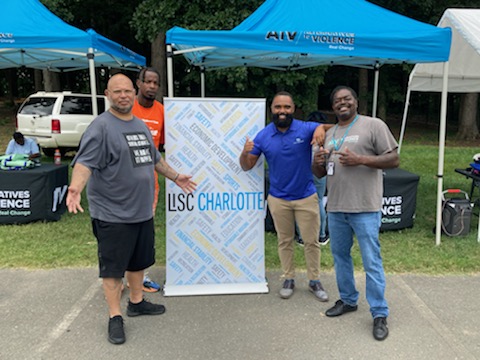
YAP’s National Director of Violence Prevention Fred Fogg (second from left) with ATV team members Conrad, Dimitros, Leondra, Juan, and Earl.
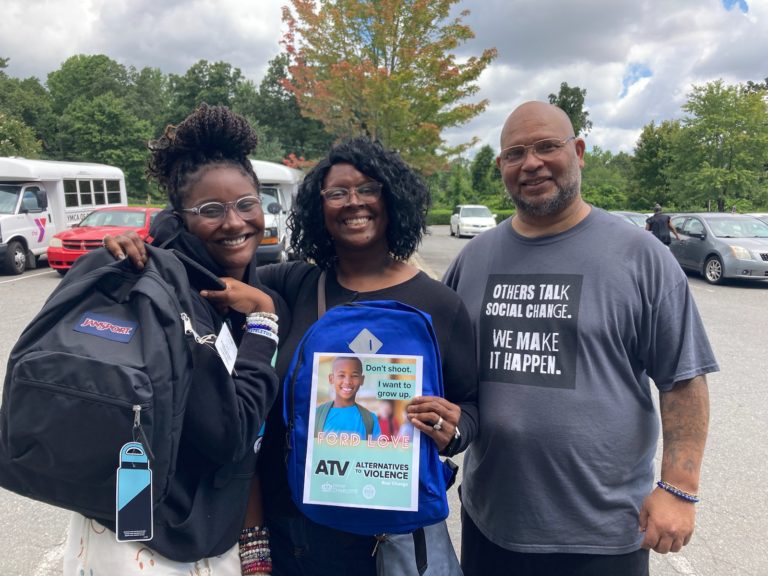
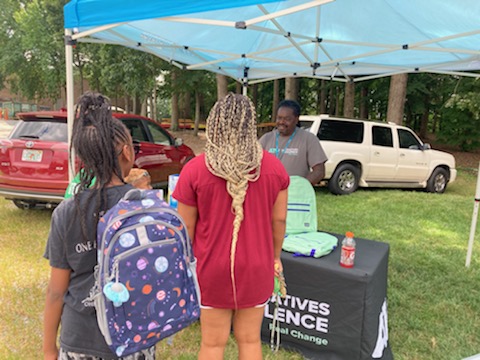
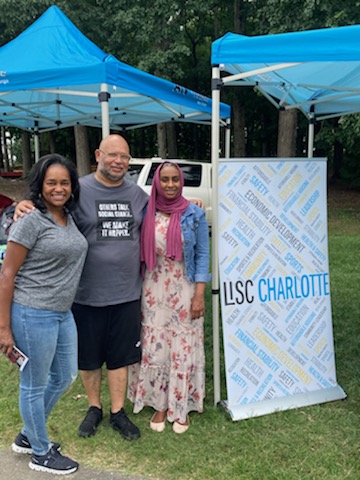
Charlotte, N.C. – The Alternatives to Violence team held its first ‘Meet and Greet’ community event of the year recently on the Charlotte, N.C. Beatties Ford Road Corridor.
ATV Site Supervisor Earl Owens shares materials with a member of the community.Outreach worker Conrad Burke speaks to a member of the community.
ATV, is a collaboration with the City of Charlotte and Mecklenburg County, Youth Advocate Programs (YAP), Inc., and Cure Violence Global (CVG), that launched in August 2021 in response to reducing violence in the Beatties Ford Road Corridor. YAP administers the program using the CVG model, which uses methods and strategies associated with disease control to detect and interrupt conflicts; identify and treat the highest risk individuals and change social norms.
Violence interrupter Dimitros Jordan speaks with a community member.
“ATV is a direct pipeline to community resources and real change,” said ATV Site Supervisor Earl Owens. “ATV can provide assistance to an individual or a family when they are threatened with violence or when they feel as though violence is close to them.”
Violence interrupter Leondra Garrett helps prepare food during the team’s meet and greet.
YAP, a national nonprofit in 32 states and the District of Columbia, has a 46-year history of providing community-based alternatives to youth incarceration, out-of-home child welfare, behavioral health, and intellectual disabilities placements.
ATV’s meet and greet event provided community members with masks, hand sanitizer, educational information, food and fellowship. In addition to Owens, the entire ATV team which consists of two outreach workers and two violence interrupters, were joined by Fred Fogg, YAP’s National Director of Violence Prevention.
Outreach worker Juan Hall dances during the ATV team’s meet and greet.
“Hopefully now the community can see us physically and don’t have to wonder who are those people walking those streets in the afternoon,” Owens added. “Now they know who we are, who we represent and how we can help.”
Baltimore, MD — Members of Baltimore’s Coach G Academy Fatal Attraction Step team took time from their busy week to say thank you to the Youth Advocate Programs (YAP), Inc. Baltimore Penn North neighborhood Safe Streets team.
Penn North is where the team’s coach, Geri McCarter, and many of her step team members live. Fatal Attraction is among the community/high school-level step teams competing in the Central Intercollegiate Athletic Association 2022 (CIAA) Stepshow Stepoff. Presented by McDonald’s, the Stepoff is a community/high school team competition taking place as part of the CIAA Basketball Tournament in Baltimore. McCarter said the Penn North Safe Streets team’s encouragement, rides to events, and day-to-day support in the neighborhood have been key to her team’s success.
Coach G with Step Team member/manager Jordan, 17
McCarter, who mastered the art in college as a member of Delta Sigma Theta Sorority, Inc., teaches step to youth as part of her work to empower them with confidence, leadership abilities, and conflict resolution skills.
Coach Gerri with Step Team member Jaydin, 15
Safe Streets works as a public health approach to reducing shootings and homicides in communities in Baltimore City. The program is staffed by adults who were formerly justice-involved, which lends to their credibility and ability to establish relationships and build rapport to change behaviors and norms of individuals, including those with backgrounds similar to theirs.
Nashville, Tenn. – Knowing the importance of having a father figure in a child’s life and reading about the need for positive male role models is what led Calvin Price to Youth Advocate Programs (YAP), Inc. in Davidson County, Tennessee.
“My father was in prison most of my childhood and wasn’t present in my life for a big portion of it due to challenges of his own,” Price said. “I loved my father like I know all children do. That place in a child’s heart for their father is always there, whether their father is in their life or not. What pushed me into [becoming a YAP Advocate] is the desire to be a positive role model to the youth in the same way I desired a role model as a youth.”
Since the inception of YAP’s Davidson County program in 2021, Price has been an Advocate for the national nonprofit that has been around for 46 years and partners with youth justice, child welfare, behavioral health, intellectual disabilities, and other systems to provide community-based services. YAP’s evidence-based model involves hiring primarily neighborhood-based Advocates and other staff who work with program youth and their families. YAP Advocates provide individualized “wraparound” services that include helping youth identify their strengths and connecting them and their families with tools to help them meet their goals.
“When I saw the posting online, and I guess one of the things that really brought me to interview and to apply at YAP is that they encouraged men to apply,” Price said. “The position had to do with the youth and providing positive role models. I thought that would be a good fit for me because I have a passion for that.”
A partnership with Davidson County Juvenile Court, YAP’s local programming—Wrapping Around Families for Success—serves up to 40 youth ages 12-18 and is funded by a Tennessee Victims of Crime Act grant (this project is funded under an agreement with the State of Tennessee).
“YAP exemplifies best practices in youth programming by connecting our youth with trained, caring advocates who truly understand their challenges and won’t give up on them, no matter what,” Davidson County Juvenile Court Judge Sheila Calloway said.
Through training and support, YAP’s Advocates are provided with the support tools needed to engage, support and mentor youth participants. Price said he connects to youth by taking an interest in what they are intrigued by.
“I make the investment in their interest,” Price said. “That is what motivates most of the engagement. They always want to do the things and talk about things that they like, so that helps conversation wise and gets them to open up.”
Price said there have been events that he and participants have attended together, which have been beneficial. So far being an Advocate has been rewarding for Price. To date, he’s been an Advocate to seven youth participants, three who have completed the program.
“I believe that a lot of people that have the same passion that I do as far as helping in this way but they may not have the same opportunities or may not know how to do so,” Price said. “With programs like this and other ones, more opportunities are becoming available. With that it can only make a more powerful impact on the community and on society as a whole.”
Price added, “I am thankful to people who have that heart to work with youth and I am hoping that more people decide to step out and become a part of it.”
The Dallas Cred team and volunteers affectionately referred to as the “InCREDibles,” distributed food to 185 households and approximately 750 individuals in the community at the Thurgood Marshall Recreation Center, 5150 Mark Trail Way in Dallas. on Feb. 11, 2022.
Dallas Cred held the event in conjunction with Dallas Park and Recreation, the North Texas Food Bank, the Dallas Police Department and other supporters. Dallas Cred is one of Youth Advocate Programs (YAP), Inc.’s violence interruption programs across the U.S. A national nonprofit, YAP provides services in 32 states and the District of Columbia that serve as an alternative to youth incarceration; congregate child welfare, behavioral health and intellectual disabilities placements; and neighborhood violence. YAP advocates for and demonstrates that more effective systems change is possible.
Learn more about YAP at YAPInc.org. Follow the organization on Twitter @YAPInc.

Gavin, a former YAP Behavioral Health program participant, shares his artwork during PSA production.
Youth Advocate Programs (YAP), Inc. has begun production for “But I’m Not,” a unique public service advertising (PSA) campaign designed to raise awareness of safe, effective community-based alternatives to youth incarceration and congregate care/treatment.
Developed in partnership with The CauseWay Agency and Picture Perfect Production & Editorial (PPP&E), the campaign will include digital, TV, radio and print ads that run with the tagline, “Others talk social change; we make it happen.”
A national nonprofit in 32 states and the District of Columbia, YAP partners with youth justice, child welfare, behavioral health, intellectual disabilities, and other systems to deliver neighborhood and family-based rehabilitative and other social services. YAP’s frontline Advocates, behavioral health professionals and intellectual disabilities staff receive training that teaches them to help individuals see their strengths while connecting them and their parents/guardians with basic-needs resources that firm their family’s foundation.
TV, radio and print “But I’m Not” public service announcement (PSA) ads feature three current and former YAP program participants who appear with frontline YAP staff members.
Former YAP Youth Justice Program Participant Tumani, who was recently hired as an Advocate, takes a walk with his former Advocate/now co-worker Jamal.
Tumani, age 22, a former YAP Youth Justice program participant, shares how as a youth, he committed crimes, even got shot. “But I’m not a criminal” he says looking into the camera.
Former YAP participant Jaylyn poses for a picture during photo shoot for YAP PSA campaign.
Jaylyn, age 16, a former YAP Child Welfare program participant, shares how as a little girl, she experienced trauma, acted out, and made mistakes.
“But I’m not a mistake,” she says. Gavin, age 22, a participant in YAP’s Intellectual Disabilities/Autism program who also received YAP Behavioral Health services, shares how growing up, he was often told what he can’t do, so much that he has often lost hope. “But I’m not hopeless,” he says.
For the ads, Tumani is joined by his former Advocate, Jamal; Jaylyn is joined by her former Advocate, Milly; and Gavin is joined by Frances, a YAP Intellectual Disabilities Specialist Advocate who along with YAP Behavioral Health program staff, have supported him for several years.
Gavin, a former YAP Behavioral Health program participant now works with Intellectual Disabilities Specialist Frances Rimby.
At the end of the 60-second PSA, Tumani tells the audience that now he’s an Advocate, who like Jamal, is helping young people change their lives.
“This campaign brings to light how the power of YAP’s model is its simplicity. Each of our program participants shares how working with our amazing Advocates and behavioral health professionals, they were empowered to truly see and put into practice their unique strengths gifts and talents to help themselves and others,” said YAP Chief Communications Officer Kelly D. Williams. “I’m extremely excited that these public service announcements provide one more avenue for people to see how special YAP is and to highlight how the organization’s work is what social change looks like.”
YAP Advocate Milly prepares for photo shoot with former Child Welfare program participant Jaylyn.
“But I’m Not” seeks to build awareness of YAP as it works to serve more young people and families through expanded youth justice, child welfare, behavioral health, intellectual disabilities, and other social services systems partnerships. The national nonprofit is also expanding partnerships with cities and counties transforming public safety through violence interruption services.
YAP’s digital PSAs are already appearing in searches for people looking for mentoring, advocacy, social services and social justice jobs and partnerships. Video and radio PSAs under production this month will be available to TV and radio stations beginning late March when they will also post for sharing on YAP’s website at www.yapinc.org.
Lebanon County, Pa. – Eighteen-year-old Miquel is leaving Youth Advocate Programs (YAP), Inc., focused on his future with his forklift certificate in tow to help get him there.
“I am proud because it is something that is going to help me,” Miquel said about his accomplishment. “Now I plan on getting a job and getting my GED.”
YAP is a national nonprofit in 32 states and the District of Columbia that partners with youth justice, child welfare and other systems to provide trauma-informed community-based services as an alternative to youth incarceration, congregate placements and treatment, and neighborhood violence. The Lebanon County Juvenile Probation Office referred Miquel to YAP in 2019 after he was missing probation and was skipping school.
“He’s changed, there is growth; but he’s always been a good kid,” said YAP Community Treatment Advocate Jon Melendez. “He’s always been helpful and friendly. He went from being a kid to an adult.”
Miquel after earning his forklift certificate.
YAP Advocates and other frontline staff are trained to help young people identify their strengths and empower them and their parents and guardians with accessible tools to turn their lives around. One of the tools available to YAP participants in Lebanon County is Workforce Innovations and Opportunity Act (WIOA), where the qualifications for youth participation in the program are that they have two general barriers to employment.
“We try to prepare them for any certifications and anything we can help them get once they turn 18. Forklift is one of the certifications they could pick out,” said YAP Program Coordinator Dee Cook. “The certification was a one-day experience for everything, and Miquel walked out of there with a forklift certificate. Once he tasted that success, I knew he would be fine.”
Cook, who met Miguel last summer, remembers looking in on him during his day-long certification training experience, which included a written test. At one point, she saw him cheering on other participants and showing others how to properly use the forklift.
“I could not believe how he was not only coming around and doing this himself, but he was also supporting others,” Cook said. “It was just the neatest thing for me to watch. I know he felt good.”
Melendez shares Cook’s happiness about Miquel’s achievement, adding that the young man has an opportunity to make good money.
Miquel driving a forklift.
Miquel will begin working at a warehouse this month through YAP Supported work where a local employer provides work experience, and the nonprofit pays the program participant’s wages. Meantime, Miguel will also have an opportunity to participate in YAPWORX, where YAP program participants meet with employers to learn about career options, get support with building a resume, and gain social capital, a network of caring contacts who can help them improve their economic mobility.
Miquel, who finished YAP’s program in December, said he’s going to miss laughing and joking with Melendez but plans to keep in touch.
“I am going to miss him because he was consistent,” Melendez added. “You knew what you were getting with him.”
Youth Advocate Programs (YAP), Inc., in Tarrant County, Texas helped provide Christmas gifts to program participants and their families with the help of Nolan Catholic High School.
YAP, a national nonprofit in 32 states and the District of Columbia, provides community-based youth justice, child welfare, behavioral health, intellectual disabilities/autism, and violence interruption services. Program participants and their families receive wraparound services that connect them to accessible trauma-informed strength-building tools to achieve their emotional, educational, and economic goals.
For more information about YAP, visit www.YAPInc.org. Follow the organization on Twitter @YAPInc.
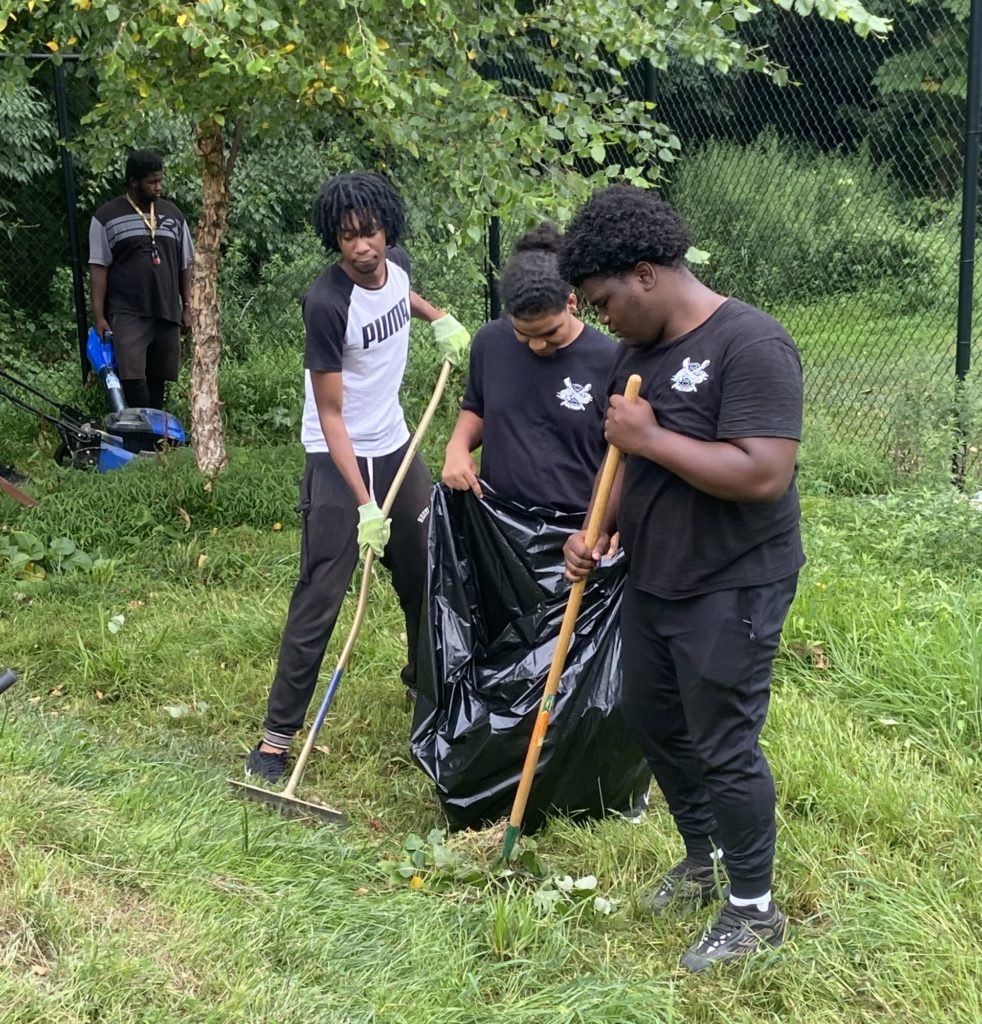
The nonprofits making the delivery include Youth Advocate Programs – or YAP — which partners with Children’s Home & Aid to deliver Choose to Change wraparound and trauma-informed behavioral health services. Joining YAP for the popcorn delivery are New Life Centers and Lifeline to Hope, Inc., two nonprofits that will help CPS reach up to 1,000 students with Choose-to-Change informed programming by the end of 2022.

YAP’s Street Outreach and Violence Prevention Director Kenneth Lewis said the nonprofit employees making the Garrett Chicago Mix deliveries are catching up with Choose to Change students and their families and neighbors at home, church, community centers, barbershops, and other gathering spots throughout the community.
The donation was made possible through talks with Garrett and CPS Chief of Safety and Security Officer Jadine Chou.