With Help from Youth Advocate Programs (YAP™), Inc., Julia Gained Confidence, Connections, and a New Laptop

Fort Worth, Texas – Julia says she has blossomed since becoming a participant with Youth Advocate Programs (YAP™), Inc. in Tarrant County, Texas about five years ago. YAP is a national nonprofit in 36 states and Washington, D.C. offering community-based youth justice, child welfare, behavioral health, and neighborhood violence prevention alternatives.

“YAP has benefited me in more ways than I can count,” she said. “Before, I used to only talk to people in my immediate little bubble, so this has opened up my circle of connections.”

YAP Tarrant County has youth justice and behavioral health programs which Julia was a part of. An alternative to youth incarceration, group home placement or residential care, the YAP youth justice program provides participants with a neighborhood-based Advocate and the nonprofit’s behavioral health program provides intensive-therapy to youth. Both services provide wraparound support and resources to young people and their families to help set them up for success.

YAP Tarrant County Qualified Mental Health Professional Sherry Freeman was paired with Julia, providing her with tools to tackle personal obstacles standing in the way of her road to college and change the trajectory of her life.

“Julia has demonstrated tremendous effort and growth throughout the years,” Freeman said. “Her positive attitude and striving to be the best are strong qualities of Julia’s.”

Through Julia’s determination and with Freeman’s help, she is now enrolled in college taking online courses. Thanks to the Tom Jeffers Endowment Fund for Continuing Education, which is funded partially by YAP employees, Julia was able to obtain a laptop to assist her in furthering her studies.

“This scholarship will take the weight off of paying for classes and materials that I will need,” Julia, 20, wrote in her Endowment essay. “I won’t worry about missing out on opportunities because I was unable to pay for it.”

Named after YAP’s founder, Tom Jeffers Endowment Fund scholarships are provided to eligible current and former program participants in the form of $1,200 for college tuition or job training/supplies fees, or a laptop computer.

“I want to meet new people and obtain new skills,” Julia wrote about attending college. “I want to overcome any obstacles that are in my way and live a happy fulfilling life. I want to give back to the people who have helped me when I needed it the most.”

Freeman said Julia, who is now a freshman at Tarrant County College, has put in a lot of work and grown over the years, adding that she is an eloquent writer and draws beautifully.

“Julia is known for her positive attitude and desire to be the greatest,” Freeman said. “Her perseverance has helped with her time management.”

Beyond attending college to learn, Julia said she hopes to find her purpose.

“I still have a long way to go, but this program has given me the help and confidence that I needed to move forward,” she added.

For more information on YAP, visit yapinc.org.

Her YAP Advocate Was her ‘Angel,’ Never Letting Her Down

Roanoke, Va.– At age 15, Brooklyn was referred to Youth Advocate Programs (YAP™), Inc. after being released from a residential care facility and placed in foster care. She was hurt, depressed and acting out.

“I still remember the day my Advocate Shaneka Bynum did an intake assessment on me,” Brooklyn recalled. “I was certain there was nothing YAP could do for me. I was very reluctant to open up to anybody, as everyone had already walked out of my life. It did not take long for Shaneka and me to click. If somebody were to ask me if I had angels in my life, Shaneka would always be one of my answers.”

YAP Roanoke provides youth justice services where young people are provided with a neighborhood-based Advocate who supports their families with individualized economic, emotional and education wraparound tools; and behavioral health services where youth are supported with intensive-therapy. YAP is a national nonprofit in 35 states and Washington, D.C. that reduces the nation’s overreliance on youth incarceration, residential care, and group home foster placements. YAP partners with public systems to provide community-based wraparound and behavioral health services as an alternative to out-of-home placement.

Brooklyn says Bynum was a dependable adult and a constant in her life who never left her. Eight years after Brooklyn’s discharge from YAP, the two still keep in touch. Today Brooklyn is a 23 -year-old mother and student at Mary Baldwin University in Staunton, Va., majoring in healthcare administration. Since age 19, she has worked in a hospital as a nursing assistant in the neuro-trauma progressive care unit. Bynum, who now serves as YAP National Director of Employee and Program Development, encouraged Brooklyn to apply for the Tom Jeffers Endowment Fund for Continuing Education and she was awarded $1,000 toward her tuition.

“Receiving this scholarship is a blessing,” Brooklyn said. “It allows me to continue to work and better myself without having to worry about paying for my college classes.”

Named after YAP’s founder, the Tom Jeffers Endowment Fund is mostly funded by employee donations and scholarships are provided to eligible current and former program participants with now up to $1,200 for college tuition, job training/supplies fees, or a laptop computer. Current and former YAP program participants can reapply for the scholarship on an annual calendar basis.

Brooklyn and her daughter Sophia.

“Brooklyn is passionate about her career choice,” Bynum said. “I’ve known Brooklyn for almost a decade, and she has always been one of the brightest young women I have had the pleasure of working with. She enjoys supporting others and it makes sense why she has chosen her career path.”

YAP staff encouraged Brooklyn, and taught her coping skills, how to love herself, be a responsible adult, build healthy relationships, and how to set boundaries. YAP also provided  her with parenting skills.

“Through all the twists and turns in my life, Shaneka and the YAP team were by my side,” Brooklyn said. “Even when I did not feel like I was doing my best, I still had their support. My childhood and teenage years were some of the hardest of my life. I truly could not have gotten through my teenage years without YAP.”

Brooklyn’s goal is to earn her bachelor’s degree, and to continue to be a great role model for her daughter, providing her she said, with everything she didn’t have as a child.

To support youth like Brooklyn or for more information on YAP visit yapinc.org.
Part II: The America I Thought I knew By Watching Movies, Versus My Perception of America During my Time in Texas

0

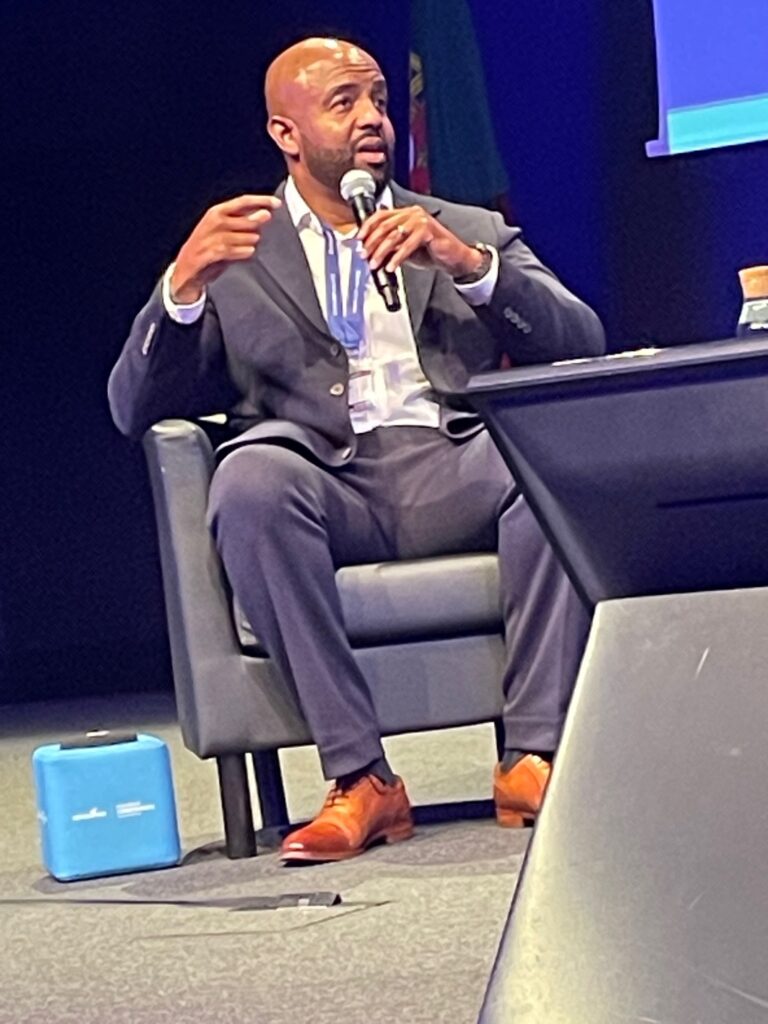
By Jacob Ngor Khot Garang

I am sharing my second story of personal experience with traveling to America for the first time to participate in the Community Engagement Exchange which provides emerging international leaders a unique fellowship opportunity through organizations such as Youth Advocate Programs, Inc. (YAP™), a national nonprofit offering community-based youth justice, child welfare, behavioral health, and neighborhood violence prevention alternatives. The first article I wrote discussed growing up in South Sudan, flying to America, and my first impressions of the United States. Below is part II.

I spent six weeks in Texas working with YAP Program Director Erika Bitar, where I worked with the organization learning about people management, how to write grants, and studying YAP’s mission of providing trauma informed care to young people and their families. All of these skills, as well as advocating for children, are experiences that I hope to use in my home country. I also discovered a lot about life from people who live in the U.S., particularly in the state of Texas.

America has a lot of things that I didn’t know about growing up in Africa. I thought it was just a small country with a powerful government, but I learned through experience that the state of Texas is three times bigger than my country of South Sudan. Of course, a country with 50 states is not a small country like I used to think.

As a young man, I also thought that everyone in America had a lot of money, however; people work really hard here to pay bills and government taxes. In my mind I thought everyone owns a house too, but I was wrong. It is expensive to buy a house and if you are renting, the only thing you get if you fail to pay the rent is an eviction notice.

I was taken aback to learn that you have to find somewhere else to stay if you can no longer pay the rent. In Africa, you can ask the landlord to give you one more month to look for the money and because we are Africans, they will give you time to borrow some money from your family or friends. It is the complete opposite here. Some landlords don’t care if you have lost your job and cannot afford to pay your rent.

I was told that you are only given three days in an eviction letter to leave, and If you have nowhere to move to, your next place of residence is the street. In some places in America, it is cold in the winter, and I cannot imagine being homeless living in harsh weather conditions. The lowest temperature in South Sudan range between 60-70 degrees.

In Africa, you will never be homeless due to not being able to pay the rent because you can go and stay with your relatives. It seems different here in my opinion. I have also come to understand that some of the homeless population may have a history of drug usage or mental health issues.

For the past two months, I have been mesmerized by so many things and one thing that stood out to me is the fancy cars. I’ve shared this before in my first article, but for every car that I have seen, it is like it was manufactured yesterday or even a few hours before. It seems that a car is not a luxury here but a necessity. In South Sudan, a car is a sign of wealth. For most people, the first time they buy a car; they will not sleep because they want to protect their car at night.

Some people will sleep in their car because owning a car in South Sudan comes with a lot of privileges. You will be respected, and if there is a community event, your tribe of men will always invite you in their meetings so that you can contribute some money. Car owners in our country think that life begins and ends with them.

In South Sudan if you’re driving a car, you think you are different from others and that you should be given special attention. In America, I have learned that you just need a car to drive to work and the rest is to meet your transportation needs. It is not an achievement to own a car like it is in South Sudan, because in America it seems almost everyone has a car.

My second impression was the condition of the roads, there are several and they are neat. How long did it take these people to build those roads? Even the way the houses are built is just really amazing.

Having pets is something else that intrigued me. Almost every person that I met has a pet, and their pets seem very healthy. There are hospitals for dogs where they are treated when they are sick. Some of the people in America are so attached to their dogs that they can’t live without them. As a dog owner, you have to provide everything for the dog and most of the dogs I have seen are happier than some human beings I have known.

In my home country, people don’t have time and resources to raise a pet and for the people who have dogs, they raise them to scare thieves and to protect their homes at night because a dog that barks at night signifies danger. For most of these dogs, they end up leaving their owners’ homes because they are not properly fed. What I have seen here is a different picture of a world I never knew existed.

Overall, I am grateful for this experience because it has put me in a position where I saw the world in its entirety. The good and the bad has equally opened my eyes to the suffering of humankind and the harsh realities of life. I believe the majority of Americans spend most of their time working and it is almost every day. I also think that about 70% of their lives are spent on their mobile phones and with pets.

The pursuit for the American dream comes with its price and you must always be ready to pay bills. Nonetheless, there are also many similarities between Americans and people from South Sudan. 

Participants in the CEE Program conducting civil society practicum are working alongside YAP staff members in Austin, Houston, Chicago, and Philadelphia. For 12 weeks, the international fellows will learn firsthand knowledge and experience as part of their assignment to collaborate with YAP on civil society initiatives and prepare to undertake community engagement projects in their home countries. The CEE Program is sponsored by the U.S. Department of State with funding provided by the U.S. Government and supported in its implementation by IREX. 

A national nonprofit in 35 states and Washington, D.C., YAP is the leading nonprofit provider of services that reduce the overreliance on youth incarceration, residential care, and group home foster placements. YAP is in its 50th year of implementing its unique YAPWrap™ individual and family wraparound services model to transform public systems to become more effective and equitable. The nonprofit also has international partnerships in Australia, Guatemala, Ireland, and Sierra Leone. Follow International Youth Advocate Programs on Facebook.

About the Author: Jacob Ngor Khot Garang (He/Him) is a South Sudanese human rights activist, writer and a U.S State Department 2024 CEE fellow who interned with Youth Advocate Programs (YAP)  in Austin, Texas.

YAP Scholarship Helps Systems-Involved Youth and Families Pursue Higher Education and Job Training

0

Las Vegas, Nev. – Aaliyah’s matriculation at the College of Southern Nevada will be a little easier financially because of Youth Advocate Programs, Inc. (YAP™) Tom Jeffers Endowment Fund for Continuing Education.

YAP is a national nonprofit that partners with youth justice, child welfare, behavioral health, education, and other systems in 35 states and Washington D.C. to deliver evidence-based community rehabilitative services as an alternative to youth incarceration and residential care/treatment. YAP also uses its unique wraparound services approach to help cities curb community violence.

A former YAP Clark County, Nevada program participant, Aaliyah received a new laptop through the Endowment Fund before starting her freshman year.

“Receiving a laptop really helped my family because my mom didn’t have to spend money on one,” Aaliyah said. “This took the stress off her back, and it was something we didn’t have to worry about buying.”

Named after YAP’s founder, the Tom Jeffers Endowment Fund is mostly funded by employee donations. The scholarship provides recipients with $1,200 for college tuition, job training/supplies fees, or a laptop computer. Current and former YAP participants and their parents or guardians can reapply for the unique scholarship fund every year while pursuing their education or career training.

YAP Clark County Program Coordinator John “Kirt” Kirtley served as Aaliyah’s Advocate. Hired from the neighborhoods they serve,  YAP Advocates work closely with program participants, their parents, guardians and other family members to connect them with individualized economic, educational and emotional tools to help them put their lives on a positive course.

“My career coach and Mr. Kirt added so much support to me and my family,” she said. “It’s truly appreciated.”   

Aaliyah.

Initially wanting to be a flight attendant, Aaliyah changed her mind and now plans to study psychology to become a psychologist so she can help young people before they reach the youth justice system.

“Being a psychologist has been my recent aspiration because I’ve been so interested in mental health,” she said. “I feel like mental health plays a big role in who we become and why we do it stems from what we went through as children. Even when I didn’t know specifically what I wanted to do, I knew I wanted to help people since I know how it feels to struggle. I can do so much with it and I know I will make a difference in someone’s life one day.”

In addition to attending her first year of college, Aaliyah is now working full time in the nonprofit field. She’s appreciative to Kirtley for motivating her and thankful to YAP for helping to open doors to more opportunities for her.

“I personally worked and coached Aaliyah to believe that she could attend college and told her about the renewable yearly scholarship through YAP’s Endowment Fund,” Kirtley said. “Now she attends junior college and is doing amazing as well.”

For more information on YAP visit yapinc.org or visit the agency on X at @YAPInc.

Advocating for Youth and Families is Latoya Rivers’ Purpose

0

Charleston, S.C. – Since retiring from the Army, North Charleston native Latoya Rivers has helped youth stay safe and away from violent behaviors. As Site Supervisor of Youth Advocate Programs, Inc. (YAP™)’s community violence interruption program (CVI) in Charleston, S.C., she will accept the Soul Harvesters Outreach Ministry’s humanitarian award during “The Night on the Red Carpet Gala,” on May 4.

“This accolade is presented by our organization to those individuals whose tireless efforts and dedication have brought noteworthy change in our community,” said Soul Harvesters Outreach Ministry Executive Director Sylvia Evans. “Through your actions, you have shown that seeing a need for change is one thing, but actually stepping up and taking action to make that change happen is where you shine.”

YAP Charleston, SC Site Supervisor Latoya Rivers and former program participant Anthony Frazier at his graduation from tech school.

YAP is a national nonprofit in 36 states and the District of Columbia that delivers community-based services as a more effective and equitable alternative to youth incarceration and out-of-home placement. In recent years, YAP has combined its evidence-based model of hiring and training neighborhood-based staff to deliver youth and family wraparound services with proven community safety approaches to help cities curb violence.

In Charleston since 2022, YAP uses the Cure Violence Global model to detect and interrupt conflicts; identify and treat individuals at the highest-risk of violence engagement; and change social norms, while also delivering its decades-old evidence-based YAP wraparound services that empower youth and families with tools to nurture their strengths and keep their lives on a positive trajectory.

“Right now I am wearing every hat there is,” said Rivers, who’s been with YAP since the nonprofit began its CVI work in Charleston. “One thing I’ve learned from the military is that you cannot give up. No matter how hard things get, you have to continue to persevere.”

YAP Charleston hosts monthly events, collaborates with community partners/agencies and strives to make YAP known in the community. Most recently YAP Charleston took program participants on a seaside excursion where they learned the fundamentals of fishing. Rivers said fishing is connected to social skills and helps to improve overall physical, mental and emotional wellbeing.

YAP Charleston, SC Site Supervisor Latoya Rivers.

Like many of the individuals she serves in her YAP role, Rivers hasn’t been shielded from the effects of gun violence. The same day she was hired by YAP she learned that her close family friend, whom she considered a nephew, was shot and killed.

“It was devastating,” she said. “We’ve known each other for at least 40 years. It was just heartbreaking.”

Rivers said in 2008, the father of her son was killed, which led him into deep grief. The experience spearheaded her to move into her purpose to advocate for youth and parents by connecting them to available resources in the community. In 2013, she started a chapter of Saving Our Sons & Sisters, a nonprofit committed to improving the lives of youth and supporting their education.

After serving in the military for almost two decades, Rivers opened a childcare facility before beginning her career at YAP.

“I enjoy championing and caring for children,” Rivers said. “I didn’t want to stop doing that. I love nurturing and keeping them safe.”

Rivers’ overall determination to keep going despite the obstacles and hardships she endured is the reason she is being honored, according to Soul Harvesters Outreach Ministry.

Soul Harvesters Outreach Ministry Executive Director Sylvia Evans.

“The actions of your organization, Youth Advocate Programs, have made a significant difference in addressing the social and emotional issues of our youth,” Evans said. “We believe that this award is a well-deserved recognition of your hard work and dedication.”

Rivers will be recognized during a gala at 5 p.m. on Saturday, May 4 at the Crowne Plaza, 4841 Tanger Outlet Blvd., in North Charleston.

To learn more about YAP and to support its work, visit www.yapinc.org.
Youth Justice System in Her Past and her Dream Career in Mortuary Science in her Future

0

Philadelphia, Pa. – The death of her maternal grandmother is what piqued former Youth Advocate Programs, Inc. (YAP™) Philadelphia program participant Aniya’s interest in mortuary science.

Since last spring, the 17-year-old has been going to the W. D. Jackson & John H. Joynes Funeral Home at least once a week after school to learn about the funeral business. The job came through YAP Supported Work, a YAP service where program participants are matched with employers close to home in fields that align with their interests and strengths.

“I am learning about basically everything that has to do with funerals from start to finish, going from picking up the body to the burial,” Aniya said. “Everyone there is really nice, welcoming and very helpful.”

YAP is a national nonprofit that partners with youth justice, child welfare, behavioral health, education, and other systems in 35 states and Washington D.C. to deliver evidence-based community rehabilitative services as an alternative to youth incarceration and residential care/treatment. YAP also uses its unique wraparound services approach to help cities curb community violence. Neighborhood-based YAP Advocates and mobile therapists deliver strength-based, culturally responsive individualized services that connect program participants and their families with economic, educational, and emotional tools to help them thrive.

Aniya was connected to YAP Philadelphia’s youth justice program at age 16 while on house arrest for theft. YAP Advocates Caprea Ross and Valentina Landrine supported Aniya, empowered her to see and nurture her strengths, and encouraged her to use her talents.

“Working in the funeral home is something she was passionate about,” Ross said.

YAP recently received a grant from the Boeing to make YAP Supported Work available to more program participants. The Boeing grant also enables YAP to enroll more participants in YAPWORX™, an employment readiness training program that engages volunteers to educate justice and child welfare-systems involved young people about their jobs and businesses, provide mentoring, and create social capital.

W. D. Jackson & John H. Joynes Funeral Home Assistant Funeral Director Andre Dozier was familiar with YAP when Ross reached out to him to tell him about Aniya’s interest in mortuary services and asked him to give her a YAP Supported Work job. 

Aniya and W. D. Jackson & John H. Joynes Funeral Home Assistant Funeral Director Andre Dozier. Photo Courtesy W. D. Jackson & John H. Joynes Funeral Home .

“When I was young, I didn’t always have those opportunities and seeing how people can go through struggles in life gave me the notion to say hey those people still need help too,” he said. “Everybody doesn’t always get a second chance, third, fourth or fifth chance. If that is something you really want to do and I see that in someone I don’t mind helping to give back.”

Dozier, who inherited the family business alongside his cousin after his grandfather’s death, says he gave Aniya an opportunity because he believes in reaching back to uplift others.

“Aniya is very bright,” said Dozier. “She is the youngest person I know that actually can handle being around this type of business. Not a lot of people like being around this type of business, it’s very rare. She shows that she doesn’t have any fear.”

Aniya graduated from YAP and has since gotten off of probation. 

“She is a good kid who just got caught up in the juvenile court system. She has progressed a lot,” Ross added.

While YAP Supported Work provided Aniya’s compensation while she was enrolled in the program’s community-based rehabilitative services, she has continued her employment at funeral home as an intern. Dozier said Aniya is learning everything she can about the business. She was recently added to the company’s website where she’s described as “soft-spirited fashion-forward funeral director intern” whose “passion for mortuary work is rooted in a deep desire to provide comfort and support to families during their most difficult times.”

“I am super proud of her,” said Ross, whose been at YAP for five years. “Most kids don’t know what they want to do but she does and she is not backing down. She is rocking it. Black girl magic all day. She enjoys it. The funeral home loves her and she loves them.”

Ross said Aniya has helped with approximately 10-15 funerals. Dozier and staff are teaching Aniya about the history of the funeral home, how to make pre-arrangements, how to socialize around people during a sad time, the order of service, clerical work, housekeeping, and helping her learn more about herself.

“She is receiving a lot of business management traits,” Dozier said. “She’s learning her hard and soft skills. This is good to put on her resume.”

Aniya appreciates how Dozier explains things in a way that she can comprehend and admires his patience.

“I really like it there,” she said. “Mr. Andre tries to explain things in a way that my 17 year-old brain understands. He knows that I am more of a visual learner. That place is like my home away from home.”

Moreover, Aniya doesn’t want families to worry more than they have to. Instead she would like to help ease the burden for the loved ones of the deceased as much as she can. Since working at the funeral home, Aniya has increased her self-confidence and willingness to engage with new people, said YAP Philadelphia Assistant Director Amelia Mullock.

“Aniya has grown significantly,” Mullock said. “She is a silly, energetic, empathetic young lady who has a desire to learn and grow.”

YAP Philadelphia Assistant Director Amelia Mullock and Aniya.

Aniya’s goal right now is to get her grades up. She has one more year left of high school and then plans to attend an in-state college that both offers a major in mortuary science and on-campus dormitories.

“I know people’s families worry after death, but I want to open my own funeral home to make funerals be a little easier on them so they don’t have to worry about so many things,” she said. “I just want to help people.”

W. D. Jackson & John H. Joynes Funeral Home created a GoFundMe account for Aniya’s education. She can also apply for a scholarship through the Tom Jeffers Endowment Fund for Continuing Education, which is mostly funded by YAP employee donations and scholarships are provided to eligible current and former program participants with $1,200 for college tuition, job training/supplies fees, or a laptop computer.

In its pre-50th anniversary year, YAP is looking to partner with more corporations and small businesses to extend YAP Supported Work and YAPWORX™ to more program participants. To learn more about YAP, visit yapinc.org or follow the organization on X at @YAPInc.

Turning his Pain to Promise: YAP Scholarship Awardee Plans to Become Doctor

0

Scranton, Pa. – Now a freshman at the University of Scranton in Pennsylvania with aspirations to become a doctor, former Youth Advocate Programs, Inc. (YAP™) Lackawanna County, Pa. program participant Daniel entered his collegiate career with a new laptop in tow thanks to the Tom Jeffers Endowment Fund for Continuing Education.

In his scholarship essay Daniel wrote, “the laptop that I have has a cracked screen and a chunk of it is missing. While it’s still functional, it is difficult to use and will not help me much in college. I do not have another computer. If I am awarded this scholarship, I will request a laptop that I will need as I pursue my college and work toward my life goals.”

Former YAP Lackawanna County, Pa. Program Participant Daniel (middle) with John and Kim Hunt.

YAP is a national nonprofit in 35 states and Washington, D.C. partnering with youth justice, child welfare, behavioral health, education, and other systems to deliver community-based services as an alternative to incarceration/residential care, and group home foster placements. YAP Lackawanna County, Pa. offers a behavioral health program where youth and their families are supported through trauma-informed services that includes connecting them to educational, economical and emotional tools.

Named after YAP’s founder, the Tom Jeffers Endowment Fund is mostly funded by employee donations and scholarships are provided to eligible current and former program participants with $1,200 for college tuition, job training/supplies fees, or a laptop computer.

Introduced to YAP at a young age, Daniel became involved with the YAP Lackawanna County, Pa. program when his adoptive family thought it would be good to help him work through some of his childhood trauma. Prior to the adoption, he was removed from his birth family at age 7, when he entered the foster care system.

At age 18, during his senior year of high school, YAP Lackawanna County Pa. Program Coordinator Kim Hunt and her husband John learned that Daniel was on his own and they stepped in to help.

“When I heard his story, I went outside and called my husband – not releasing information that he was a program participant to my husband – who said ‘I think we need to offer him to come live with us.’ If we didn’t, he would have been homeless living under a bridge,” Hunt said.

Hunt was not Daniel’s Advocate, but he had the support of all of the YAP Scranton staff including Clinical Director Andrea Sharpe, along with Behavioral Clinicians Tara Rotell and Bonnie Bower.

“Throughout the years of being with YAP, they have provided numerous services with some of the best people I have met in my life,” Daniel said. “I have meaningful connections with almost every person that has worked with me. The people at YAP have helped me to be myself and to help me to build my future.”

Daniel said if it weren’t for YAP he would not be where he is today in a safe environment pursuing his educational goals. He said his desire to enter the medical field stems from a need in wanting to give back and pay it forward. Admittingly not having the best childhood, he is turning his past pain into promise.

“Everyone at YAP helped me to find my new home, where I am loved,” he added. “I came into YAP suffering from a lot of emotional trauma and had already been in foster care. YAP helped to support me through a lot of hardships in my life.”

Hunt, who has been with YAP for 17 years, agrees with Daniel in that everyone who works at YAP is supportive, authentic and believes in the agency’s mission. That is the reason she has stayed with the organization this long. She also donates weekly through payroll deductions to the Tom Jeffers Endowment Fund.

“Kim will tell you her and her husband are the fortunate ones,” said Patty Rosati, YAP’s Chief Impact Officer and President of the Tom Jeffers Endowment Fund. “They are so selfless in their love for Daniel, it is so heartwarming. Kim is a true YAPPER who walks the talk.”

As to not disrupt Daniel’s financial aid for college, Hunt and her husband plan to legally adopt him once he completes school. Hunt is delighted that Daniel can apply to the Endowment Fund for the remainder of his matriculation through college, helping to ease his debt if even just a little bit.

“I am in a healthy situation now and growing, it’s probably the best thing I could have ever asked for in my life,” Daniel said. “I have developed multiple goals for myself throughout the years, some short term and some long term. Since I was 12, I wanted to help people by being a doctor. That’s why I am going to college, to learn the things I need to in order to achieve my goals.”

Learn more about YAP at www.yapinc.org and follow the organization on X @YAPInc.

YAP South Sudanese Fellow: The America I Knew in Movies Versus the Real America

0

By Jacob Ngor Khot Garang

Guest Writer

As a young man growing up in Africa, I never thought that one day I would have a chance or an opportunity to visit one of the world’s most powerful nations, the United States. I am sharing my personal experience with traveling to America for the first time to participate in the Community Engagement Exchange program which provides emerging international leaders a unique opportunity a fellowship through organizations such as Youth Advocate Programs (YAP), Inc., a national nonprofit offering community-based youth justice, child welfare, and neighborhood violence prevention alternatives.

When I left South Sudan for the U.S. earlier this year, I knew that I would have the chance to learn many new things. I also knew I was leaving a place that taught me resilience and provided me with a strong work ethic, but I was not naive to the fact that my native country has shown me at a very young age about the darkest part of humanity which includes killings and hatred. A civil war in Sudan between two rival armed entities has caused many people to be killed, hurt, or flee the country.

My trip to the U.S. started on a flight from Juba International Airport in South Sudan through the Addis Ababa Bole International Airport in Ethiopia with a layover in Paris, France, then to Detroit, Mich., and to my final destination of Austin, Texas where I am working to learn more about YAP’s trauma-informed behavioral health programs. Stepping foot on my first flight left me with a feeling of both joy and sadness. I was happy because I was traveling to engage in the CEE program and work with YAP. On the other hand, I was saddened while making the trip because many people on the plane from South Sudan were traveling to Cairo, Egypt in search of better medical attention from their ailments.

I arrived Ethiopia at 7 p.m. The airport was packed with travelers who were moving throughout the airport during its busiest peak hours. I had to wait for a connecting flight for a while and never knew how to change the little bucks we had into Ethiopian Birr currency so that we could buy some snacks. There was a Swiss man who was on the flight who had been in South Sudan since 2016 working with vulnerable children. He showed us a few pictures of the projects he has been spearheading and I was impressed. He was traveling to Switzerland to see his family. This man also bought me some food and water as I waited for my next flight. I have never seen that kind of love before; he was just being kind. We spent some time together in the airport and then parted ways. The next journey I was about to embark on was more fun and the longest leg of the pilgrimage. It was enjoyable because unlike the previous flight, all of those onboard were traveling for different reasons like going to see their families and others were on traveling on business.

I assumed that some of the passengers on the flight made a lot of money and were enjoying life. It was at that moment that I realized that my perspective would never be the same. I finally reached Detroit around 1 p.m. and the first thing that caught my attention after leaving the airport was all of the fancy cars. I have never seen such cars before. They were new and awesome. I was asking myself why they didn’t have old cars and the second thing I noticed was all of the snow. The snow was beautiful to me because it was my first time seeing it. However, because I wasn’t used to the snow, I found it hard to deal with. In South Sudan, it is hot throughout the year. How do people cope with snow?

My first week in the U.S. was a struggle. The food wasn’t that good because everything was new to me. I believe that our food system in South Sudan is good compared to American cuisine because we eat organic food, straight from the farm. The difference in food between the U.S. and South Sudan is that we don’t have enough food. Although we have fertile soil, we cannot grow our own food because of insecurity.

I always thought of America as a perfect nation and indeed it is because the people here are really great. But I also learned about the homeless; those who I assume feel invisible to the outside world. I thought everyone was working and making money in the U.S., but I was wrong. Money doesn’t grow on trees here and if you lose your job, you may end up on the street. I also learned about school shootings done by school children and that broke my heart. I can’t believe kids have access to guns and I was told that it is not illegal to own a gun, but it is a crime if you use that gun to kill. I was shocked to learn all of this and wondered why would anyone need a gun in the first place.  

America has taught me some things that I never knew when I was in South Sudan. Those things include gratitude and time management. We have time back home and really don’t know what to do with it. In this country, time is a resource and you must make good use of it. Everyone here is appreciative and people always wear smiles on their faces, something I have missed for years since the war in South Sudan started. It’s nice to see Americans saying thank you and speaking so friendly to one another, which is the opposite of what I have witnessed in South Sudan recently.

In my country, and in my opinion, people are always sad and this also forces you to be sad even when you have some reasons to be happy. This is because of the long protracted wars in my country. In South Sudan, if you have five reasons to be happy, you will have 20 more reasons to be sad. To be continued. Part 2 will be published in April.

Participants in the CEE Program conducting civil society practicum are working alongside YAP staff members in Austin, Houston, Chicago, and Philadelphia. For 12 weeks, the international fellows will learn firsthand knowledge and experience as part of their assignment to collaborate with YAP on civil society initiatives and prepare to undertake community engagement projects in their home countries. The CEE Program is sponsored by the U.S. Department of State with funding provided by the U.S. Government and supported in its implementation by IREX. 

A national nonprofit in 35 states and Washington, D.C., YAP is the leading nonprofit provider of services that reduce the overreliance on youth incarceration, residential care, and group home foster placements. YAP is in its 50th year of implementing its unique YAPWrap™ individual and family wraparound services model to transform public systems to become more effective and equitable. The nonprofit also has international partnerships in Australia, Guatemala, Ireland, and Sierra Leone.

About the Author: Jacob Ngor Khot Garang (He/Him) is a South Sudanese human rights activist, writer and a U.S State Department 2024 CEE fellow currently interning with Youth Advocate Programs (YAP), Inc. in Austin, Texas

From Intern to Advocate: Harley Pressel is Making a Difference for Kids on Probation

0

York, Pa. – “A pretty cool chick; and an absolutely wonderful human being who gets along with everybody.” That’s how Youth Advocate Programs (YAP™), Inc. York County, Pennsylvania Lead Advocate Harley Pressel’s supervisor describes her. 

“Harley really has built a phenomenal relationship with our referring agency,” said YAP York County, Pa. Director Natasha Kara. “They love her to death and she is an amazing member to our team.”

A partnership with York County Probation Services’ Juvenile Wellness Court, the YAP York County, Pa., Youth Justice Program provides systems-involved young people ages 14-18 with a neighborhood-based Advocate who is trained to empower them with tools to see and nurture their strengths.

“I wanted to take a moment to extend my appreciation for our ongoing partnership with Youth Advocate Programs and most specifically, for Harley’s role as a member of our team,” said Juvenile Wellness Court Coordinator/Specialty Programs Supervisor Danielle Salisbury. “Harley is truly an asset to our team.  She is professional, energetic, and hard working.”

Harley Pressel.

YAP connects program participants and their parents and guardians with resources to meet their individualized economic, educational, emotional, and basic needs.

In its pre-50th anniversary year, YAP is a national nonprofit it 35 states and Washington, D.C. that partners with youth justice, child welfare, behavioral health, education, public safety, and other systems to deliver community-based services as alternatives to youth incarceration, residential care, and neighborhood violence. The nonprofit’s national headquarters is in Harrisburg, PA, and the York County office is one of about 30 county YAP offices in the Commonwealth of Pennsylvania.

The York County program has the capacity to serve up to 20 youths, but currently has approximately eight program participants all assigned to Pressel who started with YAP as an intern her senior year at York College of Pennsylvania in 2022. York County Probation Services’ Juvenile Wellness Court refers many program participants to YAP due to substance and or mental health issues. Pressel sees each of them once – sometimes twice a week – and connects with them by being a confidant who offers encouragement, assistance and takes them on an outings to the mall or park if they’ve reached their goals.

“I definitely try to get on their level,” said Pressel, adding that she makes it a point to also communicate with the youths’ parents or guardians. “I am not a probation officer. I am there to help support them in any way possible. That helps them to be honest throughout the program.”

October 2024 marks two years since the York County YAP program got off the ground. Kara and Pennsylvania Regional Director Bob Swanson aligned the program to address the needs and trauma of youth who are on probation.

Swanson said Pressel abilities are a testament to the dedication of YAP staff who help change the lives of young people.

“Harley was the Advocate who Natasha went to right out of the gate; with confidence she would be the staff who could and would provide the best support,” Swanson said. “To hear probation’s feedback really affirms Natasha’s assessment of Harley’s abilities.”

Pressel is extremely proud of all of her program participants, but highlighted one in particular who was able to complete the program in four months, two months earlier than it normally takes. She said he was able to get off drugs, devoted his all to the program, had straight A’s in school and even applied for scholarships including the Tom Jeffers Endowment Fund for Continuing Education to further his education.

“It was good for the other participants to see him doing well,” Pressel added. “I just feel empowered to do what I need to do to help youth. I have always had a passion to want to help others.”

For more information on YAP, visit yapinc.org or follow the organization on X at YAPInc.

With Help from Youth Advocate Programs, Julian is Off Drugs and Turning His Life Around

0

Providence, R.I. – With the help of Youth Advocate Programs (YAP™), Inc., former program participant Julian was able to get off drugs and get back to high school.

“My [YAP] Advocates were very understanding and patient,” Julian said, adding they helped him obtain a social security card so he could get a job. “They would help sit down with me to get myself on the right track and work with me on my goals.”

According to the Office of Juvenile Justice and Delinquency Prevention, there is a link between substance abuse and delinquency.

“A good 60-70% of youths we serve in the youth justice system typically have substance abuse issues,” said Regional Director Estrella Griggs (Licensed Professional Counselor & Licensed Chemical Dependency Counselor) of Santa Fe Youth Services in Texas, a Division of YAP. “In Sante Fe we provide substance abuse programs that are specifically designed for adolescents. All of our programs are individualized with the program participant receiving an assigned counselor who will work with them through the process of recovery.”

In its pre-50th year, YAP is the leading nonprofit provider of trauma-informed services that reduce the nation’s over reliance on youth incarceration, residential care, and group home foster placements. In 35 states and Washington, D.C., and headquartered in Harrisburg, Pa., YAP partners with public systems to provide community- based wraparound and behavioral health services as an alternative to out-of-home placement. YAP also uses its wrap around services approach in its community violence intervention (CVI) work in several cities across the country.

Julian was referred to YAP for substance abuse issues and was required by the court to complete three months in the program to have his drug case dropped. Julian said he first started doing drugs at age 14 and got off them at 18. Born in Texas, he was adopted by his grandmother and moved to Rhode Island with her when he was two years old.

Julian.

“Julian has come a long way,” said YAP Providence County, R.I. Assistant Director Allen Leach. “In the beginning he was doing pretty badly. He wasn’t going to school at all but now he’s graduated from the program and is doing well.”

Leach was on the team of YAP staff and Advocates who worked with Julian. Often hired from the neighborhoods they serve, YAP Advocates are trained to empower program participants to see their strengths while connecting them and their families to wraparound services that include individualized educational, economic, and emotional tools to help them achieve their goals and re-set their lives.

Aside from his day job, Julian is an artist and makes music. His next goal is to get a car.

“He has come a long way from where he was and what he was going through to where he is now,” Leach said. “He is spiritual and is into crystals and that type of thing. He goes to work, goes to appointments, and still is on top of his future.”

“If it wasn’t for YAP, I probably would be dead or in jail; something drastic like that,” Julian added. “YAP is an amazing program. All of the staff are very understanding and helpful people. It’s nothing but positive energy to be around.”

Learn more about YAP and how you can support the national nonprofit’s work at yapinc.org/donate.

Follow the nonprofit on X @YAPInc.

Youth Advocate Programs (YAP™) Dallas Leader Recognized for Violence Intervention Work

0

Dallas, Texas – The Director of Youth Advocate Programs (YAP™) Inc.’s Dallas Cred violence interruption team is a nominee of The Epiphany Advocates of Change Award. He will be recognized during the April 6 Inaugural Life to Legacy Gala hosted by the Bishop Omar Jahwar Foundation.

Victor Alvelais has been a part of the Dallas Cred team since its inception and has led the team since 2022. YAP launched Dallas CRED in May 2021 as part of the City of Dallas to include violence interrupters in its public safety strategy. The violence interruption approach was recommended as part of the Mayor’s Task Force on Safe Communities. Today Dallas Cred is funded through the Communities Foundation of Texas (CFT) W.W. Caruth, Jr. Fund.

YAP is a national nonprofit in 35 states and Washington, D.C. partnering with youth justice, child welfare, behavioral health, education, and other systems to deliver community-based services as an alternative to incarceration and residential care, and group home foster placements. YAP’s evidence-based wraparound services model is also part of the nonprofit’s growing community violence intervention and prevention work in communities across the nation. 

 “Bishop Omar was a pioneer in brining community violence intervention services to Dallas. I am honored and humbled to be acknowledged as a nominee for this award,” Alvelais said. “This is a testament to the hard work that the Dallas Cred team does in helping the community and our neighbors; and I’m honored to have the opportunity to support and learn from each of my co-workers and the people we serve every day.”

YAP Dallas Cred Director Victor Alvelais.

According to the Bishop Omar Jahwar Foundation, nominees are Dallas residents who demonstrated the spirit of Bishop Jahwar through business excellence, ethical standards and behaviors, and the desire to uphold social responsibility within their communities. The Bishop Omar Jahwar Foundation partners with change agents who impact lives in underserved communities and break down barriers that prevent people from seeing themselves as God sees them.

“The Bishop Omar Jahwar Foundation partners with change agents who impact lives in underserved communities and break barriers that prevent people from seeing themselves as God sees them. We do this by providing pathways to opportunity with resources, support, funding, workshops, and tools,” said Fayth Jefferson, sister of Omar Jahwar. “The Bishop Omar Jahwar Gala  is our inaugural signature fundraising event to highlight and invest in individuals, groups, and organizations who inspire their communities.”

Dallas Cred focuses on identifying individuals who meet criteria for being at the highest risk levels of being engaged in violence. These include people who have recently returned home from jail or prison or are otherwise justice system-involved; individuals who are gang-affiliated; and those who have recently lost someone to gun violence and at risk for retaliating. At the same time, the team works to help individuals throughout these neighborhoods see their strengths while connecting them with tools to help them put their lives on a positive course. In addition to Alvelais, Dallas Cred consists of Violence Interrupters Tonya Sparks, Juan Perez and Credible Messenger Untruan Grant.

“Everyone brings a separate piece to the puzzle to effect positive change. Myself and Juan were recently from prison after serving 26 years and Tonya and Untruan have been doing this work for over a decade,” Alvelais said. The whole Dallas Cred team together brings a lot of unique skills and qualities from which I am constantly learning from.”

After serving 26 years in prison, Alvelais returned home to Dallas where he grew up and dedicated his life to making sure others did not choose a path that led to prison.

“Sadly, I have a shared lived experience with the community,” Alvelais added. “It was because of some poor decisions I made in the past. Being a part of Dallas Cred is part of my own personal road to redemption for which there is never an end goal except to continue to make a difference.”

While in prison, Alvelais worked as a coordinator for the Virginia Department of Corrections Veterans Housing Community where he established the Veterans Housing Unit, created a rehabilitative program for residents, organized work projects for the vets, and advocated for resources and opportunities for them. Prior to that, he led the National Second Chance Organization, providing redemption resources to incarcerated individuals, leading fundraisers, advocating for second-chance opportunities for incarcerated people, and publishing a newsletter.  Alvelais is a graduate of Franklin D. Roosevelt High School in Dallas and the author of L.I.F.E. Sentences, a daily affirmation book aimed at preparing incarcerated people for a successful release.

The Life to Legacy Gala will be held at 7 p.m. at Gilley’s Dallas, 650 North Avenue I in Dallas. For tickets and more information, visit bojf.orgBishop Omar died in 2021.

Learn more about YAP and how you can support the nonprofit’s work at YAPInc.org. Follow the organization on X @YAPInc.  
‘If I Can Do it, So Can You’ — LaShawn Jenkins Connects Systems-Involved Kids with Tools to Turn their Lives Around

0

Chicago, IL — At age 27, LaShawn Jenkins knows all too well the unique value she brings to her work and the lives of the young people she serves at Youth Advocate Programs (YAP), Inc. in Chicago.  

When she was 15, Jenkins herself was a YAP participant; and like the youth she now works with at the agency, she faced complex challenges. 

“I was very stubborn — didn’t want to do anything; afraid to let them [the YAP team] come in and help me.” 

Founded in 1975, YAP is a national nonprofit in 35 states and Washington, DC that partners with youth justice, child welfare, behavioral health, education, and other systems to deliver community-based services as an alternative to incarceration and residential treatment and placements. YAP’s evidence-based wraparound services model is also part of the nonprofit’s growing community violence intervention and prevention work in communities across the nation. Using zip code-based staff recruitment, YAP hires culturally responsive Advocates, Behavioral Health staff, and Credible Messengers to work with young people and their families at home, school, and other community-based sites. YAP teams are trained to empower program participants with skills to put their lives on a positive track by connecting them with individualized tools — including basic needs resources — to help them see and nurture their strengths and give back to their communities. 

Jenkins entered the child welfare system at birth.

“I was born into foster care,” Jenkins said. “I was adopted by a very kind couple when I was eight. They had two kids and they also had adopted my biological brother, but after being bounced from home-to-home, I had trouble trusting people and was having a lot of emotional issues.” 

In addition to moving a lot as a child in the foster care system, by the time she was adopted, Jenkins had lived briefly with her father before she was a toddler and had vivid memories of visiting him after that when he was in prison.

By age 8, Jenkins had lived with many families.

Compounding her pain and confusion, she had never lived with her biological mother and was aware that she had other siblings throughout the city whom she didn’t know. 

By her early teens, Jenkins had experienced multiple arrests and placements in numerous detention and residential care facilities. She said that while her adopted parents never turned away from her, a judge returned her to the child welfare system. That was when she became a participant in YAP where she began to work with a team of Advocates who believed in her from the start and never gave up on her. 

“Marlon, Antoine, E’Ron, Lanita, Jasmine, Shaquita, Nikki – they saw something I didn’t see in myself,” she said. 

By then, Jenkins was a freshman at a high school that specializes in working with students with serious behavioral and other health needs.  

“My Advocates helped me get back into regular school; and when I would mess up, they encouraged me, telling me, ‘You’re better than this.” 

Jenkins thanks YAP for helping her rebuild her relationship with the couple who adopted her before her entry into the youth justice system and re-entry into the child welfare system.

Jenkins said her YAP Advocates helped her strengthen her bond with her adopted foster parents (the Jenkins’) and empowered her with tools that helped her begin to rebuild a relationship with her biological father and start fresh with her mother and siblings with whom she had recently connected. 

“Lanita helped me with the situation with my mom — helped me understand her story. She met my mom and would invite her and some of my other siblings out with us to help build that bond,” Jenkins said. “If I never listed to Lanita, I would never know what my mom went through herself.”  

Jenkins thanks her YAP team for supporting her throughout her high school years.

She credits her whole team of YAP Advocates for helping her stay on track and graduate high school.  

In 2023, Jenkins was back at YAP as a young adult, but not as a program participant. This time, she was applying for a job. 

“I wanted to come back and give back to kids the way my Advocates gave back to me,” she said.  

So far, as a YAP Advocate, Jenkins has worked with nine program participants. She said they are all making progress, “baby steps,” as she described it. 

“Building trust is the first step. I give them hope that I’m not going to just be in and out of their lives. They need to know someone will be there steady,” she said. 

Jenkins’ superpower as a YAP Advocate is the experience that she shares with those she serves — kids who are systems involved with complex childhoods that are difficult to navigate. 

“I tell them, If I can do it, so can you.” 

Learn more about YAP and how you can support the nonprofit’s work at YAPInc.org. Follow the organization @YAPInc.  
With Tools from His YAP Advocate, Shamarion is Taking Steps Towards a Positive Future

0

At age 16, Shamarion has begun to recognize and appreciate his strengths – that he’s smart, respectful, cares about his mother, and is a great big brother to his siblings. Fulton County, Ga. Youth Advocate Programs (YAP), Inc. Program Director Haasan Smith has been working with Shamarion, encouraging him, and connecting him with tools to nurture his strengths.

YAP CEO/President Gary Ivory and YAP VP of SE LaVeisha Cummings.
Shamarion and mom, Aneka, with YAP Board members.

YAP is a national nonprofit in 35 states and Washington, D.C. that hires and trains culturally responsive Advocates, credible messengers, and behavioral health professionals to deliver community-based alternative-to-incarceration/placement, aftercare, diversion, and public safety services.

YAP Board Member Clarence Campbell giving guidance to Shamarion.

Shamarion said he landed in YAP after refusing to comply with his principal following a school fight and other incidents where he was making decisions that got him into trouble. He credits Smith for helping him navigate decisions and distractions.

“He helped me to mature and grow as a young man,” Shamarion said.

Shamarion, Fulton County YAP Program Director Haasan Smith and YAP VP of SE LaVeisha Cummings.

The Fulton County program is one of six YAP pilots launched in 2019 and 2020 that a Center for Juvenile Justice Reform at Georgetown University report found to be “extremely successful” in serving youth and families.

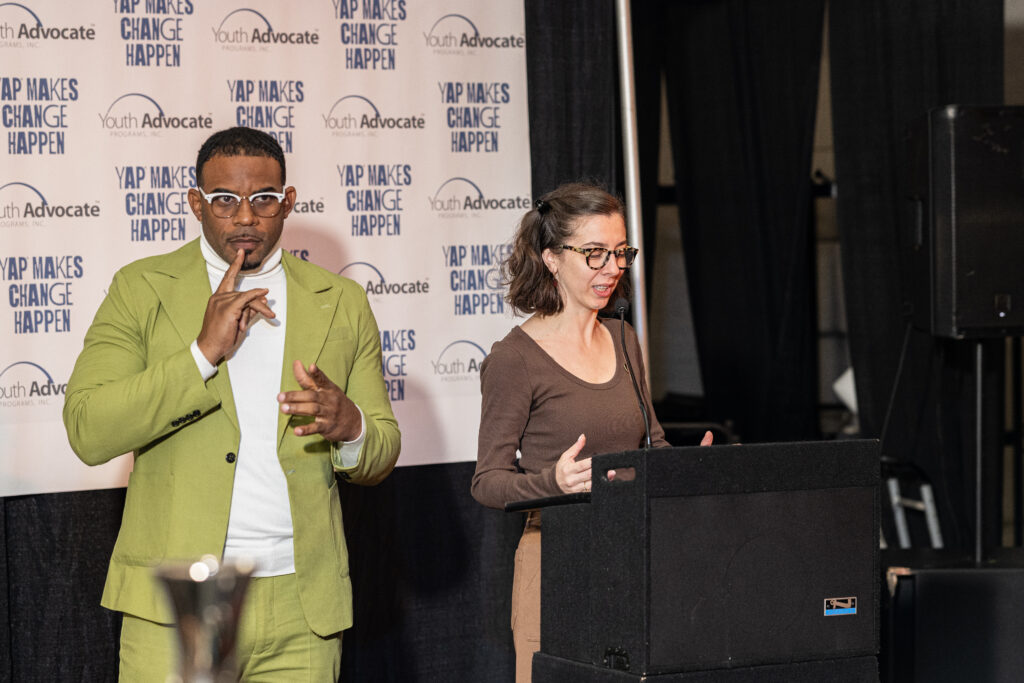
YAP Board Chair and Ga. Rep., Hon. Teddy Reese moderating a panel discussion featuring Shamarion

Smith invited Shamarion and his mother to share their story with members of the YAP Board of Directors during a recent meeting in Atlanta.

YAP Board Members Janet Lincoln and Kamia Brown.

“Some people don’t have the right people to lead them and guide them to the right choices and he helped me with that,” Shamarion told the YAP Board members when sharing about his experience working with Smith. “Now, I feel like I’m better at making choices and thinking through some of the things I do. I’m not saying I’m perfect because I’m still growing, and I still making mistakes, but I’m better at how I carry myself.”

YAP Fulton County Program Director Haasan Smith.
Mother and son.

Shamarion aspires to be a successful real estate broker and music industry artist.

He’s a great kid who just needed to see and believe in his strengths,” Smith said. “I’m helping him figure that out and will be introducing him to people in the fields he’s interested in to provide some additional support and guidance.”

Learn more about YAP at YAPInc.org.
Overcoming his own struggles, New Harrisburg YAP Director Helps Others Tackle Theirs

0

Harrisburg, Pa. – Youth Advocate Programs (YAP), Inc. Dauphin County Community Treatment Center (CTC) Director Craig Gittens connects with young people before their actions could lead to lifelong repercussions in adulthood. 
Many of the program participants CTC serves are inner city, gang affiliated, have minor drug and firearm charges, and some use marijuana to self-medicate from other issues they may be experiencing, according to Gittens. 

“I was working with grown men with issues with substance abuse, incarceration, abandonment and rejection from fathers,” Gittens said. “Now I get to work with youth so maybe we can stop the process before problems continue to grow, take root and create damage. The youth we work with think their biggest penalty is going back to jail but the biggest penalty is that they’re dead on a T-shirt.”

Headquartered in Harrisburg, YAP is a 49-year-old national nonprofit in 35 states and Washington, D.C., that partners with youth justice, child welfare, and public safety systems to deliver community-based services as alternatives to incarceration and placement. YAP also uses its community-based wraparound services model as part of its  public safety  and violence interruption work. 

In an interview with theneighborhoodadvocate.org, Gittens, a father of six – four of whom are teenagers – said he has been drug and alcohol free for 1,586 days (and counting). A drug and alcohol counselor and public speaker, he has led YAP’s Dauphin County CTC since August 2023. CTC program participants are ages of 14-18. They attend the afterschool program where they are fed, get help with homework, participate in recreational activities, complete chores, and receive treatment and training tools to equip them to make better decisions.

“In order to teach kids how to kill their demons, you must first kill your own,” Gittens said. “One of my youth has had three of his friends die. You have to know what the struggle is and it doesn’t necessarily have to be a background of violence. If you come in there perfect, they don’t want to deal with you. I share that I have done things, spent time in jail, but I don’t always share the substance abuse part because for a lot of them they haven’t had major drug abuse issues.”

A Bronx, N.Y., native, Gittens has lived in Boston and Atlanta but eventually put roots in Harrisburg where as a little kid, he attended Bible Camp. He said although he had it rough growing up, his family sustained him, saying he grew up in a different era compared to today.

“It was a horrible time, but our family unit was so strong that I was protected. It was still a strong sense of community and I think that is what is different now,” Gittens said, adding that he grew up in poverty and in the projects. “It may be that parenting or the legal system has failed young people nowadays; but we are doing what we can to help step in and fill those voids. A lot of them fall into that false narrative that gangs are a family, but it has dire consequences.”

Gittens said he didn’t know anything about YAP before he noticed the job opening, read the mission of the organization and applied.

“We have a great community here as far as the people that I work with,” Gittens said. “I work with a great group of people. There are easier ways to make the money we pay them. The people here are here for a purpose.”

In December, Gittens received the 2023 Dauphin County Male Recovery Champion of the Year Award from the Dauphin County Commissioners in recognition of his efforts to support those who are fighting to make positive changes in their lives.

YAP CTC Director Craig Gittens received the 2023 Dauphin County Male Recovery Champion of the Year Award from the Dauphin County Commissioners.

“Craig is the real deal,” said Central PA Regional Director Bob Swanson. “He brings passion in supporting our youth, day after day.”

Gittens speaks at schools and works with organizations to help reduce the stigma with substance abuse disorder.

“Kids are not going to do what you say because you tell them,” he said. “It’s based on relationships and trustworthiness and that is what we do. Some people just want to incarcerate our youth, but YAP is an alternative to youth incarceration and we have to invest in our children and plant seeds. We may never see the seeds develop, but we plant seeds of hope, trust and values.”

Gittens dedicates his work to his mother Thealo Gittens who passed away two years ago of pancreatic cancer.

“She prayed for me for two decades to get my life together,” he added. “I dedicate what I do to my mom.”

For more information on YAP, visit yapinc.org or follow the agency on X, formerly Twitter,  @YAPInc.

YAP Roanoke’s Youth and Families Receive Holiday Gifts Thanks to Omega Psi Phi Fraternity, Inc.

0

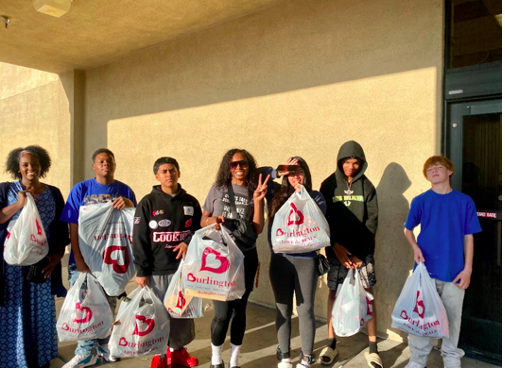
Roanoke, Va. – Program participants of Youth Advocate Programs (YAP), Inc. Roanoke received holiday toys and essential items, thanks to the generosity of the Eta Lambda Chapter of the Omega Psi Phi Fraternity, Inc. at Virginia Tech University.

About 10 members of the fraternity brought gifts and other needed items and donated them to YAP Roanoke youth on Dec. 15 ahead of the holiday season.

“On behalf of YAP Roanoke I just want to thank the members of the Eta Lambda Chapter of Omega Psi Phi for collaborating with our program,” said YAP Roanoke Program Director Breyon Fraction. “We are grateful for the support and dedication of Omega Psi Phi Fraternity members and look forward to future collaborations that will continue to make a positive impact on the lives of those we serve. We are blessed to have young men in our community making an impact and building relationships with organizations like YAP.”

A national nonprofit in 35 states and the District of Columbia, YAP partners with youth justice, child welfare, education, behavioral health, and other systems to provide community-based services as more effective and equitable alternatives to youth incarceration and residential care. YAP also partners with public safety systems to implement neighborhood anti-violence initiatives.

YAP Roanoke’s youth justice program participants are provided with neighborhood-based Advocates who support their families with economic, emotional and education wraparound support. The Roanoke program also has a behavioral health program where youth are supported with intensive-therapy.

“The collaboration not only reflects our shared commitment to uplifting the youth and families in Roanoke, but also signifies the power of community partnerships,” said Fraction, who has been a member of Omega Psi Phi for 25 years. “Each Omega chapter administers internationally mandated programs annually, aligning seamlessly with the work Roanoke YAP does in the community. These programs, which include voter registration, illiteracy programs, mentoring programs, and support for charitable organizations, mirror the YAP mission of advocating for and actively serving the community.”

The students worked alongside Fraction, YAP Roanoke Assistant Director Tasha Saul, and YAP Advocate Jamie Tarnacki to ensure that program participants received basic needs items.

“By partnering with Youth Advocate Programs this winter, we were able to fellowship and bring joy to the children of the New River Valley area,” said Eta Lambda Chapter President Michael Roberts.

For more information, visit yapinc.org or follow the agency on X, formerly Twitter, at YAPInc.