When 26-year-old Erica heard that proposed cuts by New Jersey Department of Children and Families (DCF) will keep nearly one thousand youth from services that keep them out of placement, she took it personally. As part of its proposed COVID-19-related budget cuts, DCF proposes eliminating 55 percent of New Jersey Youth Advocate Programs (YAP), Inc.’s budget. YAP is a nonprofit that serves as a community-based alternative to out-of-home placement for young people in child welfare and youth justice systems. YAP’s neighborhood-based Advocates empower youth, parents, and guardians with tools that keep kids safely home and stable with their families or in resource foster homes. Erica is one of thousands of young people who have received YAP’s services in New Jersey since 1978.
Erica said Youth Advocate Programs (YAP), Inc. changed her life for the better
She sent YAP a letter to share with lawmakers, Governor Phil Murphy, and anyone who can influence them to restore YAP’s services and keep New Jersey families strong, safe and together. “Removing YAP from the lives of children and families whose challenges are even greater in light of the COVID-19 pandemic is a significant setback in a critical continuum of care proven to put kids on a positive trajectory,” said YAP CEO Jeff Fleischer. “In the not so long run, the result will be more dollars spent on expensive, often faraway residential placements and youth prison.”
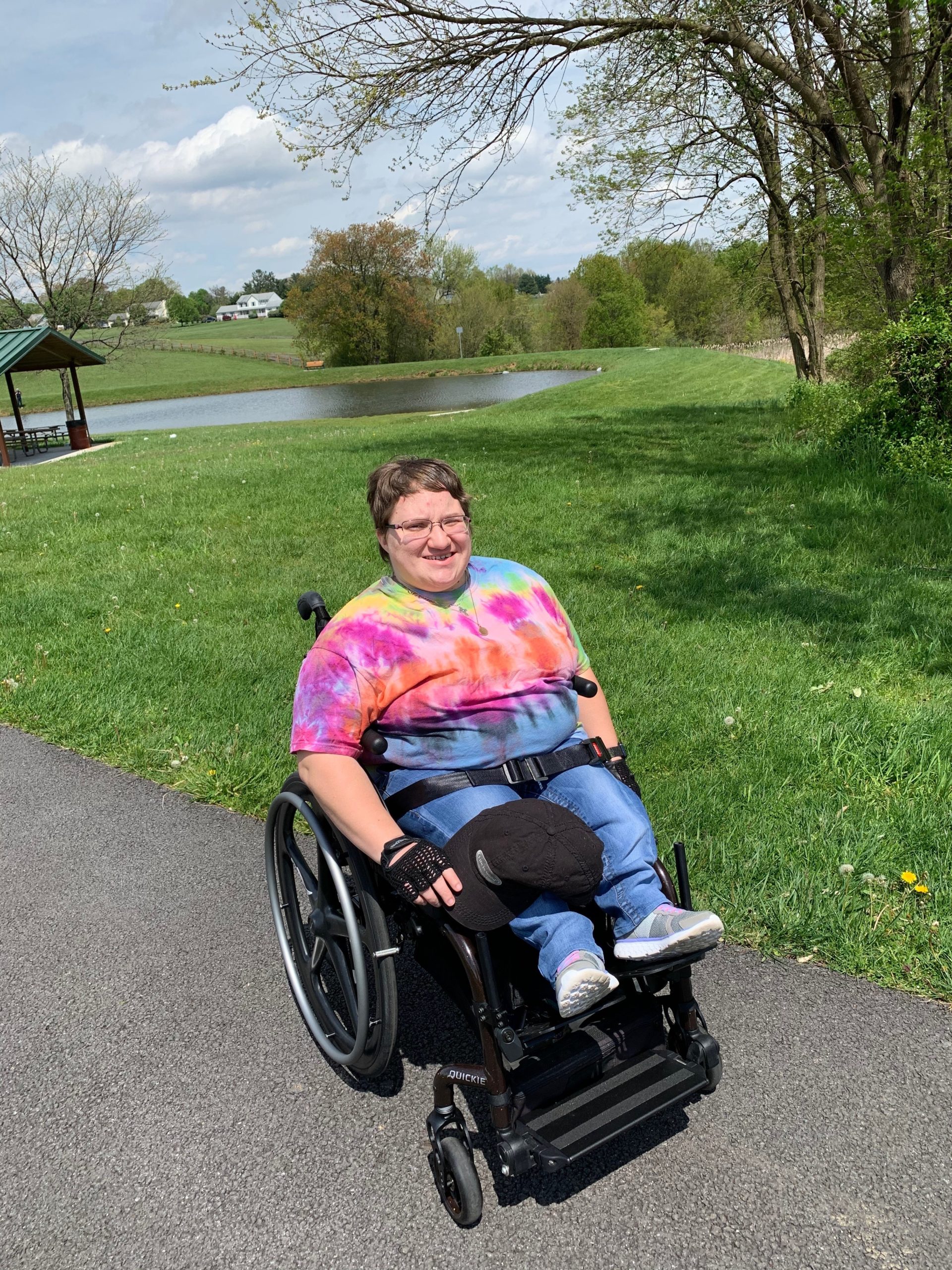
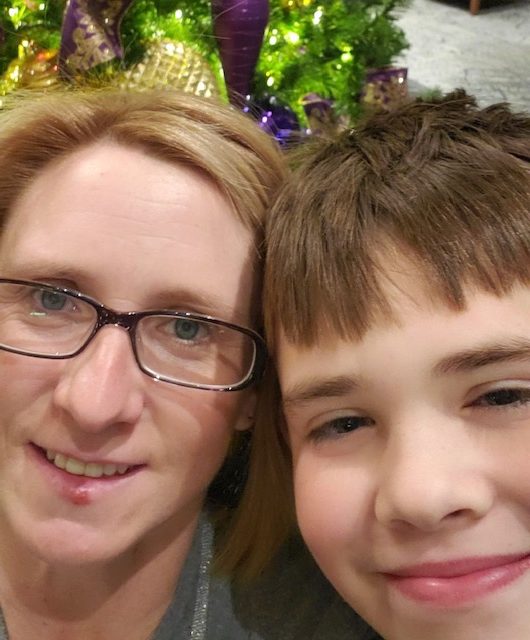
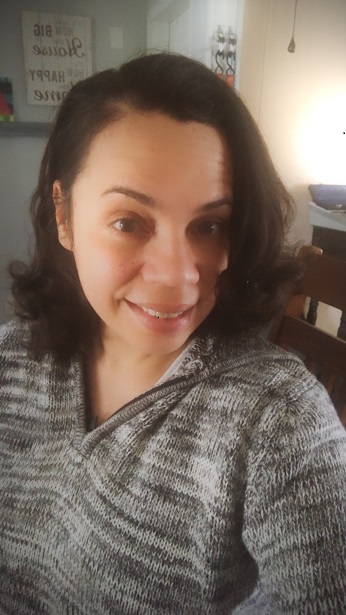
Erica about 10 years ago when she was a participant in YAP, a community-based alternative to out-of-home placement
My name is Erica, I entered foster care at 14 years old after being sexually abused by my father, I was damaged emotionally. I went through 24 foster homes in 4 years, it was destroying me, but there was one thing I had through all of this, the YAP program and Milly. This program gave me a personal Advocate (Milly) and friends (the other kids in the program). When I had to start over new over and over again, I still had my friends from YAP. As foster children, we are already deprived, we didn’t receive the love and care from our families that we were supposed to. YAP gave us the opportunity to be kids, to go out and have fun with friends and not have to worry about anything. We got to feel like normal kids thanks to this program. Closing it down and firing all the workers is not the answer. Doing that is depriving foster children of the opportunity to be normal and have fun. These kids are already more susceptible to depression and other mental health issues, what do you think will happen when there’s no programs for them to get out and have friends and have a life? These children will be damaged for life. You may not think this is a very serious matter, but I do. This program and Milly changed my life for the better, I don’t know where I would be had it not been for her and the program. Please don’t take this away from our children, they need it more than you could ever know! Thank you for taking the time to read this, I really hope you reconsider your decision. – Erica
Learn more about YAP at YAPInc.org. Follow the national nonprofit on Twitter @YAPInc.
Kiara, a 15-year-old Lebanon County, PA high school student, begins her sophomore semester with a new appreciation for her passion, gifts and talents. She’s a participant in Lebanon County Youth Advocate Programs (YAP), Inc., a community-based alternative to out-of-home congregate youth placements.
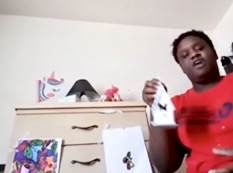
Receiving support virtually amid the COVID-19 pandemic instead of in-person gave Kiara an opportunity to focus on something she’s always enjoyed — art — and to use it to channel her passion for justice. Kiara’s mobile therapist Meghan Sidelnick encouraged her to submit her work to an exhibition presented by Abilities in Motion in partnership with Goggleworks highlighting artists with disabilities. When the show accepted one of her pieces, Kiara began to realize and appreciate the value of both her passion and her talent.
Meet Kiara and Meghan in the short video in this post.
About four years ago, Robin, a then 39-year-old Atlantic County, NJ single mother of nine children, found herself overwhelmed.
“I was in a domestic relationship with a man who sold drugs and brought a lot of drama into my home.”
She said as a result, New Jersey Department of Children and Families (DCF) removed her children from the home. Two ended up in congregate placements. Four remained together in her neighborhood with a stable, loving foster family and two were placed in a temporary resource foster home in Cumberland County. She said her oldest was incarcerated.
While Robin was able to stay in touch with all her children, she wanted another chance at parenting – at home. When her sons in Cumberland County became participants in Youth Advocate Programs (YAP), Inc. — a community-based alternative to out-of-home placement — Robin said she got that opportunity.
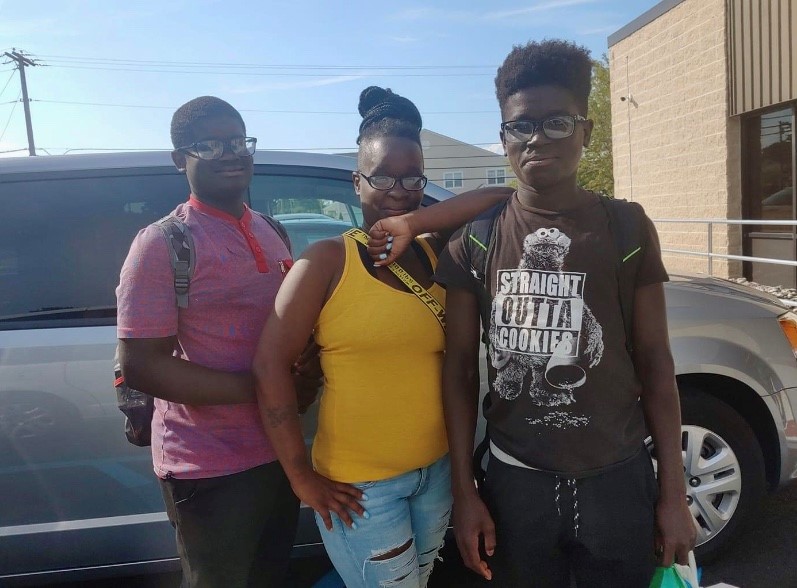
Robin with her sons, Kadin (L), and Kameron (R)
Kameron, then 14, and Kadin, 13, were working with John, a YAP Advocate trained to help young people see their gifts while connecting them and their parents/guardians with tools to achieve their goals. Robin said John empowered her with skills to earn the kids’ trust and respect.
“They’re awesome kids; but when I got them back, they [the boys] basically said it was my fault,” she said. “YAP helped me look at things different, putting my kids first. As time went on, they saw that I was doing the best I can.”
Kadin with his mom
Crystal, John’s YAP team member who specializes in life skills, also advocated for the family, including Robin’s children who remained in placement. “They’d mediate conflicts between me and my girls,” she said. “Crystal and John talked to them and me.”
Nearly 1000 New Jersey youth will lose their YAP services if proposed cuts by DCF are accepted by Governor Phil Murphy. For four decades, the state has relied on the nonprofit and its evidence-based intensive, in-home, wraparound advocacy model to keep youth with their families or stable in resource foster homes as an alternative to out-of-home placements and youth prison. Seventy percent of YAP’s program participants are youth of color, primarily Black and Latino. Seventy-five percent of the nonprofit’s staff are also people of color, with lived experience and knowledge of culture, language, and the resources of the neighborhoods they serve.
“Removing YAP from the lives of children and families whose challenges are even greater in light of the COVID-19 pandemic is a significant setback in a critical continuum of care proven to put kids on a positive trajectory,” said YAP CEO Jeff Fleischer. “In the not so long run, the result will be more dollars spent on expensive, often faraway residential placements and youth prison.”
On call 24-hours, YAP’s community-based Advocates provide intensive, strength-based, family focused, trauma informed, wraparound family support to fill critical gaps for youth who have individual and family challenges that are very complex. The Advocates address the root causes of the youths’ parental and family struggles. YAP employees rely on their teammates and community partners to connect young people and their families with accessible educational, life skills and employment resources. They ensure that lack of food; shelter; transportation for court hearings, doctors’ appointments, visits with incarcerated loved ones; and other challenges don’t impede progress. YAP Advocates also provide respite for parents and guardians when they need support.
Like other New Jersey nonprofits, YAP, which operates in all 21 counties in the state, was hit hard financially due to COVID 19.
“For the first time since 1978, New Jersey youth in need in our child welfare system will not have a program to provide the trusting relationships between local staff and youth and families, nor the support and resources, to stabilize youth in family settings and to prevent out of home placements.,” Fleischer said. “We are hopeful that the state legislature and or the governor’s office will restore the funds back to YAP and other nonprofits that were hit hard by COVID-19 and now, these harsh DCF cuts.”
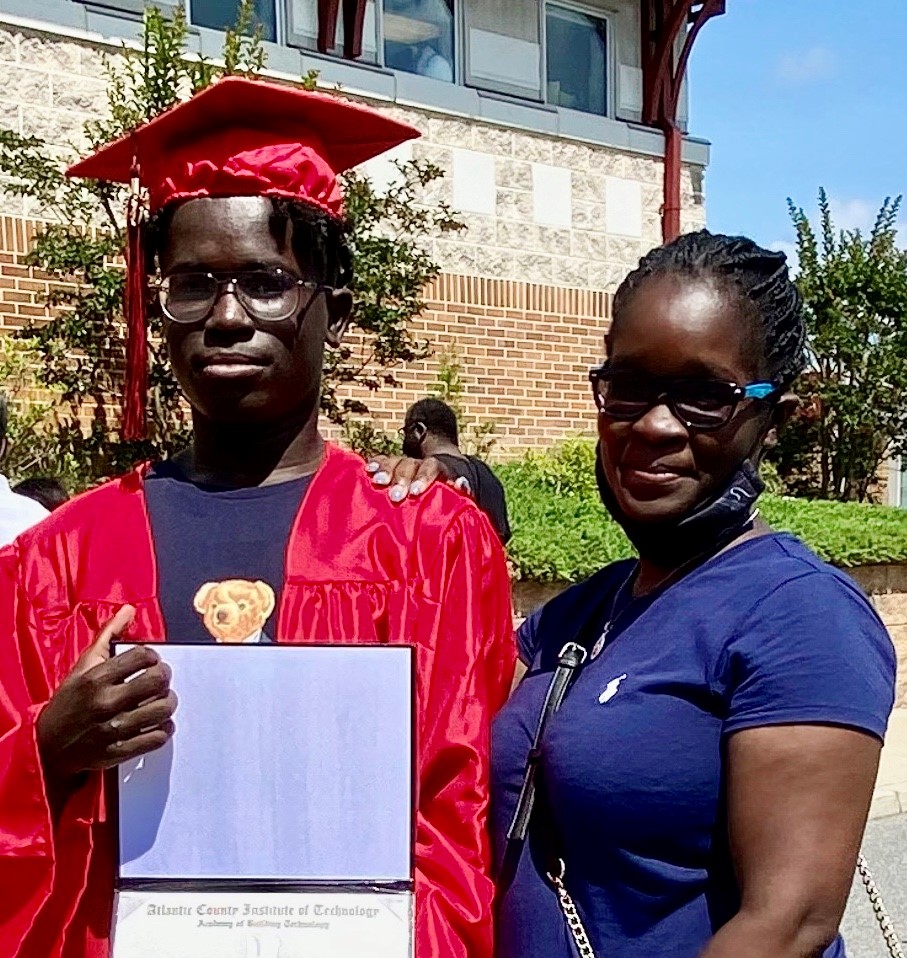
Kameron with his mom at his high school graduation
Kameron, now 18, and Kadin, 17, recently completed the YAP program. Kameron is working his first job and looks forward to studying film at Stockton University this fall. Kadin is interviewing for jobs and Robin said he’s “very helpful” around the house. “Both of them do dishes, clean the bathroom, anything I need,” she said.
As for her other children, Robin feels fortunate that the four who were together in a nearby foster home were eventually adopted by that family and a friend of theirs. The adoptions are open, enabling the children to have a relationship with their biological mom.
Robin said with support from YAP, she came to understand that she still has a lot to offer all her children. She said her interactions with them are healthier, which makes her happy.
Robin said because of YAP, Kameron and Kadin have a new outlook on life, and that she does, too.
“I always felt like YAP was on my side,” she added.
Grant Helps Youth Advocate Programs (YAP), Inc. Provide Services in Communities as an Alternative to Out-of-Home Placements
By Jasmine H. More, Youth Advocate Programs Development Coordinator, Private Sector Giving
A $75,000 grant from the New Jersey Pandemic Relief fund is bolstering much needed in-home services for youth and families who even before COVID-19, faced the kinds of complex challenges that often lead to family separation.
The grant to Youth Advocate Programs (YAP), Inc., supports the nonprofit’s work to serve child welfare systems-involved young people at home as an alternative to congregate care, residential treatment and behavioral health facilities placements.
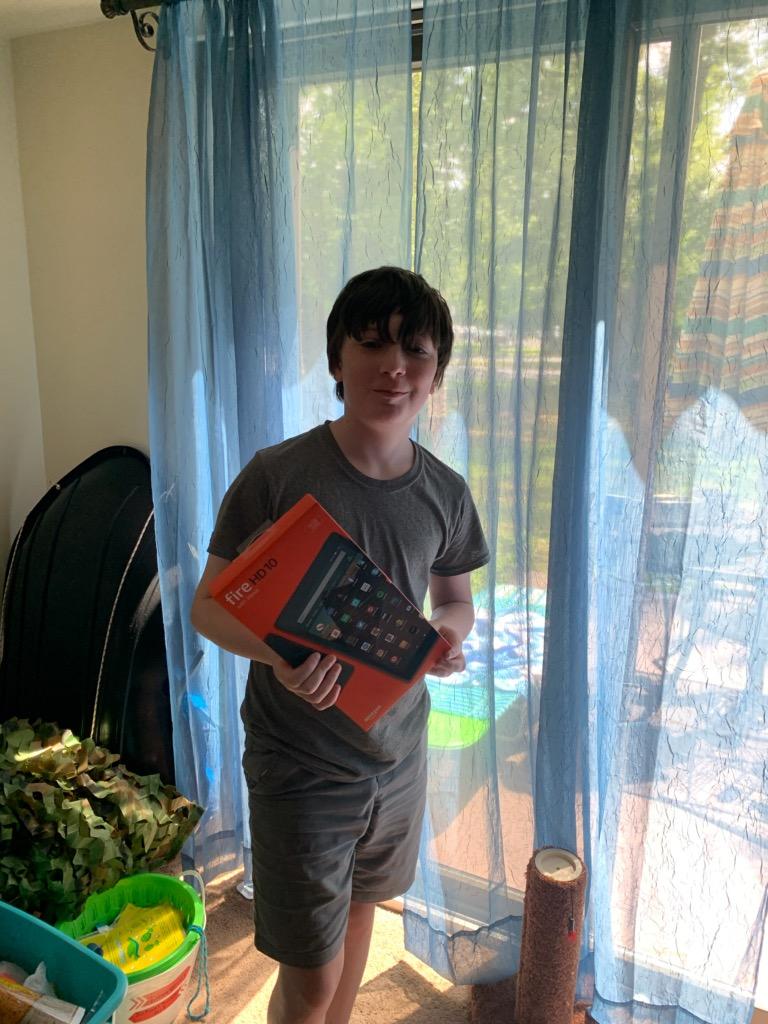
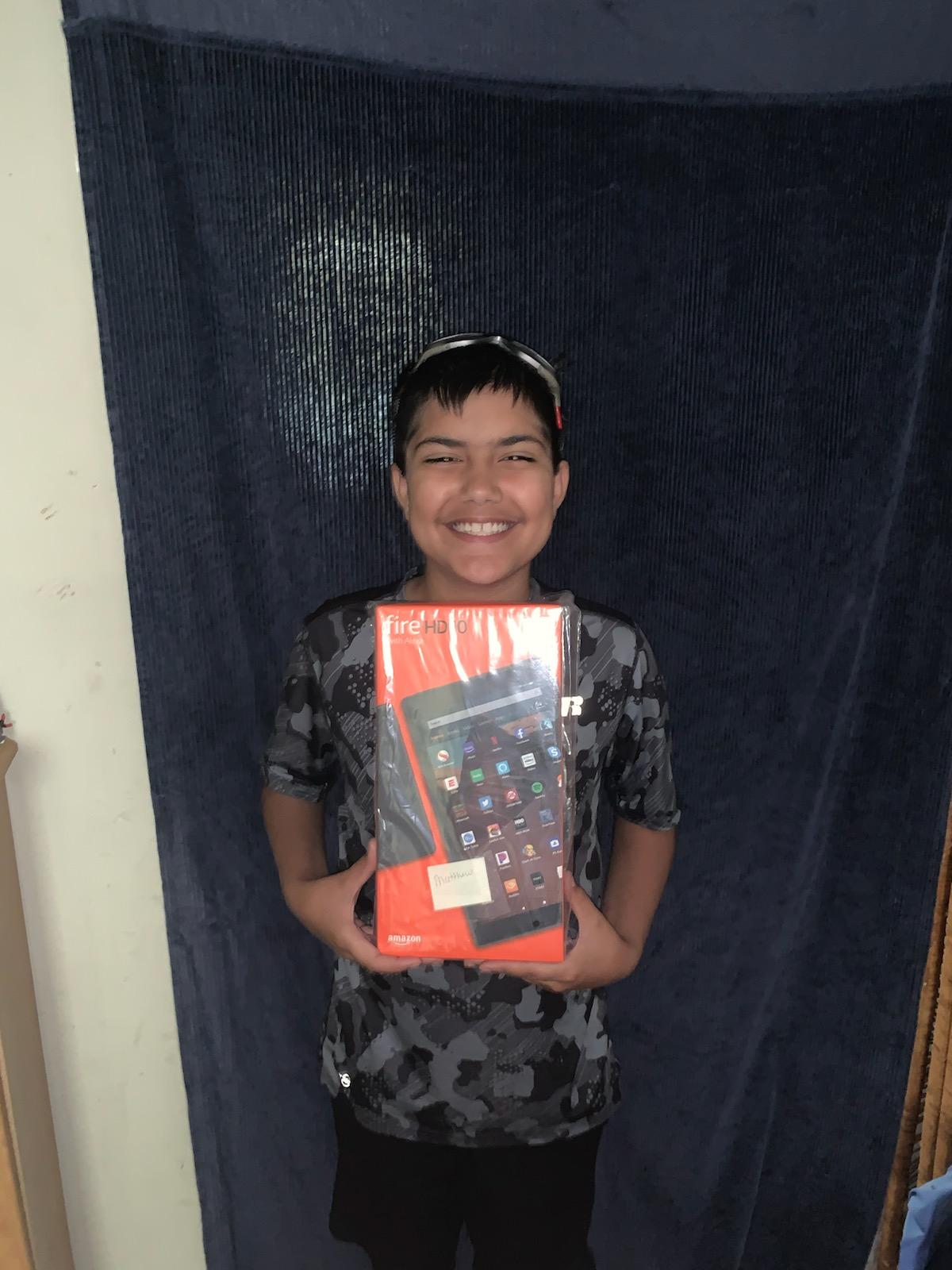
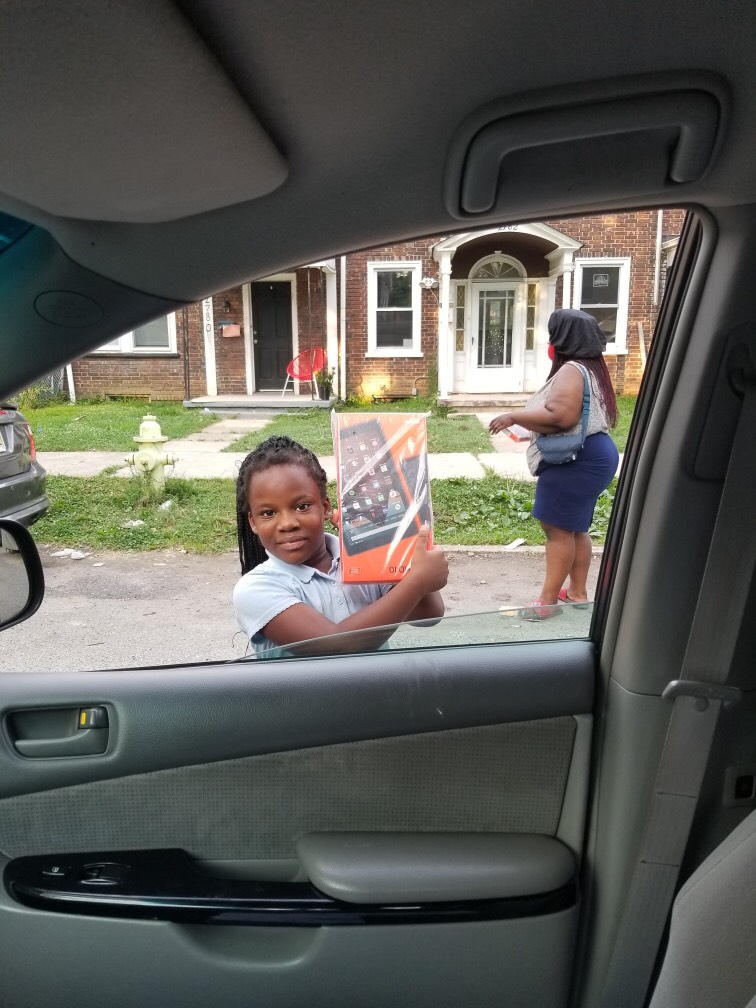
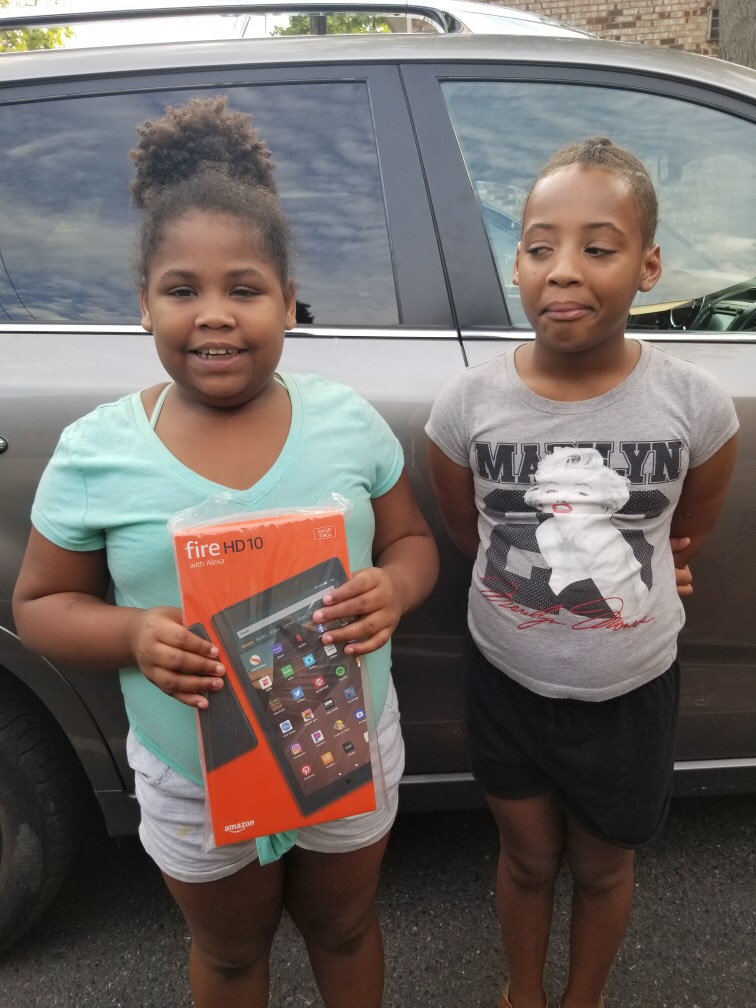
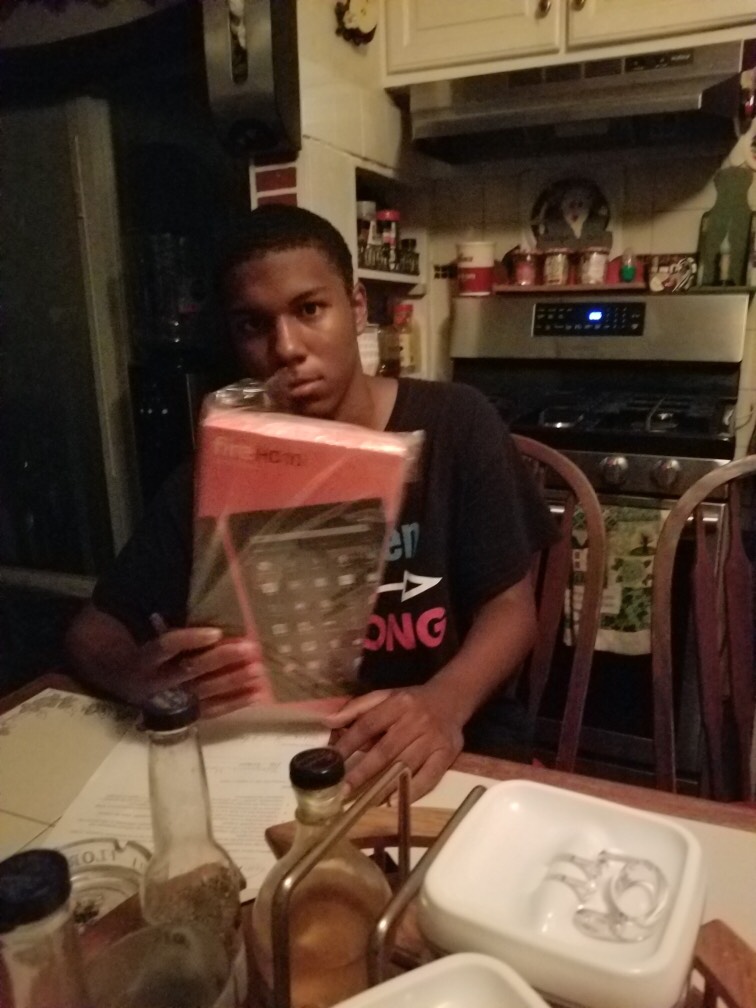
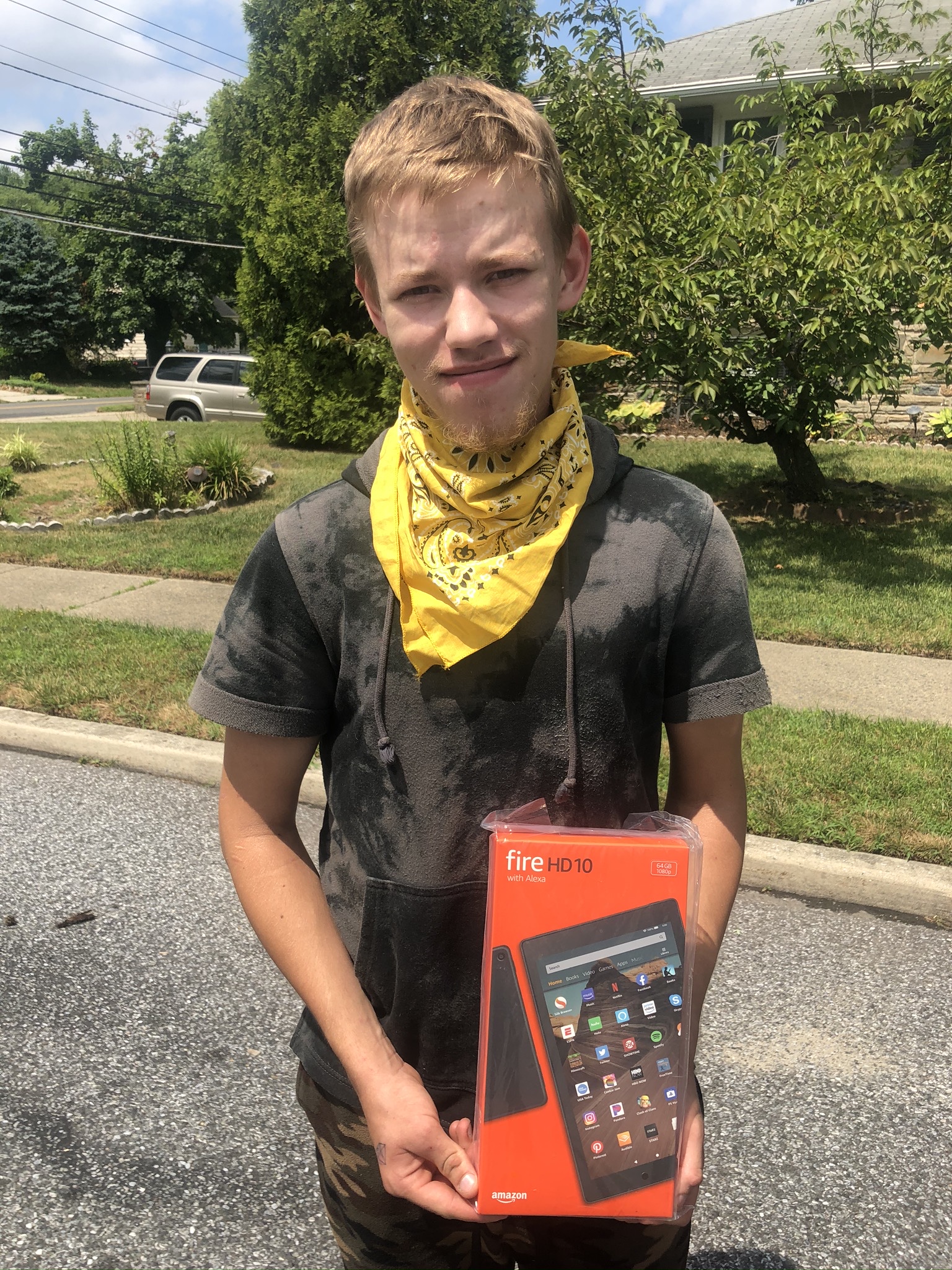
Due to the grant we received, families got so much more than just a simple gift card. Prior to the grant, many of the families we serve did not have access to technology. Because of the grant, we were able to provide our program youth with tablets. This not only helps YAP Advocates keep participants on track with their individualized service plans, it gives the youth one more thing to do to keep busy during these uncertain times. The grant has also provided YAP families with essentials, such as PPE, cleaning supplies, and non-perishable foods. Furthermore, the grant has made it possible for youth and families to continue to receive quality wraparound services that YAP is known for.
New Jersey Pandemic Relief Fund dollars support YAP programs in Atlantic, Bergen, Burlington, Camden, Cape May, Cumberland, Essex, Gloucester, Hudson, Mercer, Middlesex, Monmouth, Morris, Ocean, Passaic, Salem, Sussex, and Union counties.
Operating in all 21 New Jersey counties, YAP is a nonprofit organization with offices in more than 150 communities in 29 states and the District of Columbia. YAP is committed to the provision of community-based alternatives to out-of-home care through direct services. Since its founding in 1975, YAP’s expertise and passion have been in serving deep-end, multi-need and cross-system youth and families, with success across a continuum of needs and challenges. Learn more about YAP at YAPInc.org.
Jasmine H. More is Youth Advocate Programs (YAP), Inc.’s National Development Coordinator for Private Sector Giving. She also serves as Administrative Manager and Advocate at Hudson, Bergen & Passaic County – NJ YAP and New Jersey Pandemic Relief Coordinator.
With the increased risk of COVID-19 infections for individuals in congregate living, Youth Advocate Programs (YAP), Inc. strengthens its advocacy for community-based youth and family services alternatives. In 29 states and Washington, DC, YAP partners with youth justice, child welfare, education, behavioral health and developmental disabilities agencies to serve young people and families in their neighborhoods and homes.
Chris — YAP Lebanon, PA participant
YAP’s individualized service plans might include intensive mentoring from neighborhood-based Advocates, education and job training, behavioral health care, and assistance with basic needs. Lebanon, PA YAP’s services for young people with developmental disabilities have empowered 32-year-old Chris with skills to support himself, and in turn, serve others through the pandemic. Chris spoke to TheNeighborhoodAdvocate.org in our video interview.
Newark, NJ — Curtis Moore and his colleagues jumped into action in March when COVID-19 put their resilience to the test. Curtis is a program coordinator at Essex/Union County, NJ Youth Advocate Programs (YAP), Inc., a community-based alternative to youth incarceration and out-of-home placement.
During a call with his Advocate, Davis talks about his interest in participating in a Black Lives Matter protest
In 29 states and the District of Columbia, YAP trains neighborhood-based Advocates to use their compassion, creativity and connections to mentor and support young people in their homes and communities instead of youth prisons and congregate child welfare facilities. The Advocates empower each program participant with skills and support to develop individualized service plans that help them see and realize their strengths. At the same time, the Advocates connect youth and their parents/guardians with tools and contacts to help them reach their goals and give back to their communities.
With the onset of the pandemic, Curtis and his teammates had to quickly adapt to make the YAP model work using virtual technology.
Kyra communicates with her Advocate via Zoom to update her on her individualized service plan progress, which includes searching for a job.
“We were all concerned about how virtual was going to look. It was during the school year and while the schools and YAP’s national office were working to supply laptops or tablets as quickly as possible, the organization was experiencing funding challenges; and everyone was pitching in,” Curtis said. “So, I said, ‘let me see if I can call my contacts.’”
Curtis reached out to everyone he knows, including his friend, Mary Anne Fanning, a program manager for the Adolescent Advocacy Program in the Department of Social Work and Child Advocacy at Montclair State University.
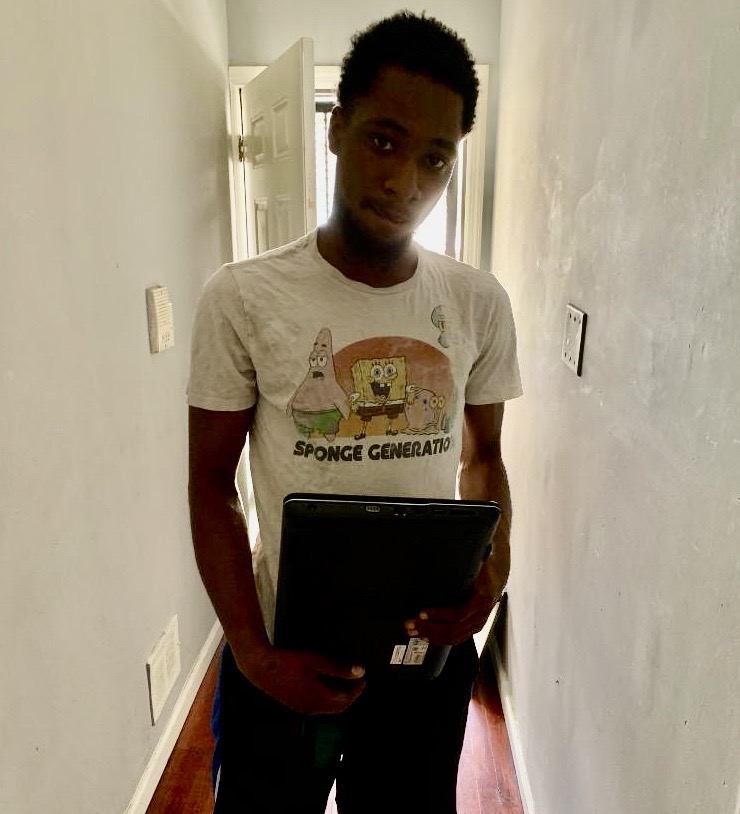
“After a couple of weeks of back and forth conversations, Mary Anne called me with news that she would be able to help us get 25 laptops donated by way of Laptop Upcycle; however, the youth would have to return the laptops at the end of the summer when it was thought they would receive devices from their school districts,” he said.
YAP Program Coordinator Curtis Moore receiving donated refurbished laptops from Jon Bonesteel, co-founder of Laptop Upcycle, and Mary Anne Fanning, program manager for the Adolescent Advocacy Program in the Department of Social Work and Child Advocacy at Montclair State University, who facilitated the gift.
A division of Montclair, NJ-based nonprofit, HackNCraftNJ, Inc., Laptop Upcycle is committed to collecting, refreshing, and distributing technology to students who might not otherwise have access to the tools to succeed in school.
With their donated laptops, the YAP Advocates have developed new ways to communicate with and support YAP participants and their families to help them achieve their program goals.
Zavion is using his laptop to focus on looking for a job
“Telecommunication has become the primary way the Advocates meet with their assigned youth and their families,” Curtis said. “The laptops are also extremely helpful in connecting the youth and families with resources to meet their basic needs, including food, and cleaning supplies.”
As the pandemic persisted, Curtis grew concerned, knowing the laptops would have to be returned few months.
“Returning the laptops at the end of the summer just would not work because it was unlikely the school districts would be distributing laptops. These kids need these laptops.” he said. “We can do our meetings with Zoom without them; but they all really needed to keep the laptops to support their ongoing education and job training needs, and for all the individual activities that they engage in with their Advocates.”
Curtis spoke to Mary Anne, who shared his concerns with Jon Bonesteel, co-founder of Laptop Upcycle.
Curtis said Jon spoke with his committee board, and not long after, he received an email from Mary Anne saying the Laptop Upcycle committee agreed that the youths should keep the computers; and that two additional laptops would be added to the original 25 requested.
With the continued virtual support from their Advocates, some of the YAP participants have found jobs. Others are enrolled in online college classes, and all are in regular communication with their Advocates and staying on track with their individualized service plans.
On a Zoom call with her YAP Advocate, Akira shares her thoughts and ideas about the Black Lives Matter movement
“The donated technology puts tools the youths and their families need to reach their goals right at their fingertips,” Curtis said. Thanks to Mary Anne Fanning of Montclair State University and Laptop Upcycle for making that happen.”
With conviction and a slight smile, 17-year-old Malachi posed for a press photographer as he held a cardboard handwritten sign during a Denver, Colo. protest and vigil for George Floyd, the Minneapolis man who died after a police officer kneeled on his neck for nearly nine minutes.
When Malachi saw his photo in a story on Denverite.com, he smiled again.
“I’ve always been a happy kid,” he said. “Even if it’s the worst of times; I always had a smile on my face.”
17-year-old Malachi said despite his struggles, he’s always been a happy kid.
Malachi has been through a lot of tough times.
“Me, my mom brother and sister, we were homeless for six years,” he said.
When he was 13, a friend of his mother’s opened the doors to her home, providing temporary housing for the family. Malachi was settling into school, even playing football on the nearby high school team. Then, his health took an unexpected turn.
“I woke up throwing up. My family got food poisoning. Mine stayed for a week. The hospital said my kidneys were functioning at zero. I stayed in the hospital for a year,” he said.
Malachi was overjoyed when he finally got to go home. Then his health began to deteriorate. He remembers medical professionals saying his diet was to blame.
“I was in a group home for almost a year. I only got to see her [my mother] when I went to church, holidays,” he said. “I almost committed suicide in that group home. Those kids there, they tried to start fights with me. I’m not a fighter; if I have to I will. I was so stressed out from not seeing my mom. I almost drank a whole gallon of milk knowing that would get me sick. They [the police] took the cameras and they called the manager of the home and he came to talk to me. I said, ‘take me from this group home.’”
Malachi with his mother, Brandy
Malachi was able to return home with his family, where he began receiving services from Youth Advocate Programs (YAP), Inc. a community-based alternative to out-of-home child welfare and youth justice placements. YAP hires mostly neighborhood-based Advocates who are trained to help young people identify and realize their strengths. At the same time, they connect the youth they serve and their parents/guardians with tools to firm the family foundation.
Cecilia (“Cece”) Roche, now program director for YAP Arapahoe, Denver, Jefferson County, became Malachi’s mentor and family Advocate. She helped him and his mother develop an individualized service plan. With intensive mentoring, Cece empowered Malachi to identify his strengths and connected him to tools and resources to help him achieve his goals.
Brandy, Malachi’s mother, asked him and Cece to pose with a virtual double high five to “make a bridge.”
“Cece has helped me with that a lot., “ Malachi said. “She put me in a boxing class to help me with the anger that I had.”
Malachi said he’s not a fighter. He appreciates all that he is learning, especially about discipline, from his boxing training.
On dialysis four hours, five days a week, Malachi looks forward to getting a kidney transplant. With Cece’s guidance, he’s also focused on the here and now. He’s working at a Denver amusement park and making plans for what he’ll do when he completes high school next year.
“I love to cook. One of my dreams when I was younger was to be a mechanic, then football; then I got kidney failure. They told me I couldn’t play football again. So, I started making cheesecakes,” he said. “My cheesecakes are fire. I was in a cheesecake competition. No bake cheesecake. Oreo cherry cheesecake. I love making cheesecake. I want to go college and open my own cheesecake business.”
Cece also works closely with Brandy, Malachi’s mother.
Youth Advocate Programs (YAP), Inc.’s Cece Roche with Malachi and his mother, Brandy
“What Cece did was awesome. She’s been Malachi’s mentor; but she’s also been one with me, helping me in different areas with him, like letting me know where I need to ease off a little,” she said. “Anything I’ve needed, whether gas, making it to his appointments – I was having a hard time getting toilet paper, cleaning supplies,” Brandy said. “I’ve been able to talk to Cece, and she comes through.”
Malachi said one of the things he most appreciates about YAP is how it’s helped his mother.
“My mom has changed a lot since YAP came. Since I’ve been doing better, I see my mom being happy.”
Malachi with his mother, Brandy
Through YAP, Malachi understands the importance of advocating for himself and others. It’s in part what drew him to the local George Floyd vigil. The other motivation was something that happened to him when he was 15.
“One time I got stopped by this cop, I was walking home. This cop stopped me because of how my hoodie looked and because of my skin. He said you look just like the dude. I said, ‘call my mom.’ They detained me and had me on the curb in handcuffs,” he said. “I was scared. I said, ‘I’m not the person you’re looking for.’ I said, ‘Call my mom, I live right up the street.’”
He said he sat in handcuffs for at least an hour.
“I was afraid they were going to take me in. They said I looked just like the guy. They didn’t even call my mom. They just looked up my name and they let me go.,” he said.
Malachi said he’d put the entire incident behind him until the protest gave him an outlet for his feelings.
“That’s why I’m at the protests. Everybody should know that Black lives matter. A lot of people don’t know. They don’t understand.”
Malachi appreciates the opportunity to give back. He’s also grateful for all Cece has done to help reinforce the foundation that empowers him to do so.
“I’m happy. I’m a young man who has a family that loves me and cares about me.”
In a recent teleconference, Sarah Gross focuses on her origami, an ancient Japanese practice of shaping paper into art. On the other end of her video call young people ages 9-17 make their own paper sculptures while simultaneously sharing their fears, hopes and dreams.
Sarah Gross during a videoteleconference with YAP program participants
Sarah is an Advocate with Gloucester-Salem, NJ Youth Advocate Programs (YAP), Inc., a community-based alternative to youth incarceration and congregate child welfare placements. She’s one of thousands of neighborhood-based YAP Advocates in 29 states and the District of Columbia mentoring and advocating for young people and families in their homes and communities instead of in facilities. The goal is to help youth and families develop individualized service plans that identify their strengths and connect them with tools to achieve their goals.
The young people with Sarah in her video session came to YAP through child welfare systems referrals. Most of them are temporarily living with “resource home” foster parents until a permanent placement with a relative is secured — or for older youth — an independent living placement, is available.
“Whatever each young person’s plan is, we try to help them think through the plan, set specific action steps to achieve the plan, advocate for that plan with their caretakes and service providers, and support them throughout the process. Each youth in the program has different strengths and comes from different backgrounds, experiences and belief systems. Therefore they are each working on very specific and individualized goals,” Sarah said. “As Advocates, we typically see the youth we are working with multiple times a week, so we try and bridge the gap between the case worker, therapist and other providers, who do not see them as often, to provide an understanding of the youth’s current needs as well as continuity of care. One youth recently shared with me that with YAP, she feels she can be herself; that’s why the mentoring works and is also why she enjoys participating in the program. She feels heard, valued, genuinly cared for and encouraged during a difficult time in her life.”
With the onset of the COVID-19 pandemic, Sarah and her fellow Advocates were confronted with their biggest collective challenge ever. They would have to continue to enage and build trust with the young people at a distance, while keeping them on track with their life plans.
“It was panic mode; fight or flight,” Sarah said. “Fortunately, I have a background in running youth support group meetings and I was familiar with video conferencing, since it is something we utilize a lot in my full-time job at a national financial firm. One of the challenges was getting the youth, as well as their resource home [foster] parents, to buy in to a new way of connecting. The Advocates in our office took time to remember why they chose this type of work and why it was more important than ever to provide the families in our program the needed social and emotional support during this unprecedented time. Prior to the pandemic, many of our families already felt isolated, discouraged and alone. We all worked together to figure out new ways to support the youth and families so they could continue to have their basic needs met, stay healthy, and feel secure so we could continue to work with them on achieving their goals.”
Working with her fellow Advocates, Sarah found ways to provide virtual homework help. She also took to YouTube where she discovered ways to connect and engage youth. She took them on a virtual trip to Paris, helped them plant their own garden and taught them how to make homemade ice cream.
Sarah used the recipe from thebestideasforkids.com to engage the youths in making their own homemade icecream.
“It is a challenge to think of and prepare new activities each day that can be done through video conferencing, keep youth motivated, and encourage them to participate,” she said. “We created an incentive program that allowed them to earn points during each mentoring session and then choose items at the end of each week.”
One day, while planning a teleconference with the program participants, Sarah was reminded of a story from her childhood. Adopted from Korea as a baby, her parents kept her connected to her Asian roots by exposing her to art and culture from her birth continent. It was during one of those experiences that Sarah heard Sadako and the One Thousand Paper Cranes, a Japanese legend promising that by making one thousand origami cranes, one’s wishes will come true. She recalled learning how the story inspired a girl with leukemia from atomic bomb radiation to make origami cranes in her quest to live.
“They [the YAP participants] were touched that she passed away and that her story came to represent world peace,” Sarah said. “They asked if it would be possible for them to work together on future sessions to make one thousand origami cranes.”
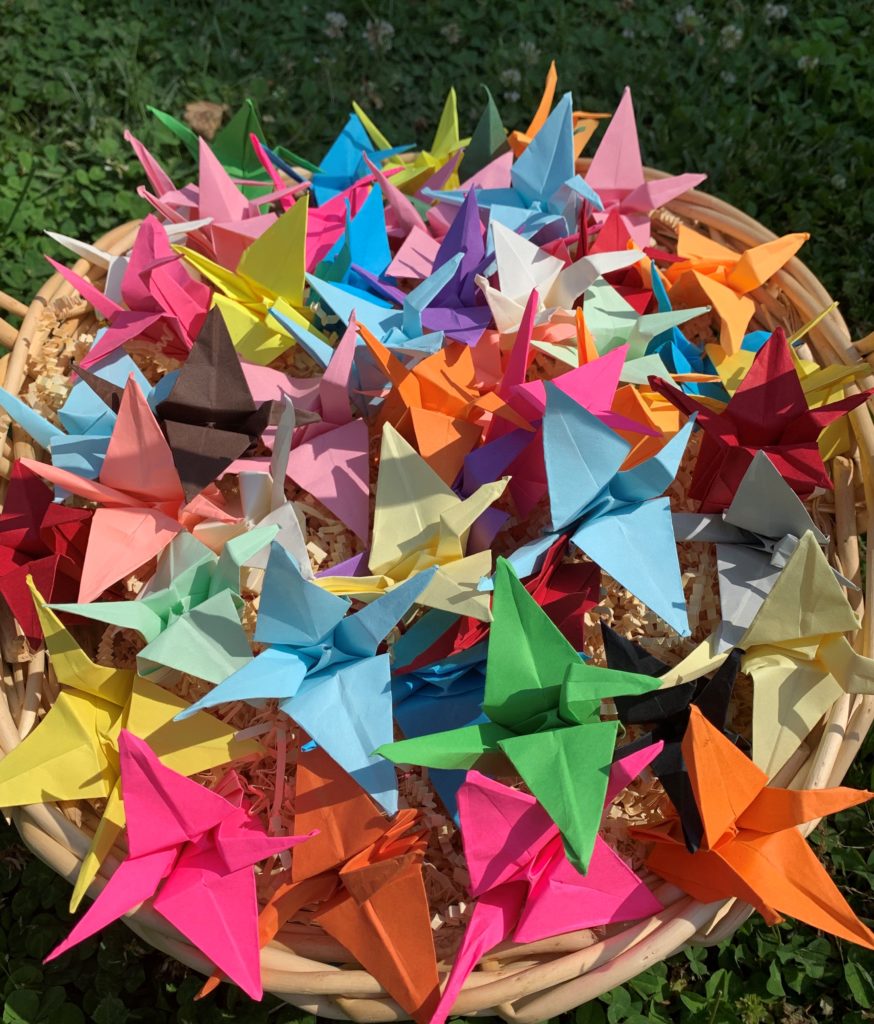
During their virtual sessions with Sarah, the YAP program participants worked together to make one thousand origami cranes.
Sarah ordered special paper and delivered it to each of the youth’s homes. In the following days and weeks, they met as a group and worked towards making one thousand origami cranes. In the process, the young people continued to form a bond of trust and solidarity with one another and began to talk more candidly about their lives.
“The group activities give them something to talk about and look forward to each day. The youth enjoy spending time together,” Sarah said. In addition to working on making origami cranes, the youth have also learned how to make ninja stars, turtles, flowers, dogs, all kinds of oragami.”
Sarah said the experience has made it easier to engage the young people in other virtual activities – ones that build life skills, help them discover new interests, and give them a chance to explore education and career opportunities.
Meanwhile, as she continued the incentive program, the young people’s points built up quickly. That’s when Sarah noticed another benefit of the origami exercise.
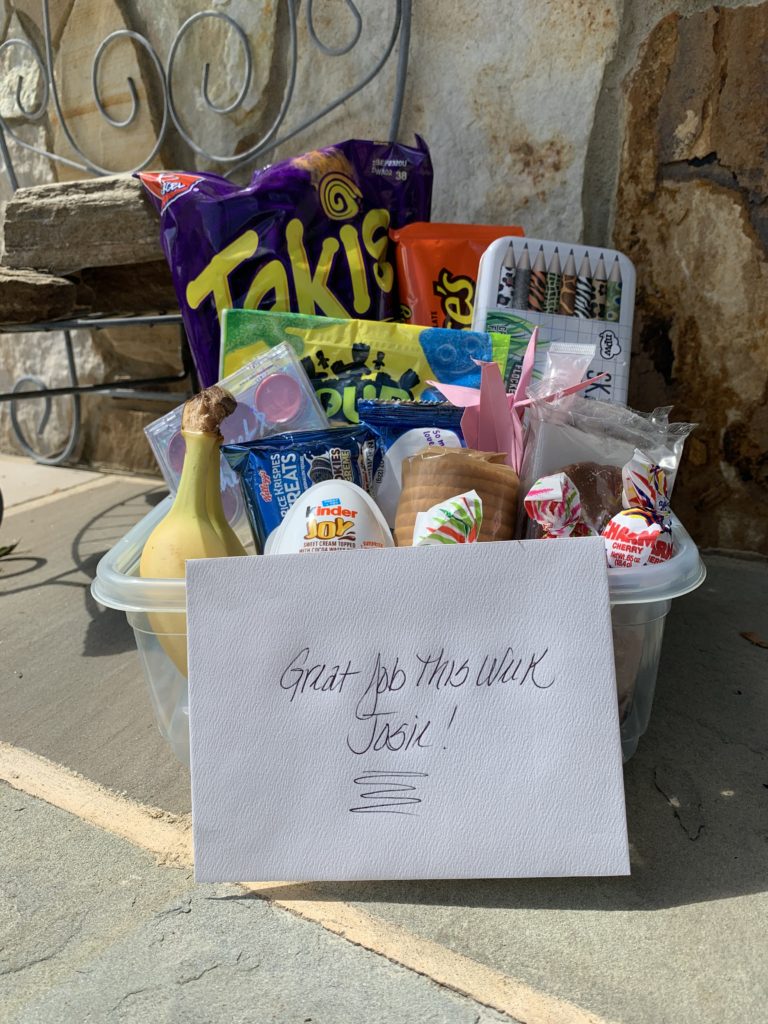
The youths cashed in their points to buy gifts for their resource parents and others.
“Instead of using the points for themseves, they wanted to share their rewards with others,” she said. “On Mother’s Day, they asked to use their points to buy gifts such as flowers, tea and lotion for their guardians and caretakers. The youth felt proud and excited to have an opportunity to do something nice and meaningful for others who care for them.”
“By nature, we are creatures of habit, find comfort in consistancy and resist change,” Sarah said. “Due to the pandemic, we were all pushed to become more creative and innovative in the way we delivered services, because it was important. Through artwork and other activities, the youth learned there are healthy ways to cope, express their feelings and take their minds off stress. Even through video conferencing, the YAP Advocates continued to expose the young people we serve to new things they would never experienced otherwise, while empowering them as they developed essential practical life skills that they can use as they continue to face adversity and challenges throughout their lives.”
For more information on YAP, please visit www.yapinc.org and follow the organization on Twitter @yapinc.
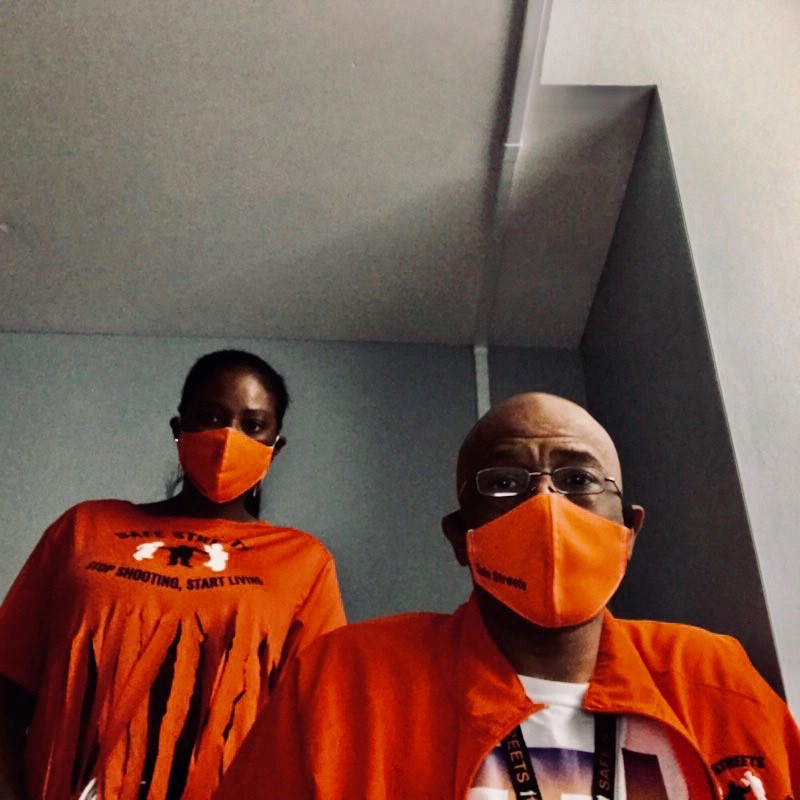
YAP Penn North Safe Streets Kia Colson with team’s Crime Prevention Coordinator Wayne Brewton
Neighborly outreach during the COVID-19 pandemic is strengthening bonds between some Baltimore City Safe Streets workers and the families they serve.
Safe Streets is an evidence-based public health approach to reducing shootings and homicides in Baltimore City.
“We mediate a lot of small disputes — little things that can become bigger beefs that involve guns,” said Kia Colson, a member of the Youth Advocate Programs (YAP), Inc. Safe Streets team. Kia grew up in Sandtown, part of the Penn North neighborhood where the YAP Safe Streets team works.
“We don’t just mediate conflict; we try to change lives. We want our youth to be the greatest they can be,” Kia said. “We also support their families.
Kia was one of the first members of the Penn North team
Better known for its work providing community-based alternatives to youth incarceration and out-of-home placement, YAP became one of the city’s non-profit Safe Streets partners a year and a half ago. YAP has relationships with employers, GED and vocational prep programs, behavioral health services, and other resources that the Penn North Safe Streets team uses as tools in their work to present positive options to neighborhood youth and families.
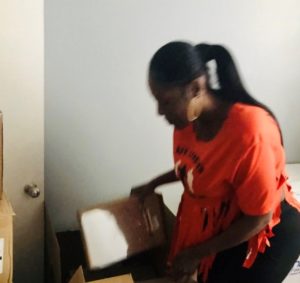
Kia regularly packs supplies and delivers them door-to-door to her Penn North neighbors
Since the onset of the pandemic, Kia said the team has been adding new resources to their toolkit to demonstrate their concern for families’ overall wellbeing. Like their fellow Safe Streets workers in other neighborhoods, the YAP team distributes face masks. They also hand out cleaning supplies along with donated food from neighborhood pantries and produce from nearby urban farms.
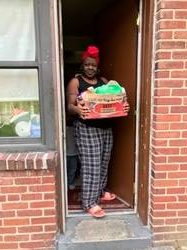
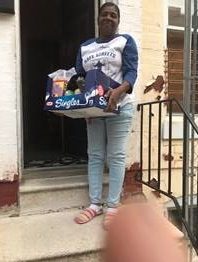
One of Kia’s Penn North neighbors shows gratitude for COVID-19 relief box
“A lot of families are suffering. We’re giving out food baskets and distributing household supplies and things like that to make them comfortable at this time. Anything we can do to give them a little relief, we’re doing,” Kia said. “People are so grateful and happy. Change doesn’t come over night; it comes from seeing what change looks like and wanting it. Any way I can help that happen, I’m down for it.”
Baltimore Safe Streets team members are formerly justice-involved individuals, which lends to their credibility and ability to establish relationships and build rapport to change behaviors and norms of people with similar backgrounds.
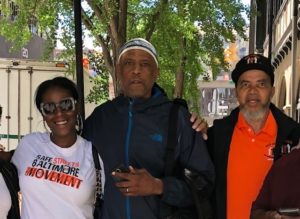
Kia with YAP Penn North Safe Streets co-workers Wayne Brewton and Dennis Wise
“I was one of those people who would do things to hurt myself and make the neighborhood terrible,” Kia said. “I’m just trying to give back – to show our future [generation] that there’s another way of living.”
Kia was one of the first members of the YAP Penn North Safe Streets team. She said it wasn’t easy at first, talking about safe choices to people, many of whom knew her past, which included being in and out of jail. Over time, as people saw that her transformation and concern for theirs were real, she began building trust and strengthening her relationships in the community. Since the onset of the pandemic, Kia has been seeing new signs that her work is making a difference.
Baltimore Penn North resident expresses gratitude to YAP Safe Streets for COVID-19 relief box
“I know we’re making a difference when the people come up and say thank you for the small things, and when you see how much those little things mean, that shows right there that there’s change,” she said. “That’s where it starts. The little things turn to big things that change communities.”
She adds that there haven’t been any shootings in the neighborhood for at least three months.
Melissa Johnson felt she’d finally made it when she earned her bachelor’s in psychology from Frostburg State University in Maryland. But when months turned into years of getting turned down for job after job, she started to wonder whether the workplace was still in the dark ages when it comes to people like her.
“They take one look at you,” she said.
Youth Advocate Programs (YAP), Inc. Therapeutic Support Specialist Melissa Johnson (photos of Melissa, courtesy MJ)
Take one look at her and see the wheelchair. Born without a lower spine, it’s how Melissa gets around.
In the face of all that rejection, Melissa did what she’s always done. She refused to give up. Then one day, Melissa rolled up to Adams County, PA Youth Advocate Programs (YAP), Inc. for her in-person interview for a position as a therapy support specialist (TSS). In 29 states and the District of Columbia, YAP partners with youth justice, child welfare and other social service systems to provide community-based alternatives to youth detention, congregate care or treatment, and out-of-home placement of young people with autism or developmental disabilities.
“I was really nervous. It was a group interview,” Melissa recalled.
Melissa Johnson began working for Youth Advocate Programs (YAP), Inc., after a six-year job search
It felt right, though. In fact, it felt pretty perfect.
“Before I left, they said they’d have to do a background check on me.”
A few weeks later, at age 28, six years into her job search, the position was hers. She would be a school-based YAP therapeutic support specialist (TSS), working with students who have developmental disabilities and/or autism.
Melissa spent her first months in the office and partnered with co-workers, mostly YAP Advocates who work with youth in the justice system. Then in February 2019, she got her first in-school assignment serving as a TSS for a 12-year-old boy named Zach.
Zach was 12 when Melissa beame his school-based therapeutic support specialist (TSS) — (photos of Zach, courtesy his mom, Terra)
“He’s on the spectrum and gets overwhelmed and lost in the shuffle when there’s a lot of external stimuli,” said Zach’s mother, Terra. “It’s hard for him to advocate for himself and he’ll have a meltdown.”
Zach with his mom, Terra
Zach’s Middle School made accommodations for Melissa, making sure that before her first day, she had a key to the private elevator.
“He was shy at first,” Melissa recalled as she thought back to her first time in the classroom with Zach. “There was no eye contact for the first week; but after a while, we started to get to know each other.”
Zach
What Melissa first noticed about Zach was his compassion.
“This wheelchair didn’t faze him. Everywhere we went, he’d move stuff out of the way so I could get through.”
When he introduced her to his friends, Melissa saw that two of them are in wheelchairs, too.
Zach
Zach said the first and most important thing Melissa helped him with was to be better organized.
“I have a terrible memory. She can remember almost everything,” he said. “I’m pretty good with remembering my homework but she helped me see that sometimes it’s good to have a chart with me.”
YAP’s model is based on providing intensive mentoring that empowers young people to see their strengths and advocate for themselves.
“He learns quickly and he’s very caring. I’m the helper, the mentor,” she said. “Just by being there and giving him the cues, he began talking to me about his issues and developing his own coping skills.”
Terra started seeing a change in her son.
Terra said Melissa has been a great support for Zach and their family
There were fewer meltdowns; his classwork was improving; and he was happier.
“She’s very nice and very, very helpful,” Zach said.
In March, Melissa and Zach learned that his school, like those across the country and around the globe would be closing because of the COVID-19 pandemic.
Melissa told Zach that YAP planned to continue providing therapeutic services to school-based program participants – with social distancing – in the students’ homes.
“He took out his phone and showed me a picture and said, ’this is why you can’t come to my house.’” Like most homes, there was no wheelchair access on the outside leading in and no room inside for one to maneuver.
“I wasn’t sure what was going to happen,” Melissa said. “I was like, ‘how is this going to work?’”
She thought about all the ground Zach had gained and wondered who would help him stay on track. She had her own worries, too, fearing that once again, she’d be out of work.
But as social distancing guidance quickly shifted to virtual work recommendations, Melissa was relieved to learn that with approval from YAP’s social services systems partners, offices were transitioning to telehealth and teleservices.
With the onset of the COVID-19 pandemic, Melissa began supporting Zach virtually
“This was great for Melissa,” said Adams County Acting Program Director Brenda Herring, one of the members of the YAP team who interviewed her for the job. “I knew Melissa was very tech savvy and would have no problem transitioning Zach’s individualized service plan to a virtual program.”
Brenda was right. Five weeks into the new arrangement, Melissa and Zach now spend four-to-five hours a day together on Zoom video calls.
“We split it up between morning and afternoon. I attend his Zoom meetings with his class beginning with math in the morning,” she said.
Using the video technology, Melissa has been able to provide a more focused form of therapeutic support and one-to-one tutoring that she wasn’t able to offer in a school setting.
“We’re able to share screens. One time she pointed something out that at first I didn’t even see in my screen,” Zach said. “The answer to the problem was right there!”
In addition to helping him with classwork, Melissa is now spending time with Zach when he’s with his parents and younger brother and sister.
“He’ll FaceTime me. He takes me along on walks with his phone,” she said. “I’ve gotten to know his little brother – who’s adorable – and all his many animals, including Mieke and Lucas, his two dogs.”
Melissa’s gotten to know Zach’s parents better, too; and sees him in the context of his life outside of school.
“I like music and so does he; I see a whole different side of him. At school he’s quiet, and at home he’s goofy, like when he plays music and dances to it,” she said. “One time, he said, ‘I’m going on break; and he played the gummy bear song and he did the floss dance.”
Melissa has also let Zach know that she, too, has a home life.
“He asked me if I spend all day in my room. I laughed and told him that I go outside,” she said. “I scoot and crawl. I started planting my garden — green peppers and beans.”
Since working with Melissa, Zach has started to think about what he wants to do when he grows up and realizes he has many options.
“I’m probably best at history. I also like science,” he said. “I probably want to be a scientist.”
Terra has appreciated Melissa’s work with her son from the very beginning, but never as much as she has since the onset of the pandemic.
“All of this was thrown upon us. Melissa has helped me stay on top of things,” she said. “She helps with schoolwork; and she’s also available for meltdowns. It’s nice.”
Zach
Melissa’s goal is for Zach to strengthen his self-advocacy; to pursue his interests and to become independent.
“That’s my goal, too,” his mom said. “My hopes are for him to follow his dreams.”
Melissa is grateful that through technology, she’s able to be there for Zach at such a critical juncture in his journey; and that by helping him pursue his dreams, she’s living hers.
During a recent videoconference meeting, the Wayne County, NY Youth Advocate Programs (YAP), Inc. team resolved to do something big to motivate homebound families strained by COVID-19 restrictions. YAP is a nonprofit with programs in communities in 29 states that provide community/family-based alternatives to youth incarceration and out-of-home placements.
Wayne County YAP Director of Programs Mike Crespo
Wayne County YAP services also include a school partnership called, Peaceful Alternatives to Tough Situations (PATS), and the Disciplinary Reduction Offender Program (DROP), which reduces solitary confinement for incarcerated individuals and provides re-entry life skills.
YAP’s Nate Hackett providing teleservices to program participant
As part of President Barack Obama’s My Brother’s Keeper (MBK) Alliance, Assistant Director James Schuler leads initiatives that focus on building safe and supportive communities for boys and young men of color.
YAP Assistant Director James Schuler
Amid the COVID-19 pandemic, YAP has been delivering video and teleservices and practicing social distancing when delivering food and cleaning supplies to families.
YAP’s Brett DeJohn providing teleservices with program participant
“We had been driving by youths’ homes to celebrate their birthdays,” said Wayne County YAP Director of Programs Mike Crespo. “Someone came up with the idea of doing a parade — going by to see all our families, something to lift everyone up.”
The team went into action with each staff person contributing ideas about ways to make it special.
“One of our Advocates printed off some positive uplifting messages. We had signs, balloons, noise makers and even wrote a message on the cars,” Mike said. “I told the police chief in town, ‘this is what’s going on.’ Everybody was just with it. They said ‘you guys are awesome. This is great.’”
Word of the parade traveled fast, among the young people and families YAP serves and many other Wayne County families.
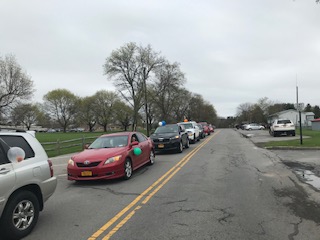
YAP Team paraded past program participants’ homes to encourage, motivate and inspire them and their families
By most measures, it was a small caravan – about a dozen cars driven by YAP staff members. However, on a YAP scale, which measures pivotal life moments, the outcome was considerable.
“The goal was for the families we work with to show them that we’re here for them daily — as a team — and that we will continue to support them through this pandemic. “We wanted the kids to see everybody.”
The parade included about a dozen YAP staffers’ cars
One by one, the parade floated along its planned route, honking horns, sounding the noise makers, and playing music. Children of all ages and adults gathered in windows and on porches smiling, waving, and cheering.
“It was cool,” Mike said. “It was a great day and the families loved it.”
If you’ve ever met a Youth Advocate Programs (YAP), Inc. Advocate, you’ll understand the key to the organization’s effectiveness as a provider of community-based alternatives to youth incarceration and out-of-home placements. With programs in 29 states and the District of Columbia, this year, YAP celebrates 45 years of keeping young people out of institutions with home-based youth and family services delivered by specially trained staff Advocates.
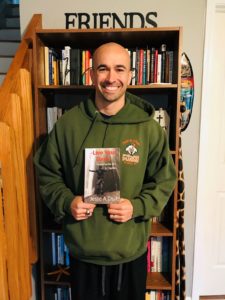
Wayne County, NY Youth Advocate Programs (YAP), Inc. Program Coordinator and author, Jesse A. Cruz
Nine years ago, Jesse A. Cruz joined YAP as an Advocate. A U.S. Army Iraq war veteran and now Program Coordinator for Wayne County, NY YAP, he is one of the staff who represents the organization as part of President Barack Obama’s My Brother’s Keeper Community Alliance.
YAP Advocates provide intensive mentorship focused on empowering youth to identify their strengths and connect them to accessible resources to help them in their personal, educational and career pursuits. At the same time, the Advocates connect youths’ parents/guardians with tools to firm their family foundation.
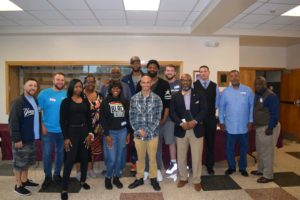
Jesse A. Cruz (center) with Wayne County, NY Youth Advocate Programs (YAP), Inc. co-workers
A husband and father, Jesse is also a motivational speaker and author of Live Your Dash – Discovering the 8 Fs to Freedom, which he talks about in our interview in the video above.
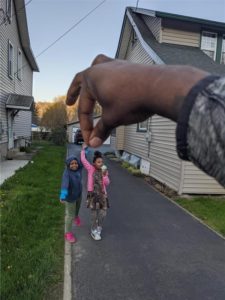
Chemung County YAP Assistant Director Gloria with her partner
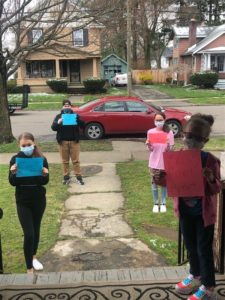
Chemung County YAP Advocate Chasity and program participant, Nathalia, and her sisters modeling social distancing
YAP Advocate Sophia with son, Brayden
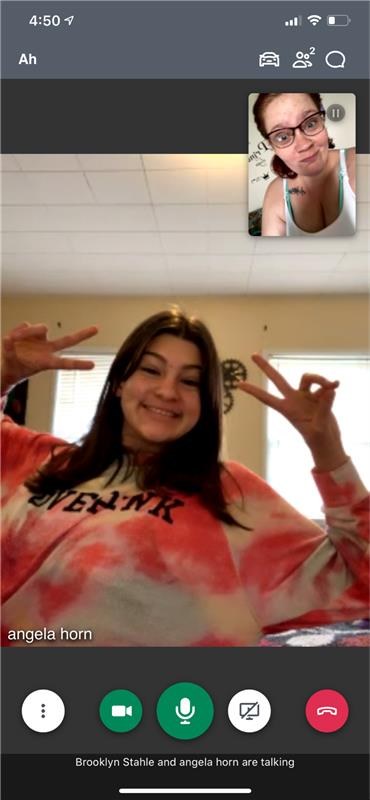
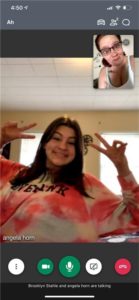
YAP Advocate Brooklyn with program partiicipant Angela...and her sister Mallory
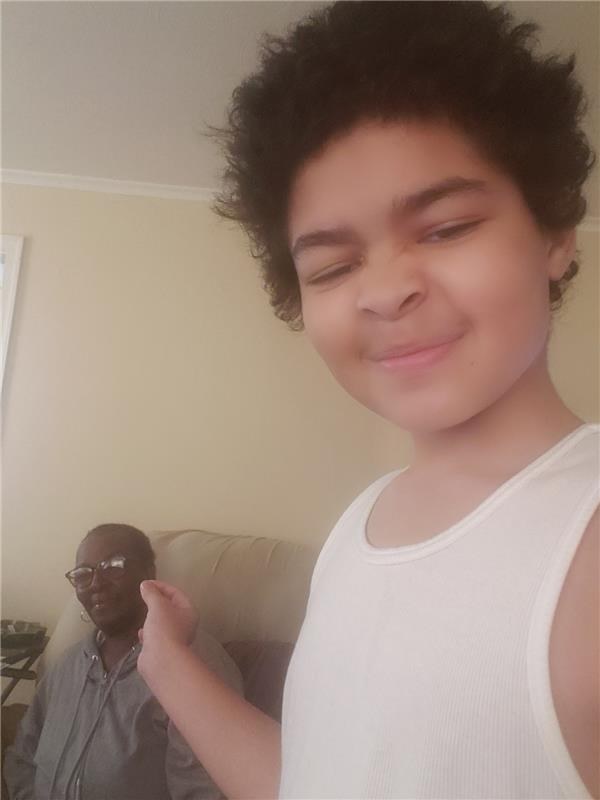
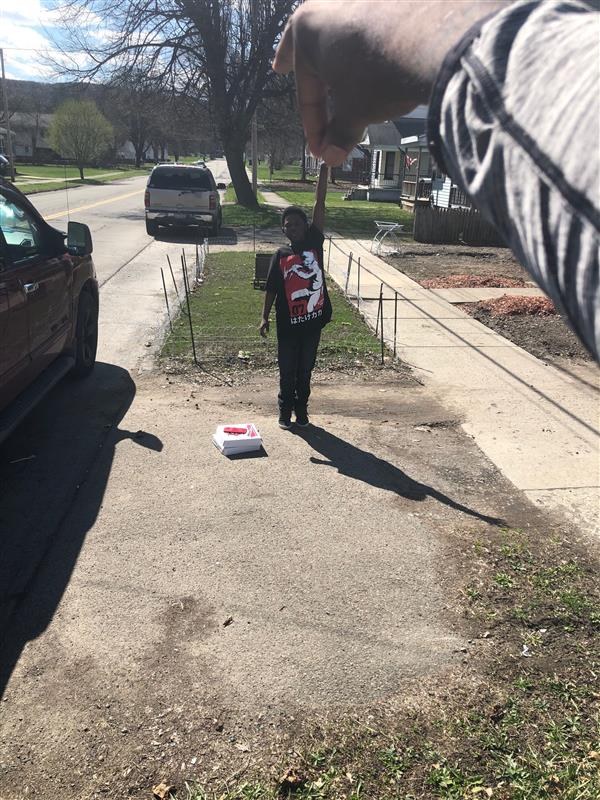
YAP program participant Antwon keeping his safe distance during a visit with his grandmother while video chatting with his Advocate, Mitchell
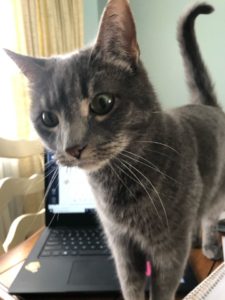
Chemung County YAP Program Director Caitlin's cat breaking the social distancing rules
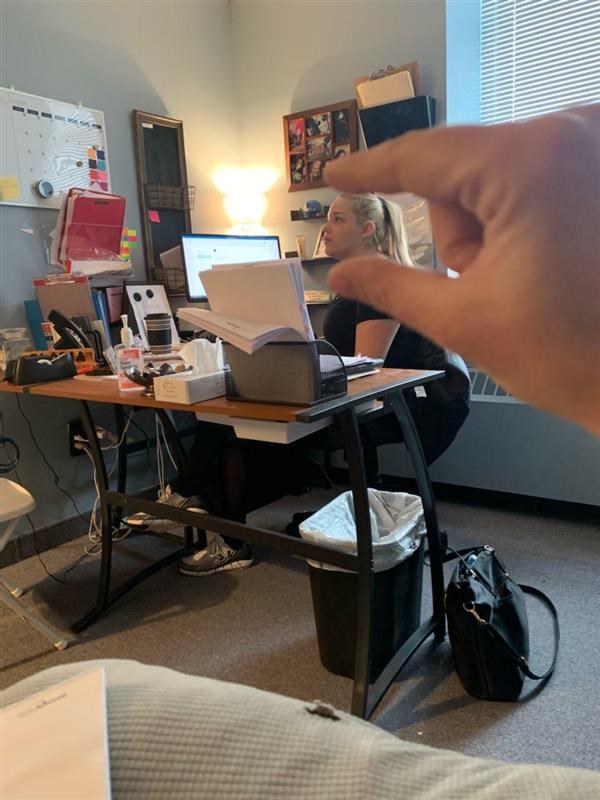
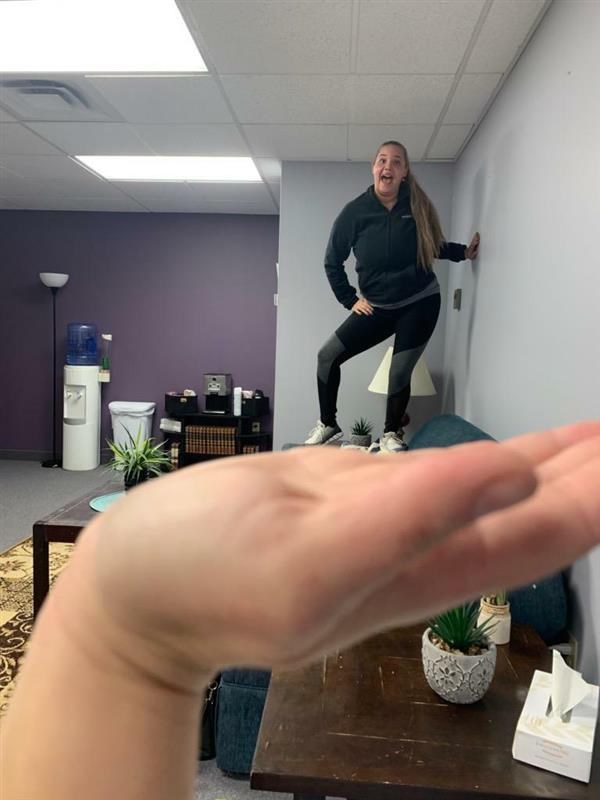
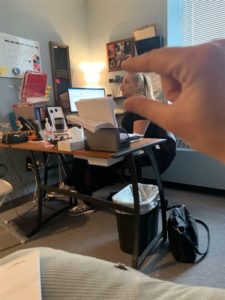
Chemung County YAP Assistnat Manager Gloria and Administrative Manager Frankie keeping it soically distant in the office
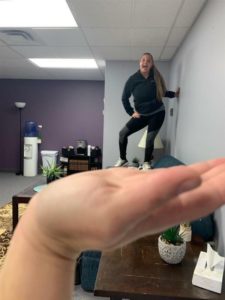
Chemung County YAP Assistnat Manager Gloria and Administrative Manager Frankie keeping it fun and soically distant in the office
YAP program participant Kyree and his mom during a video chat with Advocate, Chasity
YAP Advocate Nick and is twins, Angel and Faith
Program participant Andrew sending his dad off to work .... You're in good hands, Dad.
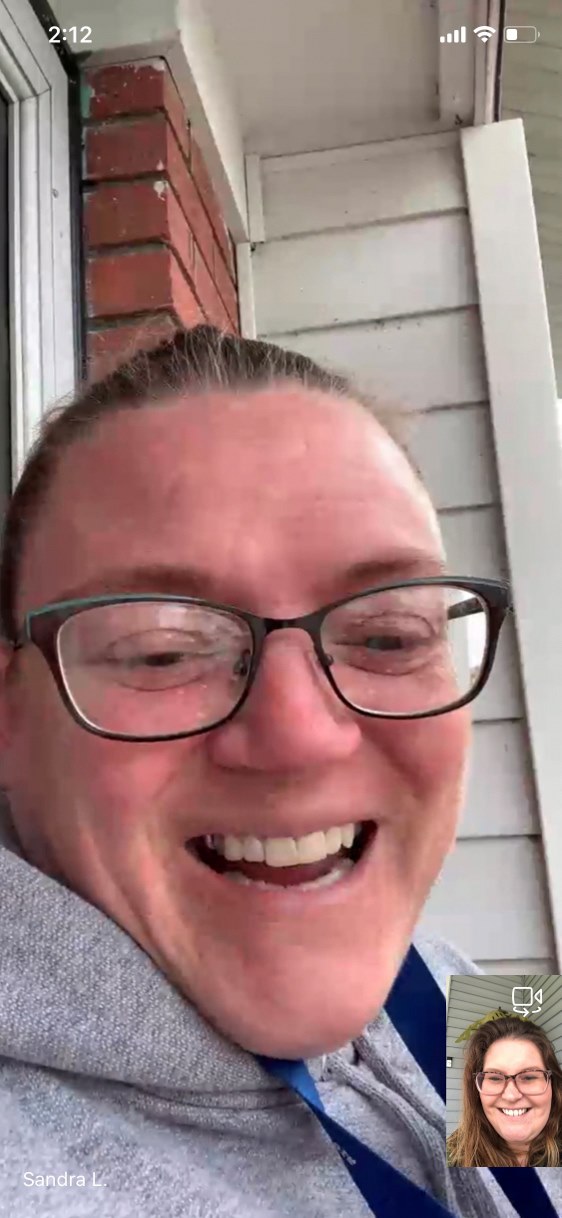
YAP program participant Trista and Advocate Sandra -- hiking while safely distancing
Program participant Leivi -- on a socially distanced visit with his Advocate, Mitchell
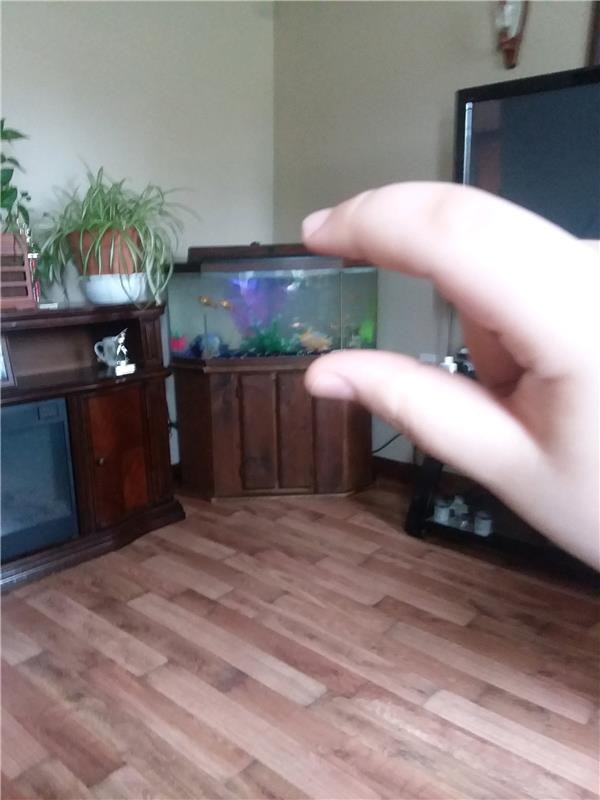
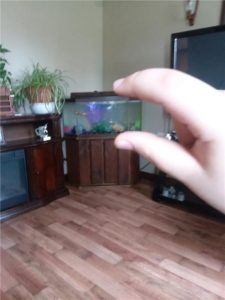
YAP program participant Xavier and his pet fish
YAP Program Director Caitlin with YAP Advocate Sandra -- safely distanced effectiveness
YAP Advocate Nick with program participant, Maurice
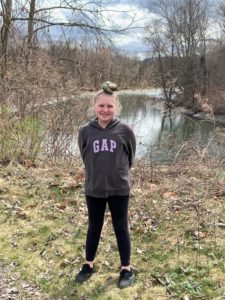
Welcome to a virtual photo exhibit featuring Chemung County, NY Youth Advocate Programs (YAP), Inc.’s program participants, families and staff. Partnering with social services, Chemung County YAP works with youth who are at risk of being in out-of-home placement and helps reunify others when they return home.
“The photos show how we’re promoting social distancing, leading by example in our own community — and even through the pandemic — still delivering services,” said Gloria, Chemung County YAP assistant director.
YAP Advocates help young people identify their gifts and talents and connect them to tools to positively pursue their goals. The Advocates, who are mostly neighborhood-based, also empower program participants’ parents and guardians with individualized tools they need to firm their foundation. They do this by meeting youth and families where they are. With the onset of the COVID-19 pandemic, services are now almost exclusively virtual. The photo challenge became a tool everyone could creatively customize.
“We’re most successful when we’re engaging youth and families in activities. Our biggest challenge with video teleconferencing was finding ways to keep everyone engaged,” said Caitlin, Chemung County YAP program director. “This photo challenge gave everyone something fun to do while teaching the importance of social responsibility through social distancing. I’m amazed and proud of my team.”
The Chemung YAP team gathered the photos over the past several weeks.
“They show our dedication to our community’s health efforts.,” Gloria said. “With the help of our program participants, their families and ours, we demonstrated the importance of leading by example.”
By Jenilee Pollan, Assistant Program Director, Ulster County Youth Advocate Programs (YAP), Inc.
A huge focus of our work at Ulster County Youth Advocate Programs (YAP), Inc. is coordinating with Ulster County School District to ensure our program participants are doing their schoolwork. Our county has been giving kids Chromebooks so YAP staff are making sure all of our kids have one, and if they don’t, staff go pick up the devices or school packets and deliver them to their homes.
We have been successful in working with program youth virtually because we are truly meeting them where they are. We ask them about the games they are playing, the apps they are using and the devices they have at their disposal. Most of our kids are aged 13-16; and they love video games. We have also been lucky with getting youth to play chess and board games via FaceTime, but it depends on the child, their interests, and ultimately what they have access to. Playing games with young people gives you a chance to have interactive conversations about how they are feeling; it offers the opportunity to help them feel comfortable, which gets them to open up.
YAP Advocate used social distancing to help a program participant tune his guitar
We discuss feelings regarding COVID-19, social distancing and how it is affecting us, them, our community and families. This week we are implementing virtual basketball drills and BINGO. The majority of our male clients absolutely love basketball and the Advocate coordinating this activity is one who usually does groups at the YMCA, so we thought, why not do virtual basketball groups?
We utilize Zoom to bring clients, staff and families together through our weekly Anger Management/Coping with Stress During Social Distancing COVID-19 group. In one of these sessions, the youths made stress balls and communicated with one another about how they are feeling.
We also hold several cooking classes during the week that are led by our Advocate/professional Chef Zach. One day, he hosted a group where youths and their moms made chicken with barbecue sauce (from scratch) using ingredients they already had.
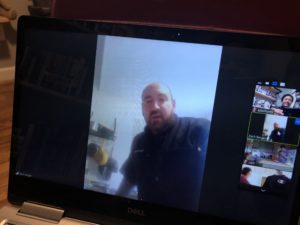
YAP Advocate Chef Zach used Zoom technology to teach young people how to make barbecue sauce and create innovative meals with it
This group was wonderful; it brought families together, we witnessed it on Zoom and it was inspiring to see moms who might otherwise be critical of their sons see the positive in them and work together with them to make a meal.
The key to all of this is to be creative and use the bond you have built with your kids before COVID-19, and above all, meet them where they are. FYI, while our kids now love our virtual group activities, the first few weeks were tough. We had to think outside of the box, collaborate, research and ultimately we had to ask them what they want to do and what they are willing to engage in. They are why we are here in the first place, to help them identify their gifts and how they want to use them to achieve their goals.
Editor’s Note: Youth Advocate Programs (YAP), Inc. is an alternative to youth incarceration and congregate placement serving communities in 29 states and the District of Columbia. Learn more at YAPInc.org.
Kingston, NY (April 22, 2020) – It’s Friday, going on 5 pm, and Cam, 15, Gabe, 12, Raymond, 14, and Stephen, 17, are in their kitchens – some with their moms — making chicken parmesan. With every step, they turn to their laptops or phones, where Zach Berger instructs and cooks along with them. Zach is their Advocate with Ulster County, NY Youth Advocate Programs (YAP), Inc. a community/family-based alternative to youth incarceration and other out-of-home placements.
Stephen teams up with his mom for his virtual cooking lesson
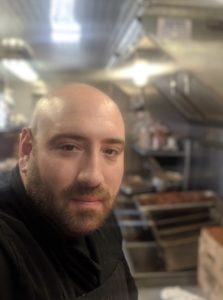
Chef Zach teaches twice-weekly virtual cooking classes to YAP participants
YAP Advocates provide a unique form of intensive, individualized mentoring that helps youth who face complex challenges identify their strengths and pursue positive paths to use them. Simultaneously, the Advocates work with each youth’s parents/guardians to connect them with tools and resources to firm their family’s foundation.
Zach, 31, created the virtual cooking class when the COVID-19 pandemic forced him and his fellow Ulster County, NY YAP Advocates to work with their leadership to develop teleservices to keep youth on track with their individualized service plans.
Zach, a part-time YAP Advocate, is a full-time caterer and private chef
“We were struggling to come up with ideas at first,” said YAP Assistant Director Jenilee Pollan.
A part-time YAP Advocate, Zach is building a business as a private chef and caterer. It’s work that has all but disappeared with the onset of the pandemic.
“When we were brainstorming, I remember saying to Zach, ‘You cook. Why not cook virtually?”
Prior to the pandemic, as part of his work as an Advocate, Zach had been teaching cooking classes at the YAP office.
“We kind of got lucky, said YAP Program Director Hannah Calhoun. “Zach loves teaching and he’s great with the young people. He also likes to experiment. His creative food side has been extremely helpful and very useful.”
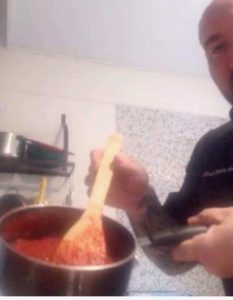
Chef Zach taught the youths how to make their own pasta suace
A year into his nearly five years with YAP, Zach took time off to go to Peru, where he co-owned a restaurant featuring all things local – building materials, fruits, vegetables and meats. His passion for sustainable dining started during his senior year in high school when he earned college credits in an environmental science program. He continued his studies at Tompkins Cortland Community College in Dryden, NY.
Zach encourages YAP program participants to believe in, focus on and use accessible tools to achieve their goals. He shares stories with them about his travels throughout South America — the Amazon — and stops along the way. He tells the young people that he’s been to 26 countries and plans to visit many more. But he also talks to them about difficulties and hard work — busing and waiting tables — and he’s open about setbacks, like healing from a painful breakup and battling depression.
Initially, the YAP team envisioned Zach’s classes as a youth group activity. But organically, they became more of a family affair.
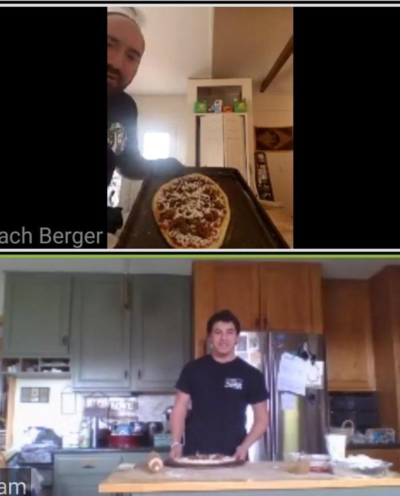
One of Chef Zach’s first virtual classes taught students how to make pizza and other meals with homemade barbecue sauce with existing ingredientsCam leans in to show Chef Zach how he’s progressing
“At first it was more because I needed their parents there for supervision,” Zach said. “I was doing cooking classes once or twice a month in the office with just the kids. Turns out it was even better when everybody had a kitchen and families were able to work together.”
There have, however, been some hiccups.
“I’d have to say the first day, it went bad.,” Zach said.
For some parents, turning the kitchen over to their children, especially considering their sons’ track records of getting into trouble, was a challenge.
“I called them after that class and said we need the youth to build the skill. I told them we want parents involved, but they have to trust their children; to give them this moment to learn,” Zach said. “For the most part, it’s working out naturally now; they’re doing this together and they’re smiling.”
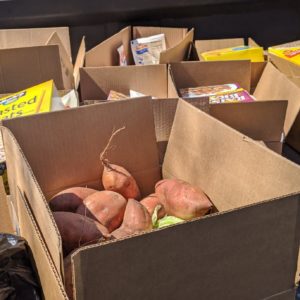
A few days before each class, Advocates let the families know what they’ll be preparing. Zach works to use recipes that include ingredients the families likely already have. The team goes to a local food pantry and gathers the additional ingredients. Zach and the other Advocates drop the items off at the families’ homes in time for each classs.
A local food pantry provides extras
YAP Advocates deliver needed food items in time for the virtual classes
For the chicken parmesan, there were two video classes, Wednesday’s, where the YAP participants made their sauce, and Friday’s session, where they cooked the chicken and pasta that completed the meal.
Shortly after Friday’s Zoom class began, Zach reminded everyone to wash their hands – at least 20 seconds – with soap and water.
Then the lesson began. He told his students to separate their chicken cutlets from their containers of flour and breadcrumbs and said they’ll need two or three eggs.
Chef Zach takes time to answer questions as he cooks along with the youths
When Gabe said he didn’t have eggs, Zach (who is also a guitarist), told him how to improvise.
Raymond, who was not on camera but following along using audio, mentioned that things didn’t go so well earlier in the week when he accidentally burned his sauce.
Zach encouraged him, letting him know every chef burns food, especially early on when they’re learning. At the same time, he patiently demonstrated how to dip the chicken into the egg, then the flour, back into the egg and then the breadcrumbs.
Throughout the class, Zach took time to answer questions.
“How much oil in the frying pan?” “What’s the boiled water for again?”
The moms worked hard not to hover but were actively involved. For a few minutes, a dad joined, too.
“Is it cool — spending time like this with your moms?” The answers came in quick nods, slight smiles, and from each young chef, a quiet, “yes.”
The YAP participants cook enough for family dinner
Zach told the youths that his love for cooking started in his childhood kitchen where he prepared meals with his mom and dad.
“it’s good,” said Stephen’s mom. “Everyone has to be a team,” Cam’s mom added. “He’s in charge of the egg and flour; I’m in charge of the breadcrumbs.”
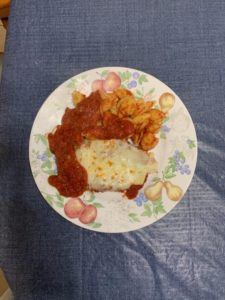
Pre-plated chicken parmesan
As the chicken went into the ovens, Zach showed his trainees a type of pesto made from a locally grown vegetable. When no one guessed the name of it, he told them it’s ramps, a regional plant that grows for a short time and tastes like garlic. Zach topped off his dish with the ramps, and like any celebrity chef, turned his perfectly plated dish towards the camera.
Chef Zach’s plated chicken parmesan
The boys took their turns, proudly showing off their’s too. Everyone agreed that it was all pretty impressive. The young men were proud, not just of what they’d prepared for dinner, but of how they felt knowing that they’re also preparing for their futures.
“I usually do outside work, change oil and tires and mow the lawn,” said Stephen “This is a trade that can benefit me in the future.” He turned to his mother and smiled. “It makes me realize what she does — how hard she works in the kitchen for us.”
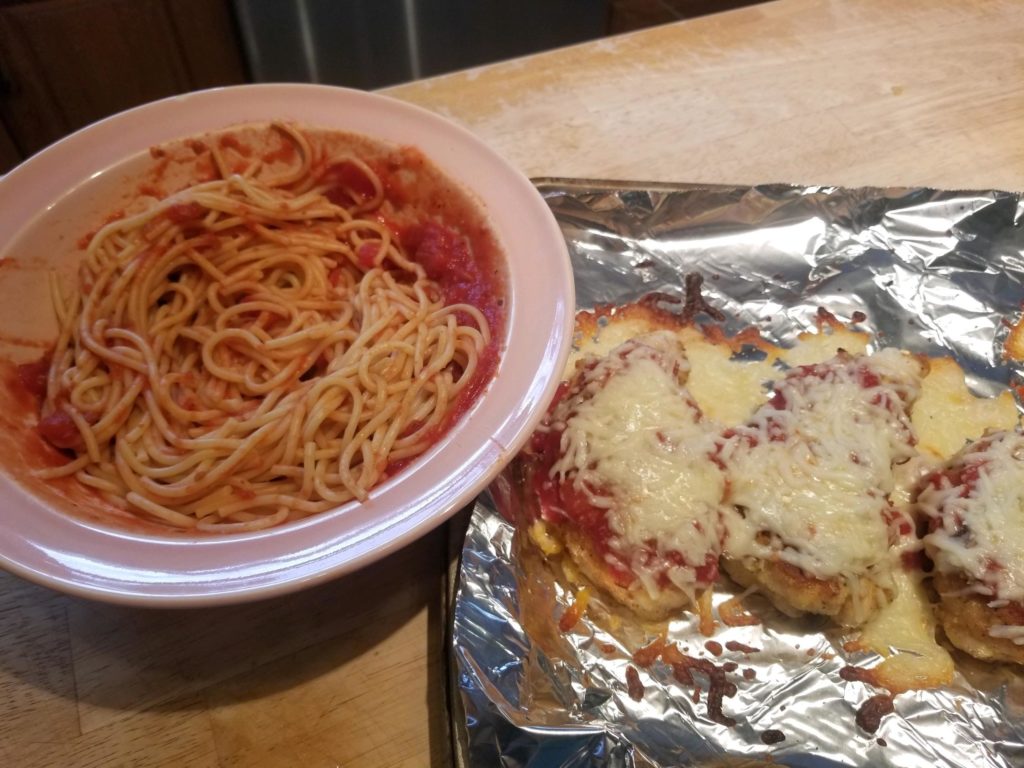
Chicken parmesan prepared by YAP participant
“I get to do things with other people and socialize and learn new stuff too. And I love it,” Cam said.
‘It’s wonderful. It brings families
YAP participant’s chicken parmesan
together. It’s inspiring to see moms who are often in conflict with their sons work so well with them, positively, to make a meal,” said Jenilee.





















 It was during one of those experiences that Sarah heard Sadako and the One Thousand Paper Cranes, a Japanese legend promising that by making one thousand origami cranes, one’s wishes will come true. She recalled learning how the story inspired a girl with leukemia from atomic bomb radiation to make origami cranes in her quest to live.