Santos Robles Helps Youth Advocate Programs Celebrate 45 Years of Transforming Lives and Systems

0

Until now, 34-year-old Santos Robles kept what happened to him two decades ago in the past. But to help celebrate the 45th anniversary of Youth Advocate Programs (YAP), Inc., a community-based alternative to youth incarceration and institutionalization, he’s ready to talk. It’s his way of raising awareness of YAP and thanking the national nonprofit for helping him see his possibilities and connecting him with tools to pursue them in positive, productive ways.

A family man with four children – four-year-old twins and two bonus kids who came courtesy his girlfriend — Robles works full-time at Harrisburg Area Community College as an adviser to veterans. The campus is close to home and not very far from the Lebanon, Pa. neighborhood where he grew up. But there’s a world of difference between where he is now with his life as an adult and where he was back then, as a child.

Santos Robles , 2020

“The first time I got arrested, I was 11. I didn’t know it, but the friend I was with at the time had robbed someone; and I ended up getting charged along with him. It was a horrible experience. It was terrifying,” Robles said. “An officer searched me and didn’t let me button and zip my pants back up. When I walked to the patrol car, they fell down to my ankles. It was humiliating. I tried to be tough, but when my mom came to pick me up, I bawled my eyes out.”

Thinking back to that time, Robles said, “I was only a child. “My daughter’s 11; and I can’t imagine her going through something like that; I look at her and — she’s a baby.”

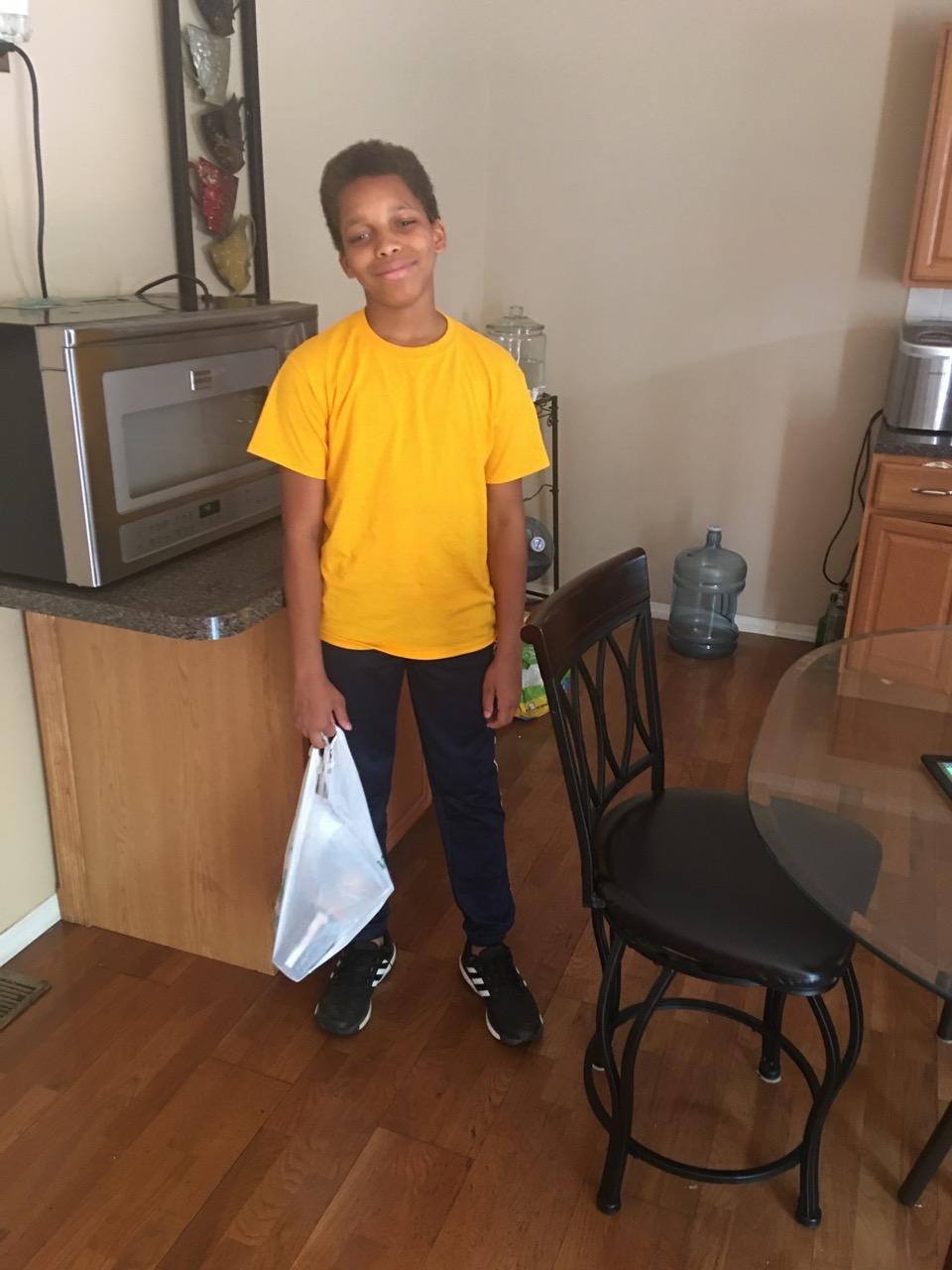
Santos Robles around the time of his first arrest

Robles was two years old when his father left his home. “He was an addict; my mom and he got into a fight and she kicked him out.”

Robles said his mother worked two jobs to support him and his sister, who’s three years older than him. Hanging around with older boys made Robles feel special, especially when they gave him money for doing jobs, like being their lookout when they sold drugs.

After the arrest, a judge sentenced Robles to five to six years of probation. During that time, violations like being late to appointments, running away, or missing school got him into more trouble, often resulting in detention time.

“At one point, they put me in a foster home,” he said. “Then by the time I was 13, they put me in a shelter, which was a detention facility on the top floor and a group home on the bottom. I was really depressed,” he said. “When I went home, I promised my mom I wouldn’t get in trouble again; but I kept going back to hanging around the same older friends.”

When he was 15, police caught Robles with a bag of crack cocaine that he was holding for one of those friends. This time, the police accompanied him on an airplane ride to a facility in western Pa. He said the experience was a nightmare from the very beginning when he realized that checking in required a strip search.

“The officer assigned to do the searches put me in a room and told me to take my clothes off. I’m looking at this guy and I’m crying so hard. I was just a little kid.”

Robles said the officer was professional, but the experience was nevertheless traumatizing, as were so many during his two-year incarceration.

“In the beginning, I wasn’t allowed to speak; I went months without talking to other kids. I could speak to staff when it was necessary, but we had to get time behind us to earn the right to talk; it was a rule; you’re on a level system and talking was a privilege” he said.

Making it more difficult was the long distance between the facility and home. It was a six-hour drive, something his mother had neither the money nor the time to do too often.

“I did not get a lot of visits. That really sucked. We got to go home on passes, but I’d keep getting in trouble. Being locked up did not rehabilitate me.”

Robles said the most positive thing about the facility were the times he got to meet with the chaplain. He became fascinated with religion, began to learn a lot about  different faiths, and started to consider that with the right opportunities, he could change.

As part of his probation when he was released at age 17, Robles became a participant in YAP, where he met Bob Swanson (now YAP Pa. and Ohio Regional Director), who soon assigned a young man named Ed Harmon to work with him as a mentor and an Advocate for him and his family.

Santos Robles at age 17 after two years of incarceration

“What was different was they treated me like a person. They cared about my interests. When I told them that I was interested in being a pastor; they linked me up with churches to talk to different pastors; they helped me find jobs,” he said.

Robles said Harmon helped him see that he wasn’t a bad person, that he was responsible and had a lot to offer. “I started feeling like others saw the good in me. I got my first job at McDonald’s. It felt amazing,” he said. “If I would have gotten linked up with YAP earlier when I first got arrested, maybe I wouldn’t have gotten into more trouble.”

After the summer when Robles went back to school, he told Harmon that some of the the influences and temptations from his earlier years were still present — that he thought it would be best to drop out and get a higher-paying job and get his GED. It’s a decision that he has never regretted.

Robles got a job at Walmart and began going to church regularly. When his pastor offered him free rent in a shed behind his family’s home, Robles took him up on the offer, cleaning it, putting down carpet and moving in furniture.

“It was my first home away from home; Ed used to pick me up from there. I moved out when I saw a big black rat that looked like a dog,” he chuckled. “I ran out the house; left all my stuff there and moved back in with my mom.”

When Robles’ probation ended, his participation in YAP was over, too.

“I still wasn’t doing the best I could,” he said. “I cried; I was convinced I’d get in trouble and go to jail. I felt really close to YAP and stayed in contact after the program.”

When he turned 18, Robles enlisted in the military. During his service, as he considered future careers, he often thought about his time in YAP with Harmon and Swanson. He wanted to do what they did – help troubled youth get back on track.

“Two months after coming home, I got a job as a YAP Advocate. It was really good to connect with the kids and have them relate to my story,” he said.

A year later, Robles used his YAP experience to get a job at Harrisburg Area Community College. It was an opportunity for him to also enroll in school and earn an associate degree.

Robles and his mother are closer than ever. He has also stayed in touch with Harmon at YAP and from time to time checks in on a few of the young people he worked with when he was an Advocate.

“The one I was closest to is now 21. He was in trouble a lot when I was working with him. His step-dad was a gang member and he’d seen a pretty rough life as a youth,” Robles said. “Now he’s working full-time at a big supply company in town. He has his own place and tells me he wants to go to the military. It’s a good feeling. I see in him the same thing Ed always saw in me.”

Robles realizes that the story of his youth is no longer a secret. He will need to talk to his children and others in his life, something he said won’t be easy, particularly because of that period of time in placement when talking was prohibited. “To this day, I sometimes still struggle to communicate,” he said.

Robles said more important than his struggles are his accomplishments and his gratitude to YAP for making them possible. “I truly believe in YAP; it’s important to keep kids home.”

YAP partners with youth justice and child welfare systems in 28 states and the District of Columbia. To learn more about the nonprofit please visit yapinc.org.


Sharing Some Penn North Love

0

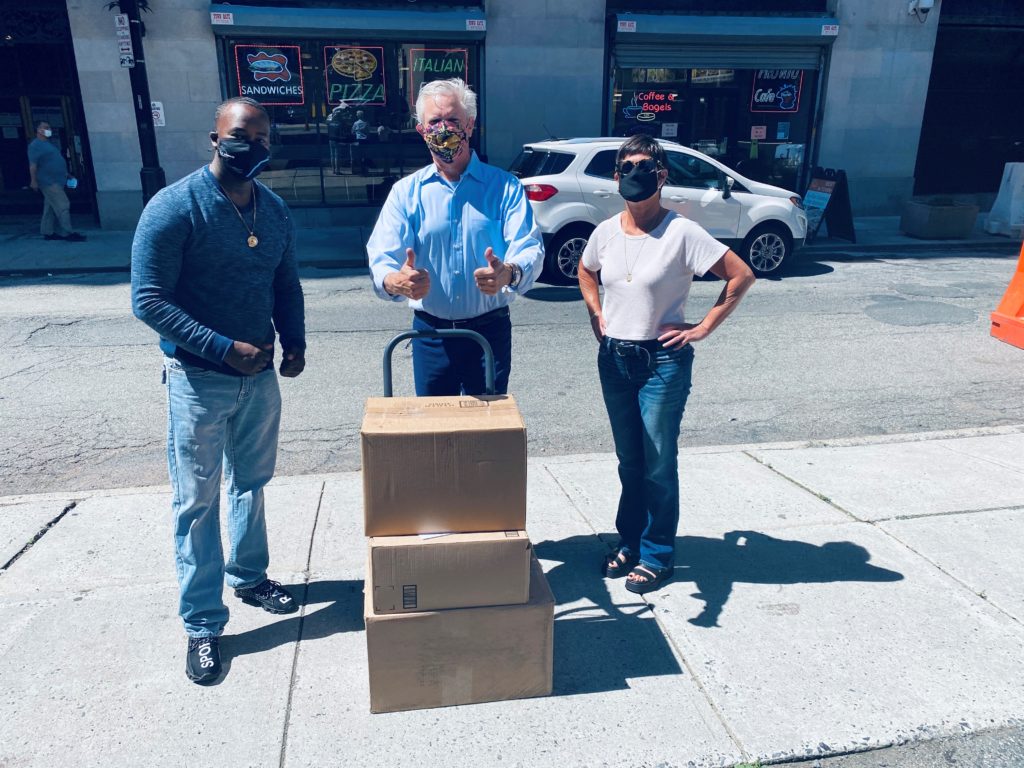
By Baltimore City Safe Streets Penn North/Youth Advocate Programs Crime Prevention Coordinator Wayne Brewton

While planning a shoe giveaway, I had no idea how our Penn North community would react. Will they be appreciative? Will they be respectful?

Thanks to a special discount from Shoe City in Baltimore’s Patapsco Village Shopping Center, the Baltimore City Safe Streets Penn North/Youth Advocate Programs team spent the last few days giving away 60 pairs of shoes.

The reason why these two questions constantly invaded my thought pattern is simple. Penn North is the epicenter of the Freddie Gray uprising in 2015. I remember what the world said about the Penn North Community back then on YouTube and CNN.

Surprise, Surprise WORLD! Not only were our young kings appreciative and respectful, they were deeply engaged with our theme of changing the community norm.

Not only do they want Safe Streets they want them NOW. You see our young guys want to be a part of helping us stop the shooting; they want to LIVE. Thank you, young kings for sharing in our love.


Editor’s Note: YAP, which celebrates 45 years in 2020 of providing alternatives to youth incarceration/institutionalization, is Baltimore City Safe Streets’ Penn North neighborhood nonprofit partner. Safe Streets works as a public health approach to reducing shootings and homicides in communities in Baltimore City. Safe Streets staff are men and women who were formerly justice-involved, which lends to their credibility and ability to establish relationships and build rapport to change behaviors and norms of individuals with backgrounds similar to theirs. Safe Streets Penn North/YAP Crime Prevention Coordinator Wayne Brewton returned to the community in 2017 after serving 38 years in prison. Wayne shared his story in this video during another Safe Streets community event. Wayne Brewton, Youth Advocate Programs (YAP), Inc. Baltimore City Safe Streets Crime Prevention Coordinator

Black History Month Celebrations Honor ‘Living Legend’ Lynette M. Brown-Sow

0

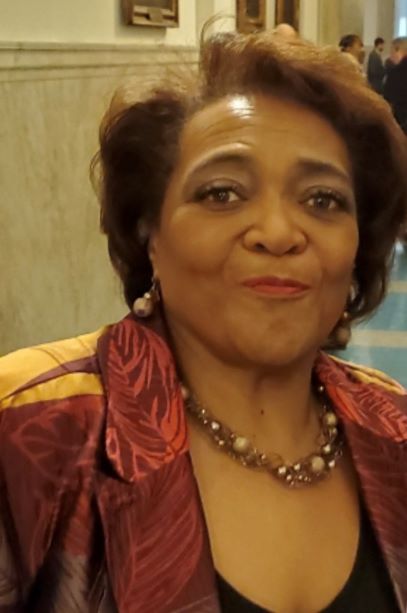
(Feb. 25, 2020) This February, as the nation honors African American heroes, the city of Philadelphia is paying special tribute to Youth Advocate Programs (YAP), Inc. Board of Directors Chair Lynette M. Brown-Sow. YAP is a nonprofit that provides community-based alternatives to youth incarceration and institutionalization in 150 communities in 28 states and the District of Columbia with international programs in Guatemala, Ireland and Sierra Leone.

Brown-Sow was among four leaders honored by the Philadelphia City Council as Living Legends. Also this month, Philadelphians will pay tribute to Brown-Sow at “Celebrating Black Woman Magic from 1694 to the Present,” the launch of They Carried Us: The Social Impact of Philadelphia’s Black Women Leaders (Arch Street Press). Brown-Sow is one of 95 women across many sectors whose stories are chronicled in the book by authors Allener M. Baker-Rogers and Fasaha M. Traylor.

Brown-Sow’s Living Legends honor came during a special ceremony at the Philadelphia City Council’s Feb. 20 meeting. She was joined by other honorees – Philadelphia County Court of Common Pleas Judge Frederica Massiah-Jackson and educators Drs. Constance Clayton and Naomi Johnson Booker – along with dozens of friends and family members.

“The Living Legends recognition is made because sometimes people are so busy making history that they don’t take the time to look up and smell the roses and see the accomplishments and things that they have done,” said Councilman Curtis Jones, Jr. “They are making a difference in other people’s lives every single day.”

Introducing Brown-Sow as she presented the resolution, Councilmember Cherelle Parker said it was her privilege to recognize her fellow Delta Sigma Theta sorority sister and Philadelphia alumna chapter member.

Councilmember Parker said Brown-Sow is a well-known leader in the city. “In her role as the Vice President of Government Relations with the Community Colleges of Philadelphia, Ms. Brown-Sow worked diligently at both local and national levels to ensure education for all. She worked with the American Association of Community Colleges as well as the White House to support tuition-free programs at community colleges and maintenance of funding for Federal Pell grants,” she said.

“Ms. Brown-Sow also served as the chair of the Board of Directors for the Consortium, a behavioral health community organization that pioneered a strategy of balancing the input of community leaders and medical experts to expand access to patient-centered behavioral health care models into individual neighborhoods,” Councilmember Parker added. In 2007, the Consortium named its newest service center the Lynette M. Brown Center of Hope.

Currently serving as chair of the board of the Philadelphia Housing Authority, Brown-Sow has an extensive governance background that includes serving as a board member with the Philadelphia Tribune Co. Inc., NHS Enterprises, Inc. and The Board of City Trusts. She has been on YAP’s board since 2013, serving as chair since 2016. She has leveraged her considerable experience and influence to help the nonprofit partner with youth justice, child welfare and other systems to provide safe, community-based alternatives to incarceration and institutionalization.

A life-long Philadelphian and West Philadelphia High School graduate, Brown-Sow founded the Hardy Williams Education Fund, which provides scholarships for students interested in law and social justice. As chair and one of the founders of Women of Destiny, she has mentored other professional women of color in an effort to develop new pipelines of talent to serve area corporations and nonprofits.

Founder of L M Brown Management Group consulting firm, Brown-Sow continues to guide communities, businesses and government entities in constructing frameworks that promote progress and prosperity.

Brown-Sow earned a Bachelor of Science in Administration from Antioch University and a M.S.S. in Policy, Planning and Development from Bryn Mawr College. She received a Governing for Non-Profit Excellence certificate from Harvard University Graduate School of Business and a certificate for Strategic Perspectives in Non-Profit Management from Harvard’s Graduate School of Administration.

As part of the celebration of Brown-Sow and others featured in They Carried Us: The Social Impact of Philadelphia’s Black Women Leaders, the honorees will place personal messages and items in a time capsule that the authors will present along with the book to Temple University’s Charles L. Blockson Afro-American Collection.

See the full Philadelphia City Council Living Legends presentation here.


Abriana’s Progress Report: Past Probation, She’s Focused on her College Goals

0

Abriana is sticking to her plan of learning from the mistakes of her past and taking steps towards a positive future.

When the 15-year-old met with TheNeighborhoodAdvocate.org in November, she said since participating in Los Angeles Youth Advocate Programs (YAP), Inc., she went from expecting to grow up to be a “low-life” to having goals of being helpful to her family and going to college. YAP is an alternative to youth incarceration and out-of-home placement.

Los Angeles YAP Program Director Brandon Lamar, whose Watts office is a few blocks from Abriana’s home, reports she’s still on track and doing well. “She’s excelling in all her classes,” Lamar said, adding that by participating in YAP, Abriana was also able to get off probation early.

Check out Abriana and her YAP Advocate Kayla in the short video below.


After a Decade in Prison, Nokomis Hunter’s Future is Poetry in Motion

0

Four years free after returning home from Federal prison, 30-year-old Nokomis Hunter is on a path that has never looked brighter. He has a career with District of Columbia Government, a young family and now, Poetry of a Caged Bird, his recently published collection of poems.

The book chronicles the ten years Hunter spent behind bars beginning at age 16 after a carjacking left him with an adult armed robbery conviction.

Hunter in Federal prison during a 10-year sentence that began when he was 16

Hunter recalls how hard it was adjusting to being a free man for the first time in his life. Having been in prison when he came of age, he had to get a driver’s license and insurance before he had a clue about how to apply for a job. After spending a few months in a Delaware halfway house, Hunter returned to his mother’s home in Washington, DC, a city he barely recognized from his childhood. Because the Federal prison system moved him to  institutions in a number of states, his mother was unable to visit. So he had to get to know her all over again, this time, as a grown man trying not to be a burden and doing his best to make a contribution.

“I went from part-time job to part-time job, but because of my record I couldn’t find anything sustainable,” he said. “I even tried to get a loan to start a catering business, but my record kept me from that too,” he said. “It was really discouraging.”

A year ago, just when he had almost given up, Hunter became one of the first formerly incarcerated adults served by Youth Advocate Programs (YAP), Inc., which traditionally provides services to young people as an alternative to youth incarceration and other institutionalization. YAP had recently become a partner in a program that helps Washington, D.C. men transition from prison to freedom.

By participating in the program, Hunter said his record was sealed, since the offense occurred before he was an adult; and he was able to be released early from his probation.  In an interview about the program with Good Morning Washington, Hunter talked about how it changed his life.

Good Morning Washington’s Jessob Reisbeck and Hunter after interview

Adapting its time-tested youth justice model of training Advocates to provide intensive mentoring and family advocacy, YAP worked with Hunter and his mother. After learning that she wanted to lean on challenges of her past to help others, YAP hired her to be an Advocate to work with systems-involved girls.

At a recent YAP recognition banquet, Hunter surprised his mother with a special tribute and a public thank you for sticking by him throughout his journey.

Hunter said of everything YAP did for him, the most meaningful was helping his mother find her purpose, which has strengthened his family’s foundation for years to come.


With Support from Her Advocate, She Turned a Setback into a Steppingstone

0

No reject; no eject. That’s a mantra at Youth Advocate Programs (YAP), Inc., a national nonprofit that provides community-based alternatives for young people who might otherwise be placed in youth detention or behavioral health/drug treatment, developmental disabilities or child-welfare facilities.

“YAP’s goal is to turn setbacks into steppingstones while keeping young people safely home with their families and helping them become contributing members of their communities” said Adams County, Pa. YAP Program Director Robert Witt.

As an example, he points to 18-year-old Erin Barnhart, an aspiring model who participated in the Adams County YAP Behavioral Health program a couple of years ago.

“During that time, I had many ups and downs, but YAP was always there for me,” Barnhart said. “In February 2018, I had a setback and was admitted to a treatment center. When I was released, my mobile therapist Kayla Sollenberger was waiting for me when I got home.”

YAP mobile therapists meet with young people in their homes and other settings in their communities where they are most comfortable receiving services. Adhering to the YAP wraparound model, these therapists serve as mentor advocates, providing individualized service plans that help young people identify and realize their strengths. As advocates, they also connect the young people and their parents to tools and resources that firm their foundation and empower them to achieve their goals.

“With love and encouragement from my YAP staff and family, I began to communicate effectively with others and utilize my coping skills,” Barnhart said. “Youth Advocate Programs truly gave me the tools to be successful and confident.”

One of Barnhart’s goals is to be a plus-size model. She is a two-time recipient of the YAP Tom Jeffers Endowment Fund for Continuing Education Scholarship. The $1,000 award is one of the tools the nonprofit makes available to individuals served by the organization and their family members to help them achieve their education and career goals.

With her first YAP scholarship, Barnhart participated in the 2016 Barbizon Passport to Discovery Cruise, where she received more than 10 hours of training and had an opportunity to audition for international agents.

“During that week, I was in Michaela Paige’s Be You video and participated in the Miss Top Plus Model Awards ceremony,” she said. “I auditioned for Laura Gentry, an international scout, and I received top scores for my runway walk, commercial, and marketability. She awarded me the highest scholarship for Passport to Discovery and the opportunity to perform in additional competitions.”

Miss Top Plus Model Magazine named Barnhart Miss Top Plus Model East Coast and featured her in the publication.

Barnhart’s second Tom Jeffers scholarship is helping her pay for specialized trainings, including one offered by Hollywood casting director Paul Weber. She has her eye set on modeling for Torrid, her favorite plus size clothing designer for girls and women.

“Youth Advocate Programs has supported me for  many years.  Everyone at YAP has always believed in me,” Barnhart said. “Without YAP and my family, I would not have had the confidence to achieve my goals.”


Family Matters When Turning Your Life Around

0

Family matters for individuals working to turn their lives around. Youth Advocate Programs (YAP), Inc.’s trained advocate mentors help young people identify their strengths while connecting them and their families with tools to achieve their goals. YAP’s family-centered, strength-based approach is also evident in its programs that serve and tap into the talents of adults returning home from prison. Wayne Brewton and his wife, Vickie, said family support has been key to his re-entry and his work as YAP’s Baltimore Safe Streets Crime Prevention Coordinator.

Instead of Lock-up, He Got an Advocate, Mentor and Friend

0

A little more than a year ago, Chris made a mistake that could have taken him away from his family and out of his community. Now 19, he thanks Will Conyers, his Baltimore Youth Advocate Programs (YAP), Inc. Advocate, for empowering him with tools to turn his life around. YAP is community-based alternative to youth incarceration/out-of-home placement. Advocates like Will are trained to provide intensive mentoring that helps youth realize their strengths while connecting them and their parents with resources to firm their foundation and help them succeed.

Holidays Highlight Gifts, Talents and Generosity of Youth Turning their Lives Around

0

MIDDLESEX COUNTY, NJ — Brian, 13, and Esteban, 14, stood proudly before community leaders and family members as they unveiled a mural decorating a wall at the New Brunswick, NJ Youth Advocate Programs (YAP), Inc. office.  The unveiling was part of a holiday gathering that gave the boys a unique perspective on how their strengths and talents can be a special gift to others.

“They described how the mural depicts the phoenix facing the future with optimism and the feathers entangled represent different paths in their lives and how they might intertwine,” said YAP Middlesex County Program Director Rebecca Escobar, who also serves on the New Brunswick City Council. “It reminds the youth that no matter what circumstances they faced, there’s always a lesson, making it possible to overcome obstacles.”

Brian and Esteban participate in YAP’s Diversion program where schools, police officers and/or parents refer young people who are beginning to exhibit behaviors that put them at risk for coming into conflict with the law. “They might be smoking marijuana or fighting, being disrespectful to teachers or running away from home,” Escobar said.

With the help of local artist Bob Ahrens, Brian and Esteban joined other YAP participants to create the mural as part of their Diversion program community service. Among those attending the holiday mural unveiling gathering were young people who had completed the YAP program in previous years. Escobar said it’s not unusual, especially around the holidays, for former program participants to come around to ask how they can give back.

The Diversion program is based on a model YAP developed 44 years ago to give youth justice, child welfare, social services and other systems community-based alternatives to incarceration and out-of-home placement. It’s a unique wraparound model where neighborhood-based Advocate mentors empower young people to identify and realize their individual gifts as they give parents and guardians tools to reinforce the family foundation.

Using the YAP Advocate model, YAP provides youth in the Diversion Program with facilitator Advocates who guide the young people through group sessions, individual mentoring and community service projects that enhance their individual interests and talents. At the same time, YAP Advocates support the youths’ families.

“In the right situation everyone can improve,” Brian said.

Throughout the holiday season, Middlesex County, YAP Diversion Program youth participated in holiday-focused service projects, including Thanksgiving turkey distributions to 250 community members, including 40 YAP program participating families. In addition, YAP’s New Brunswick School-based Youth Services Program provided gifts for 43 families it adopted from New Brunswick High School, Lord Stirling Community School and McKinley Elementary School, where 27 students received new coats.

“This is the season to give back,” Escobar said. “As they give back, the youth reflect on what YAP means to them and how we are a safe space for them; a place where they don’t feel judged and where they express how hopeful they feel towards changing themselves and achieving more for a brighter future.”

As Escobar spoke to TheNeighborhoodAdvocate.org, she received news from the from Rutgers Community Health Foundation that the program will receive funding again in 2020.

Brian (front right) and Esteban describe their mural at holiday gathering


Los Angeles Families Now Benefit from Community-based Alternative to Out-of-Home Placement

0

A community-based alternative to youth incarceration and institutionalization in 28 states and the District of Columbia, Youth Advocate Programs (YAP), Inc. recently began serving young people in Los Angeles. Adhering to its “no reject; no eject” policy, YAP serves South Los Angeles youth through a partnership with Shields for Families. As more communities embrace social justice and child welfare systems reform and seek safe, cost-effective alternatives to out-of-home placement, YAP’s Safely Home model has been expanding globally. Founded 44-years ago, YAP has a time-tested model that matches individuals it serves with professional mentor Advocates who receive special training to empower young people to identify their strengths and connect them and their parents/guardians to accessible tools to achieve their personal, family and career goals.